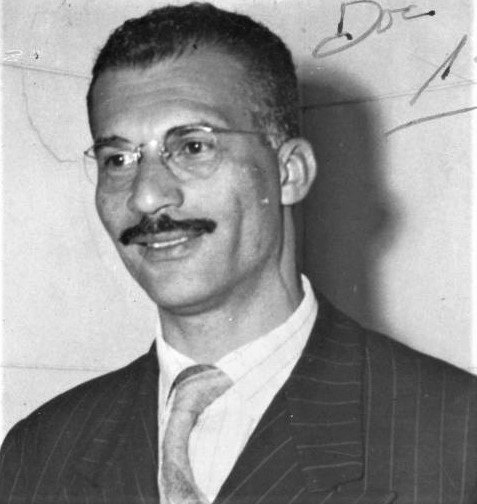
Carlos Marighella
 Brazil
Birthday
+1911-12-05
Birth Sign
Sagittarius
Birthplace
Salvador
Age
Died at 57
About
Carlos Marighella was a Brazilian politician, writer, and Marxist-Leninist militant from Salvador, Bahia. Born on December 5, 1911, he became a vocal critic of the military dictatorship that took power in 1964, arguing that nonviolent resistance was futile. In 1967, he founded the Ação Libertadora Nacional (ALN), an urban guerrilla group that carried out bank robberies and kidnapped high-profile figures to fund and publicize its cause. Marighella's writings, especially his Minimanual of the Urban Guerrilla, became a touchstone for revolutionary movements worldwide. He was killed by police in an ambush on November 4, 1969, in São Paulo, at age 57. His life and death turned him into a symbol of armed resistance, and his ideas continue to influence militants and scholars alike.
Fame & Fandom
Carlos Marighella's fanbase is a unique blend of political activism, historical commemoration, and cultural resistance. Unlike conventional fandoms, his followers are not organized around a formal name or fan clubs; instead, they are united by a shared reverence for his role as a revolutionary icon. The most visible expression of this devotion came with the 2019 biographical film Marighella, directed by Wagner Moura. Its delayed release in Brazil became a political flashpoint, and when it finally premiered in 2021, screenings turned into impromptu protests, with audiences chanting anti-Bolsonaro slogans. One attendee captured the sentiment: 'His struggle is ours.' This moment transformed the film's release into a fan-driven political campaign, showcasing how Marighella's memory continues to mobilize people.
His legend is defined by his death in 1969, when police ambushed him in São Paulo, cementing his status as a martyr. His Minimanual of the Urban Guerrilla, written in the final months of his life, became a canonical text for revolutionary movements worldwide, adding to his mythic stature. The story of his break from the Brazilian Communist Party to found the ALN, the most radical armed resistance group against the dictatorship, is retold as a reflection of his uncompromising militancy.
As of August 2026, iFANN's Global Fame Engine has evaluated Carlos Marighella, but he does not currently hold a placement in the published rankings. His legacy, however, remains a powerful force in Brazilian political culture, inspiring new generations of activists and artists.
Interesting Facts and Legends
Carlos Marighella was a poet as well as a revolutionary, and his writings reflect his literary sensibility. He was killed in a police ambush on November 4, 1969, in São Paulo, an event that became the cornerstone of his legend. The Minimanual of the Urban Guerrilla, written just months before his death, is still studied by guerrilla movements and military academies worldwide. A story fans retell is how the manual was smuggled out of Brazil and translated into multiple languages, becoming a blueprint for urban insurgency from Latin America to Europe. Another iconic moment is the 2019 film Marighella, whose production and delayed release in Brazil turned into a political event; when it finally premiered in 2021, audiences greeted it with anti-Bolsonaro chants, and one attendee declared, 'His struggle is ours.' His break with the Brazilian Communist Party to found the ALN is often cited as a defining act of radical commitment, and his image, with his signature glasses and beret, has become a symbol of resistance in Brazilian street art and political iconography.
Death & Aftermath
Died
+1969-11-04 (aged 57)
Death Place
São Paulo, São Paulo, Brazil
Cause of Death
Reported death by police gunfire during ambush
In the final months of 1969, Carlos Marighella lived in total secrecy underground, evading capture while operating a safe house in the Vila Prudente neighborhood of São Paulo. On November 4, 1969, he was exiting his vehicle to enter the residence at Rua dos Aimorés, 2080 when a force of approximately thirty officers led by Colonel Carlos Alberto Brilhante Ustra ambushed him. The Department of Political and Social Order and the Military Police opened fire, striking Marighella multiple times in the chest and abdomen during what official records describe as an extrajudicial execution carried out in public view. Decades later, the 2012 Truth Commission formally acknowledged the state-sponsored nature of the murder, confirming that the DOPS and Military Police were responsible for the assassination. His remains were taken away by police and disposed of without identification or family notification, leaving the exact location of his grave unknown and preventing any traditional funeral or burial ceremony.
The news of his death transformed him into an immediate martyr for the left-wing opposition and student movements across Brazil and internationally, sparking outrage among intellectuals who viewed him as a victim of state terrorism. While immediate public vigils were impossible under the repressive censorship of the military regime, clandestine memorials emerged, and his legacy saw significant surges in cultural attention following the release of the biographical film Marighella in 2019. Murals depicting the revolutionary appeared in various Brazilian cities, serving as enduring symbols of resistance alongside the continued global circulation of his Minimanual of the Urban Guerrilla .
Awards & Accolades
Keywords
Quick Facts
- Profession
- writer, poet, politician
- Born
- +1911-12-05
- Birthplace
- Salvador
- Died
- +1969-11-04
- Death Place
- São Paulo
- Gender
- Male
- Birth Sign
- Sagittarius
Join the community
fans discussing