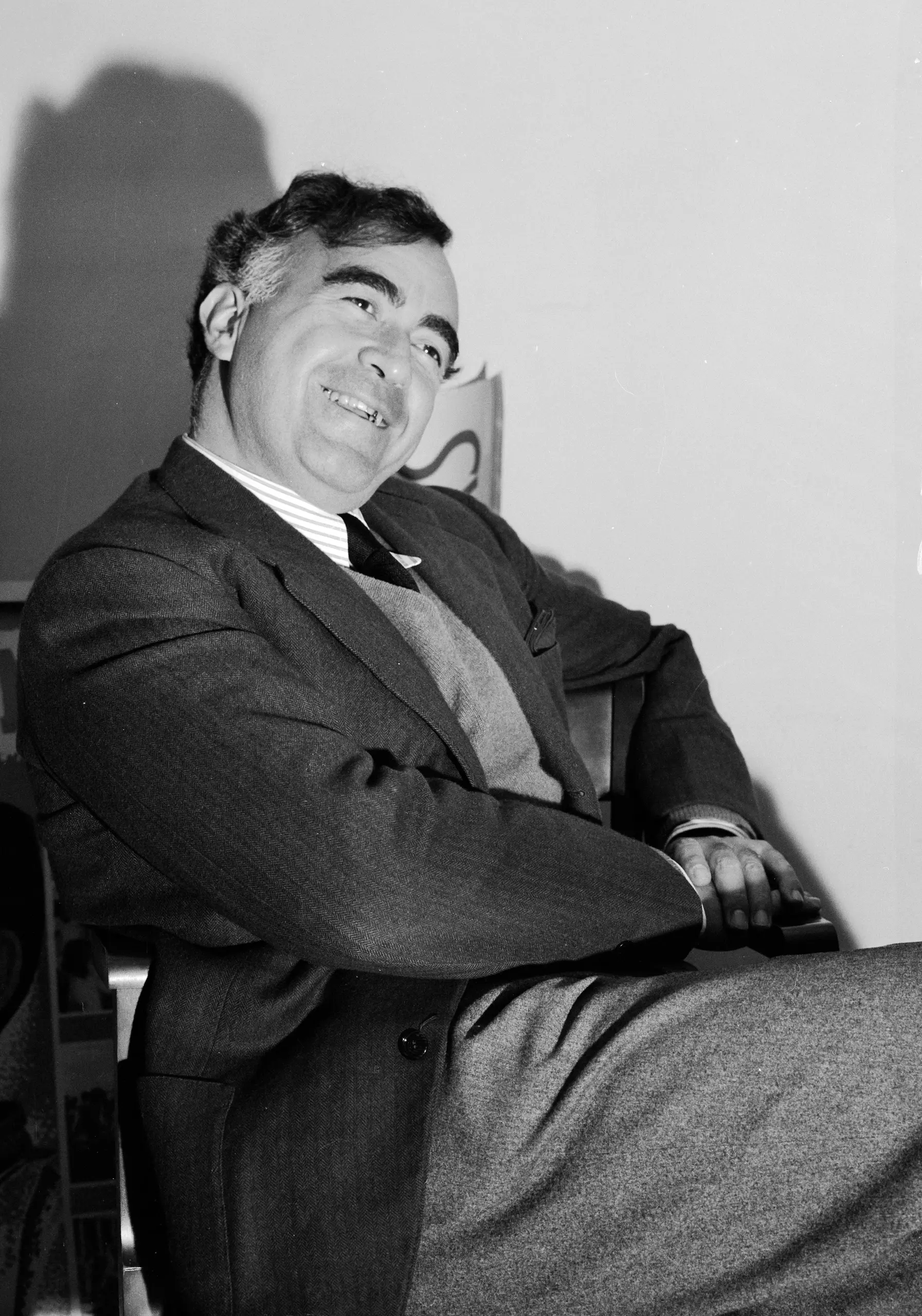
Carlos Chávez
 Mexico
composer•conductor•music theorist•educator•journalist
Birthday
June 13, 1899
Birth Sign
Gemini
Birthplace
Popotla, Mexico
Age
Died at 79
About
Carlos Antonio de Padua Chávez y Ramírez was a Mexican composer, conductor, music theorist, educator, and journalist. He was a central figure in 20th-century Mexican music, particularly recognized for his ability to weave elements of indigenous Mexican cultures, including native rhythms and melodies, into the framework of European classical traditions. Chávez founded and directed the Mexican Symphonic Orchestra, a role through which he significantly influenced the development of classical music in Mexico and fostered a distinct national musical identity. His compositions, such as the ballet El fuego nuevo and his Sinfonía india, remain important works that exemplify his unique artistic vision and his lasting impact on the global musical landscape, continuing to be performed and studied decades after his passing.
Early Life & Background
Carlos Antonio de Padua Chávez y Ramírez was born on June 13, 1899, in Popotla, a district now integrated into Mexico City. His early life unfolded in an environment rich with the cultural complexities of Mexico, which profoundly shaped his artistic sensibilities. This upbringing fostered in him a deep appreciation for his country's indigenous heritage, an element that would later become a hallmark of his compositional style. From a young age, Chávez embarked on a path of musical study, receiving formal training that provided the technical bedrock for his extensive career. This initial education was not limited to performance; it encompassed a broad understanding of music theory and composition, cultivating a disciplined approach to his craft. He further developed his expertise not only as a composer but also through his early dedication as a conductor and educator. These formative years were instrumental in shaping his vision for a distinct Mexican national musical identity, laying the groundwork for his later efforts to integrate native sounds and rhythms into classical forms. His early studies honed his skills across various musical disciplines, from piano performance to orchestration, preparing him for the wide-ranging influence he would eventually exert on Mexican and international music. He absorbed the vibrant folk traditions around him while simultaneously engaging with the established classical repertoire, an early demonstration of the synthesis that would define his mature work.
Career Growth
Chávez's breakthrough came with his founding and direction of the Mexican Symphonic Orchestra in 1928, a significant institution that profoundly influenced the development of classical music within Mexico. Through this role, he nurtured a new generation of musicians and introduced innovative programming that showcased both Mexican and international works. His compositional output during this period increasingly explored pre-Hispanic themes, a stylistic choice that became a hallmark of his unique sound. One notable example is his ballet El fuego nuevo, which drew inspiration from ancient indigenous rituals and mythologies. Another pivotal work was his second symphony, the Sinfonía india, which he completed in 1935. This symphony is particularly celebrated for its innovative incorporation of indigenous Yaqui percussion instruments, creating a distinctive sonic tapestry that resonated widely. Chávez also served as the director of the National Conservatory of Music from 1928 to 1934, further cementing his influence on music education in Mexico. Throughout his active career, which spanned several decades, Chávez remained dedicated to forging a unique Mexican musical identity, blending European classical traditions with the distinct sounds and spirit of his homeland. He continued composing and conducting internationally until his passing on August 2, 1978, in Mexico City, leaving behind a substantial body of work that continues to be performed and studied.
Career Timeline
Public Image & Style
Carlos Chávez cultivated a public image rooted in intellectual rigor and a deep reverence for Mexican culture. He was perceived as a serious, authoritative figure in the classical music world, known more for his measured artistic statements than for personal theatrics. His compositions, often characterized by their lean textures and percussive drive, projected a disciplined and modern aesthetic. Audiences and critics alike viewed him as a cultural ambassador, someone who successfully elevated indigenous Mexican musical elements to the international concert stage. He was not merely a composer but also a scholar, and this academic approach contributed to his reputation as a thoughtful and deliberate artist. His influence extended through his roles as a conductor and educator, where he fostered a sense of national pride in musical expression. This persona underscored his commitment to forging a distinct Mexican identity within the broader classical tradition.
Fame & Fandom (iFAMOUS Rankings)
Carlos Chávez's audience is not the kind that gathers under a single banner. There is no documented fandom name, no coordinated fan campaigns, no birthday billboards or streaming pushes. Instead, his following is diffuse and scholarly, spread across conservatories, orchestra halls, and the pages of music history. He is revered as a cultural hero in Mexico, a figure whose legacy is taught, performed, and studied rather than celebrated with fan rituals. This is a fandom of quiet devotion, built on the endurance of his scores and the weight of his influence.
In the global fame rankings, Chávez's position reflects that quieter kind of renown. As of August 2026, iFANN's Global Fame Engine has evaluated his legacy but he does not currently hold a placement in the published rankings, neither the Global Top 1,000 nor any Top-100 scope list. That absence is not a judgment on his importance; it simply measures a different kind of footprint. His fame is not the kind that spikes with viral moments or chart surges. It is the kind that accumulates over decades, in the programming of orchestras, the curricula of music schools, and the cultural memory of a nation.
His story is one of enduring influence rather than fleeting celebrity, a composer whose music still speaks, even if the applause is measured in decades, not decibels.
Interesting Facts and Legends
Carlos Chávez held a diverse range of professional titles throughout his life, including composer, conductor, music theorist, educator, and journalist. His full birth name was Carlos Antonio de Padua Chávez y Ramírez. He was highly influential not only within Mexico but also internationally, with his compositions performed by orchestras around the globe. Beyond his creative work, Chávez also held significant administrative positions, notably as director of the National Conservatory of Music and founder of the Mexican Symphonic Orchestra. He was also a prolific writer on music, contributing to various publications.
While no dramatic legends or viral moments are documented in the available research, Chávez's legacy is marked by quieter, yet profound, milestones. He was a pioneer in incorporating indigenous Mexican instruments and rhythms into symphonic works, a bold move that helped define a national musical identity. His ballet El fuego nuevo and his Sinfonía india remain cornerstones of the Mexican classical repertoire, pieces that continue to be performed and recorded, carrying his influence into the 21st century.
Family & Personal Life
Carlos Antonio de Padua Chávez y Ramírez was born on June 13, 1899, in Popotla, a district now part of Mexico City. His early family environment, while not extensively detailed in biographical accounts, undoubtedly contributed to his profound connection to Mexican culture. The cultural tapestry of his homeland, particularly its indigenous roots, became a central theme in his life and work, suggesting that his upbringing fostered a deep appreciation for this heritage. Specific information regarding his parents' names, occupations, or any siblings is not widely documented in available public records. However, it is clear that the cultural context of his childhood home was instrumental in shaping his artistic identity and his lifelong commitment to developing a distinct national musical voice for Mexico.
Notable Connections
Carlos Chávez's career was closely associated with the Mexican Symphonic Orchestra, which he founded and directed, using it as a primary vehicle for his artistic vision and for promoting Mexican music. He also drew significant inspiration from Mexico's indigenous cultures, particularly the Yaqui people, whose traditional instruments he incorporated into works like his Sinfonía india. His pedagogical work linked him to numerous students and institutions, shaping a generation of Mexican musicians.
Relationships & Dating History
Death & Aftermath
Died
August 2, 1978 (aged 79)
Death Place
Mexico City
Cause of Death
Unknown
Carlos Chávez, the renowned Mexican composer, conductor, music theorist, educator, and journalist, died on August 2, 1978, at the age of 79. He was born on June 13, 1899, in Mexico City. Furthermore, no official medical documents or family statements regarding the specific cause of death are available in the provided text. The circumstances surrounding his final days are not detailed in the search results. His passing appears to have been treated as a natural event without legal controversy or formal inquiry documented in these texts. Public reaction to his death included tributes from peers and institutions recognizing him as a cultural hero and one of the most influential figures in Mexican history.
However, the provided search results do not contain specific details regarding fan vigils, chart surges, moments of silence, memorial murals, or specific landmarks erected immediately following his death in 1978. The specific details of the funeral or memorial service, such as the exact date, location, whether it was public or private, notable attendees, performances, and the method of burial or cremation, are not contained within the provided search results. Consequently, it cannot be confirmed from this data if a public ceremony was held or who attended. Posthumously, Carlos Chávez was honored as a foundational figure in 20th-century Latin American music, with his works continuing to be performed and studied by institutions like the LA Phil and referenced in educational contexts.
Specific details regarding post-1978 releases, films, books, awards, hall-of-fame inductions, dedications, or foundations created specifically in his name are not listed in the provided snippets. Similarly, the handling of his estate, including family statements or legal administration of his assets after his death, is not addressed in the available information.
Awards & Accolades
Known For
Sinfonía india
1935 · Composer
El fuego nuevo
1940 · Composer
Mexican Symphonic Orchestra
1928 · Founder and Conductor
Keywords
Sources
Quick Facts
- Full Birth Name
- Carlos Antonio de Padua Chávez y Ramírez
- Born
- June 13, 1899
- Died
- August 2, 1978
- Birthplace
- Popotla, Mexico
- Profession
- Composer, Conductor, Music Theorist, Educator, Journalist
- Birth Sign
- Gemini
- Nationality
- Mexican
Personal Details
- Full Name
- Carlos Antonio de Padua Chávez y Ramírez
- Children
- Education
Frequently Asked Questions
Who was Carlos Chávez?
What is Carlos Chávez known for?
When did Carlos Chávez live?
What was Carlos Chávez's impact on Mexican music?
Where was Carlos Chávez born?
Join the community
fans discussing