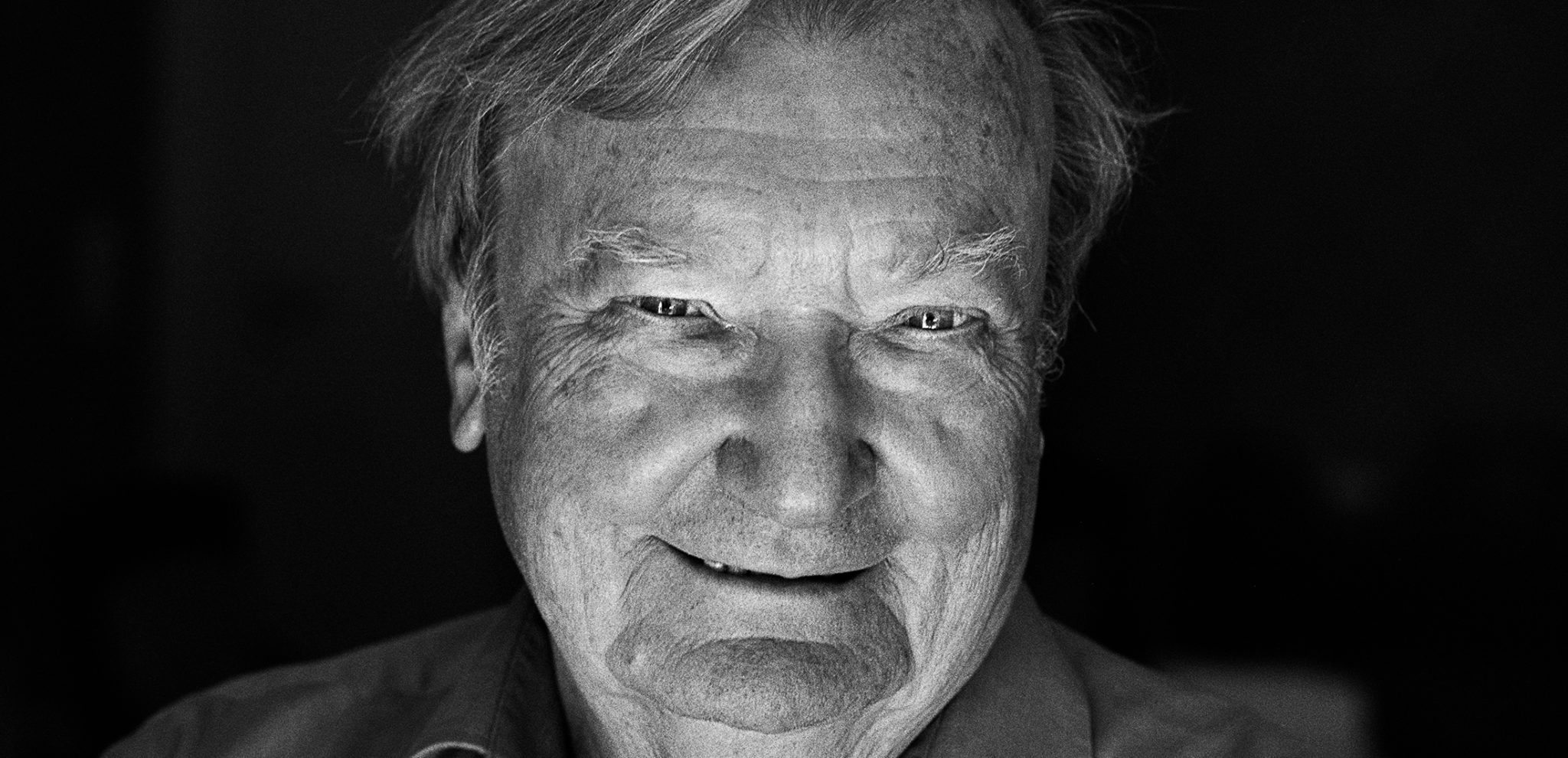
Carlo Rubbia
 Italy
ItalyAlso known as: Carlo Rubbia
Birthday
March 31, 1934
Birth Sign
Aries
Birthplace
Gorizia, Italy
Age
92 years old
About
Carlo Rubbia is an Italian particle physicist and inventor, best known for sharing the 1984 Nobel Prize in Physics with Simon van der Meer. Their work at CERN led to the discovery of the W and Z bosons, the particles that carry the weak force, a cornerstone of the Standard Model of particle physics.
Now in his nineties, Rubbia remains a vivid presence in the physics community, frequently speaking about the future of the field and championing bold new experiments like muon colliders. He served as CERN's director-general from 1989 to 1993 and has since turned his attention to energy innovation, particularly nuclear waste transmutation and natural gas pyrolysis.
Fans of physics admire Rubbia not just for the Nobel, but for his restless curiosity and willingness to challenge orthodoxy. He is a figure who has shaped modern particle physics and continues to push its boundaries.
Early Life & Background
Carlo Rubbia was born on March 31, 1934, in Gorizia, a town in northeastern Italy near the Slovenian border. His father was an electrical engineer and his mother a schoolteacher, so intellectual curiosity ran in the family. Growing up in the shadow of World War II, Rubbia developed an early fascination with science, tinkering with radios and building small devices.
He studied physics at the Scuola Normale Superiore in Pisa, earning his doctorate in 1958. His thesis work on cosmic rays caught the attention of the physics establishment, and he spent time at Columbia University in New York, where he worked under the legendary physicist T.D. Lee. These years sharpened his experimental instincts and gave him a taste for big, collaborative projects.
In 1961, Rubbia joined CERN, the European particle physics laboratory near Geneva, as a senior physicist. It was a time of rapid discovery, and he quickly made a name for himself with innovative experiments on weak interactions. His reputation as a brilliant, sometimes controversial, experimenter grew throughout the 1960s and 1970s, setting the stage for his later breakthrough.
Career Growth
The defining moment of Rubbia's career came in 1983, when he led the UA1 collaboration at CERN's Super Proton Synchrotron. The experiment confirmed the existence of the W and Z bosons, the carriers of the weak nuclear force. This discovery was a triumph of both theory and experimental ingenuity, and it earned Rubbia and his colleague Simon van der Meer the 1984 Nobel Prize in Physics.
After the Nobel, Rubbia's influence only grew. He served as CERN's director-general from 1989 to 1993, steering the laboratory through a period of ambitious projects, including the early planning for what would become the Large Hadron Collider. He was also a driving force behind the ICARUS experiment, a pioneering liquid-argon neutrino detector that later moved to Fermilab in the United States.
In recent years, Rubbia has turned his attention to energy. He has advocated for using particle accelerators to transmute nuclear waste and for converting natural gas into hydrogen and solid carbon. In 2020, he shared the Global Energy Prize for this work, a recognition of his efforts to apply physics to real-world problems.
Career Timeline
Public Image & Style
Carlo Rubbia is seen as a giant of experimental physics, a man who combined theoretical insight with hands-on engineering skill. He is known for his intense, sometimes impatient, style in meetings, but colleagues say his enthusiasm is infectious.
In the media, he is often portrayed as a maverick, someone who is not afraid to challenge established thinking. His advocacy for muon colliders and other futuristic projects has kept him in the headlines, even as he enters his tenth decade.
Fans of physics admire Rubbia for his willingness to speak his mind and his unwavering belief in the power of human curiosity. He has become a sort of elder statesman for the field, a living link to the heroic era of particle physics.
Fame & Fandom
Carlo Rubbia commands a sphere of influence defined by the rarest currency in science: the ability to reshape reality. His audience is not a mob of screaming teenagers, but a global assembly of physicists, energy policymakers, and students who gather at conferences like Lindau or CERN to hear his vision. There is no official fandom name for Rubbia because his legacy does not rely on chart-topping singles or viral dance challenges. Instead, his 'fans' are the intellectual heirs of the Standard Model, those who revere the moment he turned a proton beam into a window on the weak force. The mythology surrounding him is built on concrete triumphs rather than pop culture lore, the daring gamble of converting the Super Proton Synchrotron into a collider, the sketching of particle trajectories on napkins during lunch, and the infectious enthusiasm that pushes younger generations to think bigger. This is a following measured in citations, medals, and the quiet reverence of a community that knows how hard it is to change the universe's rules. He remains a vivid presence in his nineties, advocating for muon colliders and nuclear transmutation with a maverick spirit that keeps him in headlines long after his Nobel Prize was awarded. While some celebrities cultivate digital armies, Rubbia's impact ripples through the halls of academia and the corridors of international energy policy. Despite his towering status, iFANN's Global Fame Engine has evaluated this person, but they do not currently hold a placement in the published rankings (Global Top 1,000 or a Top-100 scope list).
Interesting Facts and Legends
Carlo Rubbia once joked that he chose physics because it was the only subject that combined his love of gadgets with his desire to understand the universe. He is known for his intense, sometimes impatient, style in meetings, but colleagues say his enthusiasm is infectious. Despite his age, he still attends conferences and workshops, often challenging younger physicists to think bigger. He has a habit of sketching ideas on napkins, a practice that has led to many a lively discussion over lunch. In 2024, on his 90th birthday, CERN hosted a celebration in his honor, where he was awarded the INFN medal. The event drew physicists from around the world, a reflection of the deep respect he commands. One legendary moment from his career is the 1983 announcement of the discovery of the W and Z bosons at CERN, a feat that required transforming the Super Proton Synchrotron into a proton-antiproton collider, a daring engineering gamble that paid off spectacularly. Another is his 2019 call for courage in the face of building a next-generation collider, when he urged the physics community to push forward with bold projects. And in 2020, he shared the Global Energy Prize, cementing his legacy beyond particle physics.
Notable Quotes
“The discovery of the W and Z bosons was a triumph of teamwork.”
“We must be bold and try new ideas, even if they seem impossible.”
“Physics is not about being right, it's about being curious.”
“The future of particle physics lies in the hands of the young.”
Family & Personal Life
Details about Carlo Rubbia's family are sparse, as he has kept his personal life largely private. He was born to an engineer father and a teacher mother, both of whom encouraged his early interest in science. He has a brother, Luigi, who also pursued a career in physics.
Rubbia is married, and his wife has often accompanied him to award ceremonies and public events, though her name is not widely publicized. The couple has children, but little is known about them, as Rubbia has always shielded his family from the spotlight.
He currently lives in Italy, splitting time between Rome and his hometown of Gorizia, where he maintains a modest house and enjoys spending time with extended family.
Notable Connections
Relationships & Dating History
Carlo Rubbia has been married for many years, though his wife's name is not widely publicized. The couple has children, but they have stayed out of the public eye. There are no known romantic relationships outside of his marriage, and he has kept his personal life very private.
As of 2026, Rubbia is still married, and he and his wife live in Italy. They have been together for over five decades, a quiet stability that contrasts with the high drama of his scientific career.
Salary, Net Worth In 2026
$10 Million
iFANN Editorial Team estimate
iFANN currently estimates Carlo Rubbia's net worth at $10 million. This wealth stems from his long career in physics, including his salary as a senior scientist and director-general at CERN, as well as prize money from the Nobel and other awards. He has also earned income from speaking engagements and consulting work. Rubbia has not been known for lavish spending, and his lifestyle is modest compared to many celebrities. He has invested in his research and in supporting young physicists, and he reportedly owns a small apartment in Rome and a house in Gorizia.
Awards Won (3)
Carlo Rubbia's most prestigious award is the Nobel Prize in Physics, which he won in 1984. He has also received the Global Energy Prize in 2020 and the INFN medal in 2024, among others.
1984 · Physics
Discovery of W and Z bosons
2020 · Energy
Sustainability of energy use
Known For
Discovery of W and Z bosons
1983 · Lead experimenter
Nobel Prize in Physics
1984 · Laureate
CERN Director-General
1989-1993 · Director-General
Keywords
Sources
Quick Facts
- Profession
- physicist
- Born
- March 31, 1934
- Birthplace
- Gorizia, Italy
- Gender
- Male
- Birth Sign
- Aries
Personal Details
- Full Name
- Carlo Rubbia
Frequently Asked Questions
How old is Carlo Rubbia?
What is Carlo Rubbia's net worth?
Is Carlo Rubbia still alive?
What is Carlo Rubbia best known for?
Where is Carlo Rubbia from?
Similar People
Join the community
fans discussing