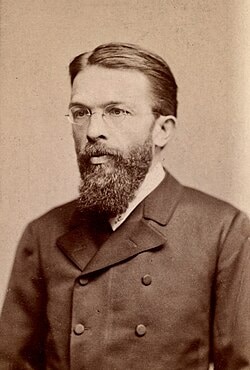
Carl Menger
 Austria
Also known as: Carl Menger Edler von Wolfensgrün
Birthday
February 28, 1840
Birth Sign
Pisces
Birthplace
Neu-Sandec, Kingdom of Galicia and Lodomeria, Austrian Empire (now Nowy Sącz, Poland)
Age
Died at 80
About
Carl Menger was an Austrian economist who founded the Austrian school of economics. His 1871 book Principles of Economics introduced the subjective theory of value and marginal utility, reshaping how economists understand value. Menger argued that value is determined by individuals' preferences, not by labor costs or inherent properties of goods. This directly challenged classical economists like Adam Smith, David Ricardo, and Karl Marx.
Today, Menger's ideas continue to influence economic thought, particularly in entrepreneurship and market process theory. His disciples Eugen von Böhm-Bawerk and Friedrich von Wieser expanded his work, and Friedrich Hayek later stated that the Austrian school's fundamental ideas belong fully to Menger. Though he published relatively few works, their impact has been profound.
Early Life & Background
Carl Menger was born into a wealthy family of minor nobility in Neu-Sandec, Galicia, part of the Austrian Empire. His father Anton was a lawyer, and his mother Caroline was the daughter of a wealthy Bohemian merchant. He had two brothers: Anton, who became a law professor and socialist author, and Max, a lawyer and Liberal deputy in the Austrian Parliament. The Menger family included craftsmen, musicians, civil servants, and army officers, all emigrated from Bohemia a generation before his birth.
Menger studied law and government science at the Universities of Prague and Vienna. One of his teachers at Vienna was Peter Mischler, a champion of marginal-value theory, though Menger was not then interested in economics or an academic career. He earned his doctorate in law from the Jagiellonian University in Kraków in 1867.
After his studies, Menger began working as a journalist in 1863 for the Lemberger Zeitung. He founded the journal Wiener Tagblatt, which first appeared on November 26, 1865. In an early issue, he published an anonymous novel with the scandalous title Der ewige Jude in Wien (The Eternal Jew in Vienna). In March 1866, he joined the economics staff of the Wiener Zeitung, a government-controlled paper, becoming a government employee in a fast-track position.
While working as a business journalist, Menger noticed inconsistencies between existing economic theory, particularly classical economics, and how buyers actually reasoned in real markets. This observation drove him to develop his own theoretical framework.
Career Growth
In 1871, Menger published his seminal work, Principles of Economics (Grundsätze der Volkswirtschaftslehre). The book introduced the concept of marginal utility and the subjective theory of value, arguing that the value of goods arises from their relation to human needs. This work founded the Austrian School of Economics and was one of three independent formulations of the marginal utility revolution, alongside William Jevons and Léon Walras.
One year after publishing, Menger qualified as a professor at the University of Vienna. He was appointed associate professor in 1873 and full professor in 1879, a position he held until his early retirement. He declined appointments at foreign universities.
From 1876 to 1878, Menger served as a private tutor and confidant to Crown Prince Rudolf of Austria, undertaking extensive study trips through Germany, France, Switzerland, and England. In 1883, he published Investigations into the Method of the Social Sciences, defending theoretical research against the German Historical School and sparking the Methodenstreit (methodological dispute).
In 1900, Menger was appointed a life member of the Austrian House of Lords. He retired from his professorship in 1903, devoting himself entirely to his studies until his death in 1921.
Career Timeline
Public Image & Style
Menger is consistently portrayed in academic circles as the founder of the Austrian School of Economics and a revolutionary thinker who challenged classical economics. He is depicted as a careful observer of real-world market behavior who built theory from empirical observation. Portraits show him as a serious, bearded 19th-century scholar in formal attire. His followers are primarily students of Austrian economics, libertarians, and free-market advocates. Organizations like the Mises Institute, the Cato Institute, and Students For Liberty actively promote his work.
Fame & Fandom (iFAMOUS Rankings)
Carl Menger, the founder of the Austrian School of Economics, is not currently ranked in iFANN's Global Fame Engine. Despite his monumental influence on economic thought, the engine has evaluated him as unranked, meaning he holds no placement in the published Global Top 1,000 or any Top-100 scope list. This absence reflects the quiet, academic nature of his legacy rather than any lack of significance.
His admirers form an intellectual community rather than a conventional fanbase, and no formal fandom name exists. The Austrian School tradition itself, with institutions like the Mises Institute and the Foundation for Economic Education, serves as the closest analogue, preserving and promoting his work with near-reverential dedication. Rituals such as the Carl Menger Essay Contest and scholarly conferences mark his legacy, but these are academic observances, not fan gatherings.
Menger's fame, then, is of a peculiar kind, profound within economics, yet largely invisible to the broader public. The legendary tales surrounding him are intellectual: the 1871 publication of Principles of Economics, the bitter Methodenstreit with the German Historical School, and his insights into spontaneous order. These stories are retold in classrooms and seminars, not in stadiums. His standing is that of a founding figure whose ideas continue to shape discourse, even as the global fame metrics pass him by.
Interesting Facts and Legends
Carl Menger Edler von Wolfesgrün, though he and his brothers never used their title of nobility, was a true polymath in his youth, intellectually vigorous into old age. He founded the journal Wiener Tagblatt and published an anonymous novel titled Der ewige Jude in Wien in its early issues. Initially uninterested in economics or an academic career, he preferred non-academic writing.
Menger's 1871 Principles of Economics is the foundational legend of the Austrian School, born from his observations of real market behavior that contradicted classical theory. The Methodenstreit, his bitter methodological dispute with Gustav von Schmoller, became a heroic tale of theory versus bureaucratic establishment, cementing the school's outsider identity. His 1883 Investigations into the Method of the Social Sciences introduced the concept of spontaneous order, explaining how institutions like money emerge without design. A peculiar legend involves obituaries for other men named Carl Menger, occasionally surfacing and causing confusion about the economist's 1921 death.
Notable Quotes
“The value of goods arises from their relation to our needs, and is not something inherent in the goods themselves.”
“In real life there are only concrete goods and concrete wants.”
“The degree of mankind's economic progress will be proportional to the advancement of human knowledge.”
Family & Personal Life
Carl Menger was married and had one son, Karl Menger (1902-1985), who became a prominent mathematician and taught for many years at the Illinois Institute of Technology. Details about Menger's wife are not widely recorded in standard biographical sources. Menger came from a family of minor nobility; his father Anton was a lawyer, and his mother Caroline was the daughter of a wealthy merchant. He had two brothers: Anton, a law professor and socialist author, and Max, a lawyer who served as a Liberal deputy in the Austrian Parliament.
Notable Connections
Menger's ideas were expanded by disciples Eugen von Böhm-Bawerk and Friedrich von Wieser. Later Austrian economists Friedrich Hayek and Ludwig von Mises carried his work forward. He tutored Crown Prince Rudolf of Austria. His son Karl Menger became a mathematician. His brothers Anton and Max were respectively a law professor and a Liberal deputy.
Relationships & Dating History
Carl Menger was married, though details about his wife are not widely recorded in standard biographical sources. The couple had one son, Karl Menger, born in 1902, who became a mathematician. Menger died on February 26, 1921, in Vienna. No other romantic relationships are documented in credible biographical sources.
- MarriedDetails about Menger's wife are not widely recorded in standard biographical sources.
Death & Aftermath
Died
February 26, 1921 (aged 80)
Death Place
Vienna, Austria
Cause of Death
Natural causes associated with advanced age
Carl Menger spent his final days in Vienna, continuing his academic work and writing until shortly before his passing. He died on February 26, 1921, at the age of eighty following a long illness that was consistent with natural causes associated with advanced age. The circumstances were treated as a peaceful departure by those who witnessed them. The economic community responded with profound respect, recognizing him immediately as the founder of the Austrian School and a principal architect of the Marginalist Revolution. Tributes focused on his theoretical contributions, particularly the subjective theory of value and marginal utility, which he co-discovered alongside William Stanley Jevons and Léon Walras. While specific details regarding the date and location of his funeral service remain unrecorded in standard biographical sources, it is historically established that he was buried in Vienna.
Notable figures within his intellectual circle, including Ludwig von Mises and Friedrich Hayek, mourned his loss as the end of an era for classical liberal economic thought. His posthumous influence has been immense, with institutions such as the Samford University Brock School of Business establishing the Carl Menger Essay Contest to honor his legacy. The Mises Institute continues to publish extensively on his life and works, solidifying his status as the sole founder of the Austrian School. Modern commentary frequently cites his theories in relation to libertarian movements.
Awards Won (1)
Menger was appointed a life member of the Austrian House of Lords in 1900, a significant honor placing him in the upper house of the Imperial Parliament for life. He also received many other honors and awards, though specific titles are not detailed in available sources.
1900 · Honorary Appointment
Known For
Principles of Economics
1871 · Author
Investigations into the Method of the Social Sciences
1883 · Author
Keywords
Sources
Quick Facts
- Profession
- economist, professor
- Born
- +1840-02-28
- Birthplace
- Neu-Sandec, Galicia, Austrian Empire
- Died
- +1921-02-26
- Death Place
- Vienna, Austria
- Gender
- Male
- Birth Sign
- Pisces
- Education
- Doctorate in law, Jagiellonian University (1867)
Personal Details
- Full Name
- Carl Menger Edler von Wolfensgrün
- Children
- Karl Menger
- Education
- Doctorate in law from Jagiellonian University in Kraków (1867)
Frequently Asked Questions
What is Carl Menger known for?
Was Carl Menger married? Did he have children?
How did Carl Menger die?
What is Carl Menger's most famous book?
How old was Carl Menger when he died?
Similar People
Join the community
fans discussing