
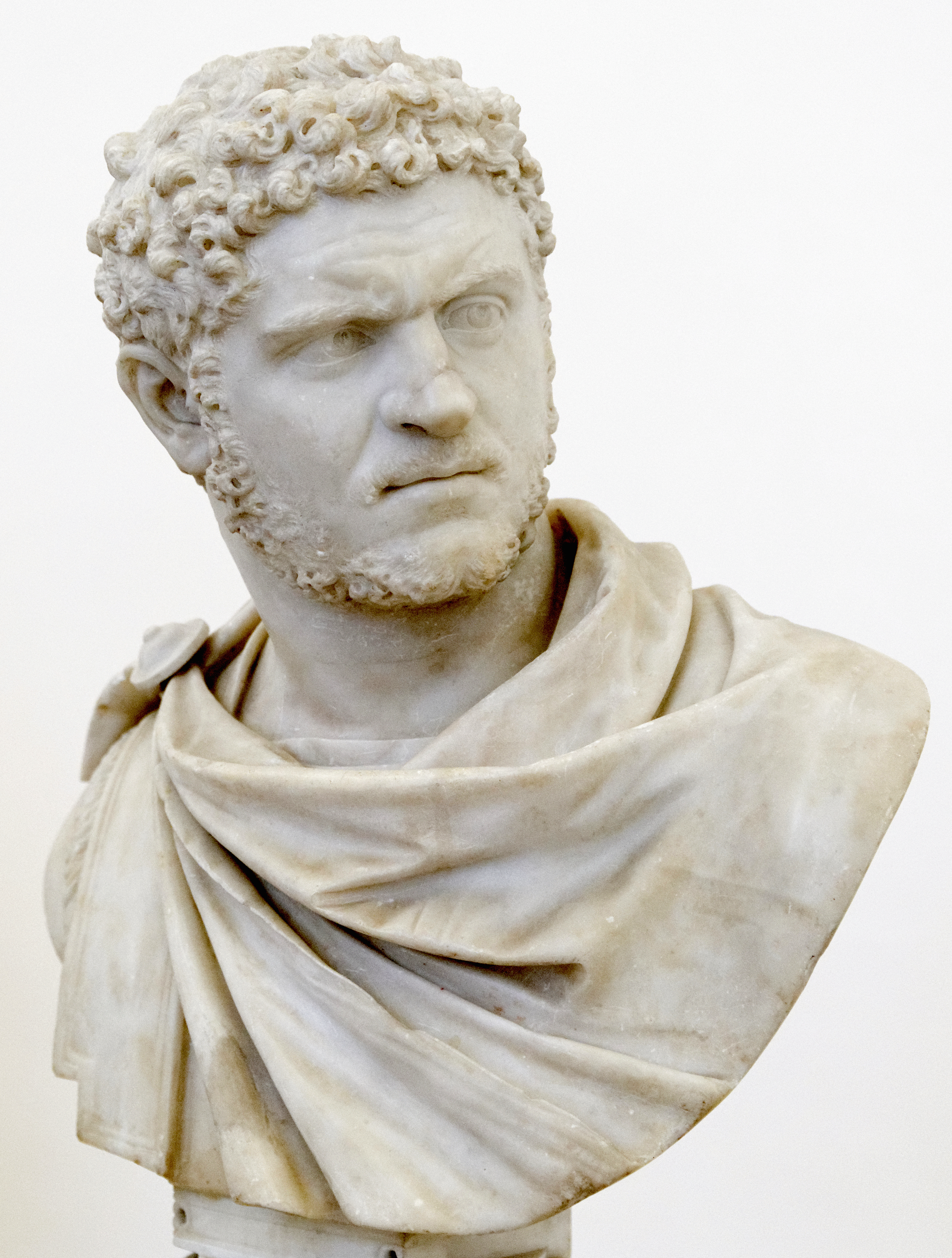
Caracalla
 Italy
ItalyAlso known as: Marcus Aurelius Antoninus, Lucius Septimius Bassianus
Birthday
April 4, 188
Birth Sign
Aries
Birthplace
Lugdunum (modern Lyon, France)
Age
Died at 29
About
Caracalla, born Lucius Septimius Bassianus on April 4, 188, in Lugdunum (modern Lyon, France), was a Roman emperor known for his brutal rule and sweeping reforms. He was the eldest son of Emperor Septimius Severus and Empress Julia Domna, part of the Severan dynasty. His nickname, Caracalla, came from the Gallic hooded tunic he often wore. Severus made him co-emperor in 198 AD, and after his father's death in 211, Caracalla ruled jointly with his younger brother Geta. That arrangement lasted less than a year: Caracalla had Geta murdered by the Praetorian Guard, securing sole power. His mother, Julia Domna, handled much of the administrative work, as Caracalla found governance tedious.
Caracalla's reign was marked by both monumental construction and ruthless violence. His most famous building project, the Baths of Caracalla, was the second-largest bathing complex in Rome, a sprawling public works that showcased imperial grandeur. In 212 AD, he issued the Antonine Constitution, granting Roman citizenship to all free men across the empire, except a small group called the dediticii. This edict expanded the tax base and unified the realm under a single legal status. Caracalla also introduced a new silver coin, the antoninianus, a double denarius that helped fund his military campaigns. But his cruelty was legendary: he ordered massacres in Rome and beyond, targeting perceived enemies and rivals.
Ancient historians like Cassius Dio and Herodian painted Caracalla as a soldier-emperor who preferred the camp to the court. His reign faced domestic instability and Germanic invasions. In 216, he launched a campaign against the Parthian Empire, but it was cut short when a disgruntled soldier assassinated him on April 8, 217, just days after his 29th birthday. Macrinus, his Praetorian prefect, took the throne three days later. For centuries, Caracalla has been remembered as a tyrant; 18th-century French artists drew parallels between his cruelty and that of King Louis XVI. Modern portrayals keep that dark legacy alive, casting him as one of Rome's most villainous emperors.
Early Life & Background
Caracalla spent much of his childhood in Lugdunum and later in Rome, where his father Septimius Severus rose to power after the civil wars of 193. From an early age, he was immersed in the rough world of imperial politics and military camps. Severus took his sons on campaign, instilling in Caracalla a soldier's identity rather than a scholar's. Ancient writers Cassius Dio and Herodian describe him as intensely martial, more at home with legionaries than senators. He reportedly disliked academic pursuits, preferring the clang of weapons and the camaraderie of troops.
In 198, at about age nine, Severus formally proclaimed Caracalla co-emperor (Augustus), an unprecedented elevation for such a young child. This public investiture marked his official entry into imperial rule, though real power remained with his father. By 209, Severus also elevated Caracalla's younger brother Geta to co-ruler, setting the stage for a fraught sibling rivalry. Caracalla's first steps toward independent authority came through these dynastic appointments, but his true breakthrough would wait until after Severus' death.
Career Growth
Caracalla's career as sole emperor began in blood. On December 26, 211, less than a year after their father's death, he had Geta murdered in their mother's arms. With Geta's memory officially condemned (damnatio memoriae), Caracalla stood alone at the top of the Roman world.
His most enduring act came on July 11, 212, when he issued the Constitutio Antoniniana, granting Roman citizenship to all free inhabitants of the empire. This edict expanded the tax base and legally unified the realm, though modern scholars debate whether it was motivated by fiscal need or genuine imperial vision. The reform remains a landmark in Roman legal history.
Caracalla also completed the Baths of Caracalla, a monumental complex begun by his father, which became one of Rome's largest public bathhouses. He introduced the antoninianus, a double-denarius coin, to fund his military spending. His reign saw campaigns on the German frontier and violent crackdowns in cities like Alexandria, where he ordered a massacre after a satirical performance mocked him. In 216, he launched an invasion of the Parthian Empire, but the campaign was cut short when a soldier assassinated him on April 8, 217, near Carrhae.
Career Timeline
Public Image & Style
Ancient historians Cassius Dio and Herodian portray Caracalla as a cruel, violent soldier-emperor who preferred camp life to governance. Modern accounts often frame him as a bloodthirsty tyrant, but some highlight his transformative citizenship edict and architectural legacy. His iconic short beard, intense expression, and military attire in statues and coins project a stern, martial image. The nickname cloak (caracalla) adds a distinctive Gallic touch. Among Roman history enthusiasts, he sparks debate: some admire his bold reforms, while others revile his brutality. He frequently appears in discussions of Rome's worst emperors, though his legal impact earns grudging respect.
Fame & Fandom (iFAMOUS Rankings)
Caracalla's global fame rests on a paradox: his historical infamy is vast, yet his standing in contemporary fame indexes is conspicuously absent. The Global Fame Engine, which evaluates public figures across media coverage, search behavior, and cultural consumption signals worldwide, has assessed Caracalla but assigned him no placement in its published rankings. He does not appear among the Global Top 1,000, nor does he hold a position on any of the Top-100 scope lists. This absence is notable for a Roman emperor whose name remains attached to one of antiquity's grandest architectural achievements, the Baths of Caracalla, and whose edict of 212 extended Roman citizenship to millions. In the modern imagination, he is a figure of historical study rather than a subject of widespread, ongoing fame. The fanbase for Caracalla is equally undefined; no formal fandom name exists, and the communities that engage with him are primarily academic, historical reenactment groups, or enthusiasts of Roman history who gather on forums and in museum contexts. Any fan engagement with 'Caracalla' today is largely channeled through his dramatized portrayal in the film Gladiator II, where he appears as a character, but this does not constitute a dedicated fandom for the historical person. In essence, Caracalla's fame is historical and cultural, not contemporary and measurable, and his legacy persists through scholarship and monuments rather than through a vibrant fan culture.
Interesting Facts and Legends
Caracalla's nickname comes from the caracalla, a Gallic hooded cloak he wore so often that it became his moniker. He was proclaimed emperor at age nine, unusually young even by Roman standards. After ordering Geta's murder, he erased his brother's name from inscriptions and monuments, a practice known as damnatio memoriae. One ancient source claims he was assassinated while urinating by the roadside, an ignominious end for a tyrant. His mother Julia Domna effectively ran the empire's administration while he focused on military affairs. The antoninianus coin he introduced became a key currency of the 3rd century, associated with inflation and economic strain.
The foundational legend of his reign is the murder of his brother Geta in 211 CE, a story retold by ancient historians and modern commentators alike as the defining act of his rule. His reputation for cruelty is balanced by accounts of his piety; he traveled from sanctuary to sanctuary, seeking divine favor. A new chapter in his legend emerged when a lost letter from Caracalla, etched on 1,800-year-old stones in Turkey, was discovered, adding a verifiable artifact to his historical record. The Baths of Caracalla, completed around 216, remain his most enduring legacy, serving as a venue for cultural events and a site of modern pilgrimage for history enthusiasts.
Notable Quotes
“I have all the power, and I can do whatever I want.”
“Let no one be a Roman citizen unless they are worthy of it.”
“The army is my only family.”
Family & Personal Life
Caracalla was the eldest son of Septimius Severus, a North African Roman emperor, and Julia Domna, a Syrian priestess from Emesa. His younger brother Geta was born in 189. The family was deeply enmeshed in imperial politics; Severus emphasized dynastic continuity, taking both sons on campaigns and into public ceremonies. Julia Domna played a major administrative role during Caracalla's reign, managing state affairs while he pursued military interests. After Caracalla's assassination, she committed suicide. Caracalla had one daughter with Fulvia Plautilla, whose name is not recorded; both mother and daughter were exiled and later executed on Caracalla's orders.
Notable Connections
Caracalla is closely associated with his father Septimius Severus, who groomed him as heir, and his brother Geta, whom he murdered. His mother Julia Domna was a key advisor. The Praetorian prefect Macrinus, who orchestrated his assassination, succeeded him. The Baths of Caracalla and the Antonine Constitution are his enduring legacies.
Relationships & Dating History
Caracalla's only documented marriage was to Fulvia Plautilla, daughter of the powerful praetorian prefect Gaius Fulvius Plautianus. The marriage was arranged by Septimius Severus in 202 to solidify political ties. It was reportedly unhappy; Caracalla despised his wife and threatened her. After Plautianus fell from power and was executed in 205, Caracalla exiled Plautilla and their daughter to Sicily, later ordering their deaths. No other formal relationships are recorded in credible ancient sources. At his death in 217, Caracalla was not married.
- MarriedFulvia Plautilla202 - 205Political marriage arranged by Severus; ended with Plautianus' fall and Plautilla's exile and execution.
Death & Aftermath
Died
April 8, 217 (aged 29)
Death Place
Harran
Cause of Death
Reported assassination by stabbing
Marcus Aurelius Antoninus, known as Caracalla, died on April 8, 217 near Harran during a military campaign in Mesopotamia. The emperor was killed by Marcus Opellius Macrinus, a member of his own bodyguard who stabbed him while he was relieving himself outside his tent. Ancient historians Cassius Dio and Herodian recorded this event. Macrinus immediately declared himself emperor with Praetorian Guard support, bypassing any formal trial for the murder. Public reaction to the death was polarized within the Roman military and administration, where relief at removing a tyrant mixed with fear of his erratic behavior.
The funeral served as a state affair attended by high-ranking officials and the Praetorian Guard before his burial in the Mausoleum of Hadrian in Rome. Posthumous history saw the collapse of the Severan dynasty shortly after his death, with control passing to Macrinus before shifting to Elagabalus. Modern cultural references include academic studies on Roman tyranny and appearances in films such as Gladiator II, alongside commercial commemorations like the Bulgari Monete Maglia Milanese watch released in 2026 featuring his coin design.
Awards & Accolades
View 2 records, honours and achievementsKnown For
Constitutio Antoniniana
212 · Emperor
Baths of Caracalla
216 · Patron
Antoninianus coin
215 · Reformer
Keywords
Sources
Quick Facts
- Profession
- politician, monarch
- Born
- +0188-04-04
- Birthplace
- Lugdunum
- Died
- +0217-04-08
- Death Place
- Haran
- Gender
- Male
- Spouse
- Fulvia Plautilla
- Birth Sign
- Aries
- Profession
- Roman emperor
- Born
- April 4, 188
- Birthplace
- Lugdunum (modern Lyon, France)
- Died
- April 8, 217
- Death Place
- Near Carrhae (modern Harran, Turkey)
Personal Details
- Full Name
- Lucius Septimius Bassianus
- Spouse
- Fulvia Plautilla
- Children
- One daughter (name unknown)
Frequently Asked Questions
Who was Caracalla?
What is Caracalla best known for?
How did Caracalla die?
Why is Caracalla considered a tyrant?
What was the Antonine Constitution?
Similar People
Join the community
fans discussing