Cannes Film Festival
"The world's most prestigious film festival"
8+
Editions
30000
Peak Attendance
About
The Cannes Film Festival is the most prestigious and widely publicized film festival in the world, held annually in Cannes, France. Established in 1946, the festival takes place each May at the Palais des Festivals et des Congrès on the Mediterranean coast. It is one of the 'Big Three' European film festivals alongside Venice and Berlin, and is accredited by the FIAPF. The festival's main competition awards the Palme d'Or (Golden Palm) to the best film, along with other major prizes including the Grand Prix, Jury Prize, and awards for Best Director, Best Actor, and Best Actress.
The festival is invitation-only and features several official sections: the Official Selection (competing for the Palme d'Or), Un Certain Regard (focusing on original works and new talent), Out of Competition (high-profile non-competing films), Cannes Classics (restored films), and the Short Film Competition. The Marché du Film, the world's largest film market, runs concurrently, drawing thousands of industry professionals for networking, sales, and co-production deals. The festival also hosts masterclasses, panels, and special screenings at venues throughout Cannes, including beachfront locations along the Croisette.
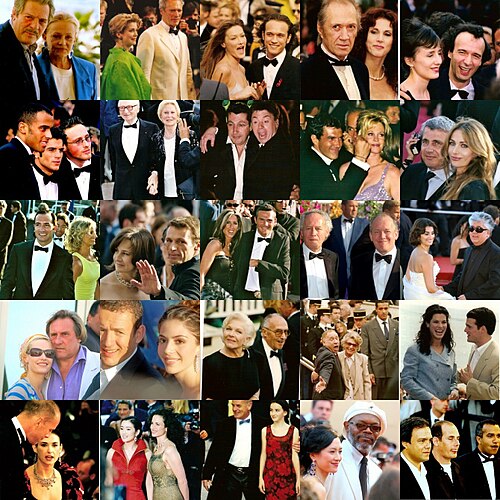
With an attendance of over 30,000 accredited professionals and journalists, Cannes serves as a global launchpad for major cinematic works. Its red-carpet premieres and glamorous galas attract worldwide media attention, making it a key event in the film industry calendar. The festival has championed artistic freedom and international cinema since its founding, maintaining a reputation for both artistic rigor and commercial influence.
History
The Cannes Film Festival was born out of outrage. In 1938, the Venice Film Festival was manipulated by Mussolini's fascist government to award propaganda films, including Leni Riefenstahl's 'Olympiad' and Goffredo Alessandrini's 'Luciano Serra, Pilot'. French Minister of National Education Jean Zay, along with Philippe Erlanger and Robert Favre Le Bret, proposed creating an independent, non-political international film festival. The city of Cannes was chosen over Biarritz, and the official birth certificate was signed on May 31, 1939. The first festival was scheduled for September 1-20, 1939, but was cancelled after Germany invaded Poland on September 1, triggering World War II. Only a single private screening of William Dieterle's 'The Hunchback of Notre Dame' took place, for which a cardboard replica of Notre Dame was built on the beach.
The first actual festival ran from September 20 to October 5, 1946, at the former Cannes casino, with 21 nations participating. The 1948 and 1950 editions were cancelled due to economic difficulties. In 1951, the festival moved to spring to avoid clashing with Venice, and has been held in May ever since. The Palme d'Or was introduced in 1955, replacing the Grand Prix du Festival. By the late 1970s, the festival had outgrown its original venue, and a new Palais des Festivals opened in 1983. The last screening at the old Palais was Steven Spielberg's 'E.T. the Extra-Terrestrial' in 1982, and the building was demolished in 1988. Over the decades, Cannes has evolved from a small gathering of film enthusiasts into a global media spectacle, with attendance soaring from 300 in 1946 to over 30,000 today.
Notable Editions
1946: Inaugural edition
300 attendeesFirst official festival held at the Cannes casino with 21 nations participating.
1955: First Palme d'Or awarded
Introduction of the Palme d'Or award.
1960: La Dolce Vita scandal
Screening of Federico Fellini's La Dolce Vita caused Vatican condemnation.
1961: Buñuel's banned film wins
Luis Buñuel's Viridiana won the Palme d'Or despite censorship from Franco's Spain.
1968: Cancelled by protests
Festival cancelled due to the May 1968 protests in France.
Past Winners / Headliners
| Year | Name |
|---|---|
| 1946 | The Lost Weekend |
| 1955 | Marty |
| 1976 | Taxi Driver |
| 1979 | Apocalypse Now |
| 1994 | Pulp Fiction |
| 2003 | Elephant |
| 2011 | The Tree of Life |
| 2019 | Parasite |
| 2021 | Titane |
| 2022 | Triangle of Sadness |
Notable Moments
1946
First festival
The first Cannes Film Festival opens at the Cannes casino, featuring films from 21 nations.
1955
Palme d'Or introduced
The Palme d'Or trophy, designed by jeweler Lucienne Lazon, replaces the Grand Prix as the top award.
1960
La Dolce Vita controversy
Federico Fellini's film sparks outrage from the Vatican, which threatens excommunication for viewers.
1961
Viridiana banned in Spain
Luis Buñuel's Palme d'Or winner is condemned by Franco's regime, leading to Buñuel's exile from Spain.
1968
Festival cancelled by protests
The May 1968 student and worker protests in France force the cancellation of the festival after it had already begun.
1982
E.T. closes old Palais
Steven Spielberg's E.T. the Extra-Terrestrial is the final film screened at the old Palais Croisette.
1993
Jurassic Park premiere
Spielberg's Jurassic Park has its world premiere out of competition, drawing massive crowds.
2007
60th anniversary tribute
33 renowned directors gather on stage after contributing to the anthology film Chacun son cinéma.
2018
Women's protest on red carpet
Cate Blanchett and 82 other women stage a protest on the red carpet demanding gender equality in the film industry.
2021
Palme d'Or for Julia Ducournau
Julia Ducournau becomes the second female director to win the Palme d'Or for Titane.
Cultural Impact
The Cannes Film Festival is widely regarded as the world's most influential film festival, setting trends in cinema and launching careers. Winning the Palme d'Or can transform a film's commercial and critical fortunes, as seen with Pulp Fiction (1994), Parasite (2019), and Anatomy of a Fall (2023). The festival's red carpet has become a global symbol of glamour, with celebrities, fashion, and paparazzi converging each May. Cannes has also championed auteur cinema and freedom of expression, often selecting politically charged or controversial works. The Marché du Film drives global film financing and distribution, making Cannes a key economic hub for the industry. Beyond film, the festival influences fashion, tourism, and media coverage, reinforcing the French Riviera as a cultural destination.
Controversies
The Cannes Film Festival has weathered numerous controversies. In 1960, the Vatican condemned Federico Fellini's La Dolce Vita as pornographic, threatening excommunication for viewers. The 1961 Palme d'Or winner Viridiana by Luis Buñuel was banned in Franco's Spain, and the director was barred from returning. The festival was cancelled in 1968 after the May protests disrupted proceedings. More recently, the festival has faced criticism for its lack of gender parity in competition lineups and for prioritizing celebrity glamour over artistic merit. In 2018, Cate Blanchett led a protest on the red carpet demanding gender equality. The festival's strict dress code and red carpet rules have also sparked debate, and the heavy presence of commercial brands has led some to accuse Cannes of selling out.
Related Events
Keywords
Sources
Event Info
- Founded
- 1946
- Frequency
- Annual
- Location
- Cannes, France
- Primary Venue
- Palais des Festivals et des Congrès
- Attendance
- 30,000+
- Top Award
- Palme d'Or
Join the community
fans discussing