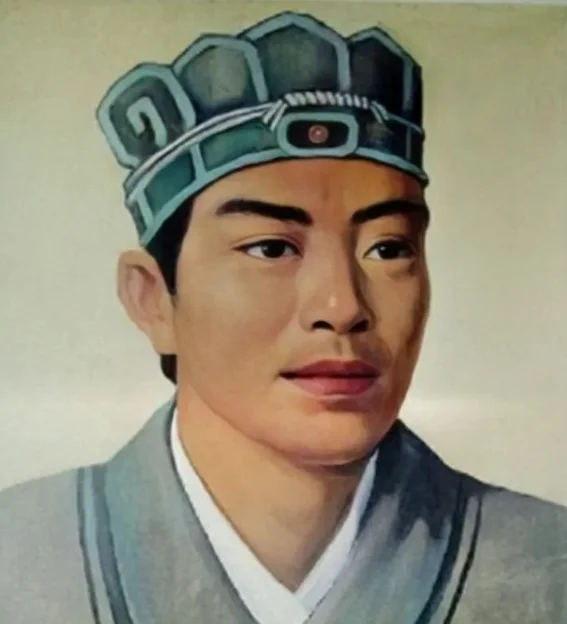
Cai Lun
 China
ChinaAlso known as: Ts'ai Lun
Birthday
Birth Sign
Birthplace
Leiyang, Hunan, China
Age
Died at 121
About
Cai Lun, known in the West as Ts'ai Lun, was a Chinese eunuch and court official of the Eastern Han dynasty whose innovations in papermaking changed the world. Born around 50-62 CE in what is now Leiyang, Hunan, he entered the imperial court in Luoyang by 75 CE. Serving under Emperors Ming, Zhang, and He, Cai climbed the ranks from chamberlain to imperial messenger (Xiao Huangmen). His political savvy helped Lady Dou secure her adopted son as heir, leading to his appointment as Zhongchang shi, the highest eunuch post, and Shangfang Ling, overseer of the Palace Workshop. There, he improved the production of instruments and weapons, earning a reputation for craftsmanship. But his most significant contribution came in 105 CE: a new papermaking process using tree bark, hemp waste, old rags, and fishnets. This innovation made paper cheaper and more abundant, replacing bamboo and silk strips and spreading across the empire. Cai was rewarded with wealth, a marquis title, and the fiefdom of Longting. In 110 CE, Empress Dowager Deng appointed him to oversee scholars revising the Five Classics. However, after Deng's death in 121 CE, Cai was implicated in the earlier death of Consort Song, the emperor's grandmother. Facing disgrace and likely execution, he committed suicide that year in Luoyang. Cai's innovations are considered one of China's Four Great Inventions, alongside the compass, gunpowder, and printing. Though little known outside East Asia, he is worshipped in China as the god of papermaking, and his hometown remains a paper production hub.
Early Life & Background
Born into a modest family in Guiyang Commandery (present-day Leiyang, Hunan), Cai Lun entered the imperial palace as a young boy, undergoing castration to become a eunuch. This was a common path for lower-status families seeking advancement in Han dynasty China. He began his court service in Luoyang around 75 CE during the reign of Emperor Ming. His early education included training in court protocol, literacy, and administrative duties. His first steps toward prominence came through serving as a chamberlain (Xiao Huangmen), a junior eunuch position that involved managing palace communications. A pivotal moment came when he allied himself with Empress Dou, helping her secure her adopted son Liu Zhao (later Emperor He) as heir apparent. This political maneuver elevated Cai Lun's standing considerably.
Career Growth
In 88 CE, Cai Lun was appointed Xiao Huangmen (Junior Attendant), a mid-ranking eunuch position handling imperial communications. By 92 CE, he was promoted to Zhongchang shi (Regular Palace Attendant), the highest-ranking eunuch post, due to his role in Empress Dou's political maneuvers. In 97 CE, he became Shangfang Ling (Master of the Imperial Workshops), overseeing production of weapons, instruments, and luxury goods. In 105 CE, he presented his improved papermaking process to Emperor He, using tree bark, hemp waste, old rags, and fishnets to create durable, affordable paper. In 110 CE, Empress Dowager Deng Sui appointed him to oversee scholarly revisions of the Five Classics, a major imperial project. In 114 CE, he was awarded the title of Marquis of Longting with a fiefdom of 300 households. Following Empress Dowager Deng's death in 121 CE, Cai was implicated in the 97 CE death of Consort Song, grandmother of Emperor An. Ordered to report to prison authorities, he bathed, dressed in formal robes, and committed suicide by drinking poison.
Career Timeline
Public Image & Style
In China, Cai Lun is celebrated as a national hero of technology. Chinese popular culture depicts him as a wise, bearded scholar-artisan, an anachronistic portrayal since eunuchs lacked facial hair. His aesthetic is associated with traditional Chinese papermaking: bamboo screens, mulberry bark, and vats of pulp. Papermaking enthusiasts, Chinese history buffs, and technology historians form a loose community of interest. The Cai Lun Paper Culture Festival in Leiyang draws thousands annually, featuring papermaking competitions and historical reenactments. Chinese television dramas portray him as a tragic genius undone by palace politics, while Western documentaries focus on his technological contribution.
Fame & Fandom (iFAMOUS Rankings)
The legacy of Cai Lun is a quiet monument rather than a roaring crowd, defined by the sheer endurance of his invention rather than the fleeting heat of celebrity. For nearly two millennia, he has stood as a singular figure in Chinese history, revered not for performance or persona but for the fundamental shift he brought to human communication. While modern fans might rally behind living idols with organized campaigns and social media hashtags, Cai Lun's admirers are a diffuse collection of historians, papermaking enthusiasts, and cultural pilgrims who visit sites like the Cai Lun Paper Culture Museum in Weifang. There is no formal fandom name attached to his memory, nor are there rituals of fainting crowds or fan-funded billboards; his 'fanbase' is simply anyone who has ever held a sheet of paper.
Despite this lack of modern celebrity machinery, his global standing remains remarkably robust within the canon of historical figures. The iFANN Global Fame Rankings place him as the 66th most famous person from China, a position he has held steady across recent cycles. This ranking reflects a sustained, deep-rooted recognition that transcends regional borders, anchoring him firmly among the titans of Eastern innovation. His status is not built on viral moments or trending topics, but on the silent, ubiquitous presence of his work in every corner of the world.
Interesting Facts and Legends
Archaeological evidence confirms that paper-like materials existed in China as early as the 2nd century BCE, yet Cai Lun's contribution was standardizing and refining the manufacturing process to make paper affordable for widespread use. He bathed, donned his finest formal robes, and drank poison rather than face public execution, a common dignified suicide practice for disgraced Han officials. Recent scholarship suggests Cai Lun oversaw a team of craftsmen at the Imperial Workshops, meaning his role was more administrative than hands-on.
The story of his invention remains the central legend of his life. Around 105 CE, he is credited with innovating the method by using tree bark, hemp ends, old rags, and fishnets to create a pulp suitable for writing. While some scholars view this as a consolidation of gradual technological evolution, the narrative of the imperial acceptance of his invention stands as his defining moment. Emperor Hedi recognized the utility of the new material, leading to its adoption across China and eventually the world. Papermaking spread from China to Korea and Japan by the 7th century, reached the Islamic world by the 8th century, and arrived in Europe by the 12th century. Despite his enormous impact, Cai Lun was virtually unknown in Europe until the 19th century when Jesuit missionaries translated Chinese historical texts.
Notable Quotes
“In ancient times, writings and records were inscribed on bamboo tablets or on silk cloth. But silk being expensive and bamboo heavy, they were not convenient for use.”
“Cai Lun was ashamed and bathed himself, put on his formal robes and cap, and drank poison to end his life.”
“His paper has carried the wisdom of humanity for two thousand years.”
Family & Personal Life
Cai Lun's family of origin is unknown beyond his birthplace in Leiyang. As a eunuch who entered the palace as a child, he had no spouse, children, or romantic relationships. No historical records mention parents, siblings, or any family members. His education was limited to court training rather than formal scholarly study.
Notable Connections
Cai Lun's political patron was Empress Dou, whom he helped secure the succession of Emperor He. Emperor He received the papermaking innovation in 105 CE. Empress Dowager Deng Sui appointed him to oversee the Five Classics revision project; her death left him vulnerable. Consort Song, whose death in 97 CE was orchestrated with Cai's involvement, became the crime for which he was prosecuted. Emperor An, Consort Song's grandson, ordered Cai's prosecution.
Relationships & Dating History
Cai Lun had no documented romantic relationships, marriages, or partnerships. As a eunuch serving in the imperial palace from childhood, he was physically incapable of marriage or fathering children. No historical sources mention any romantic or sexual relationships.
Death & Aftermath
Died
121 (aged 121)
Death Place
Luoyang
Cause of Death
Reported suicide
Cai Lun died in 121 CE within the capital of the Eastern Han Dynasty, likely Luoyang. Historical accounts describe a period of disgrace when he was implicated in misconduct and summoned to answer charges regarding his conduct as a high-ranking official. This is described as a reported or traditional account found in historical records rather than a medically verified ruling. He chose to end his life rather than face imprisonment or execution. He was approximately fifty-eight to sixty years old at the time of his passing. The immediate political reaction involved an initial view of him negatively due to the scandal, yet the value of the papermaking process he perfected proved undeniable shortly after his death.
By the Wei and Jin dynasties, his reputation had been fully rehabilitated, leading to enduring veneration across China and globally as the father of paper. Modern commemorations include cultural performances and museum exhibits dedicated to his legacy. Cai Lun was buried in Hanzhong, where a grassy hill now marks the site that houses the Cai Lun Paper Culture Museum. His estate was handled by the imperial court, and he was posthumously titled Marquis Tshai by Emperor An, restoring his honor after the initial disgrace.
Net Worth (Estate Value)
Cai Lun died in 121 CE, nearly 1,900 years before modern currency systems. He has no current net worth. During his lifetime, his wealth derived from an imperial salary as Zhongchang shi and Shangfang Ling, measured in grain and silk; the fiefdom of 300 households that paid taxes in grain and local products; and imperial gifts of gold, silk, and valuables for his papermaking innovation. No estate exists today. His innovations are in the public domain, and no descendants or estate managers collect royalties. His hometown of Leiyang has a memorial temple and museum, but these are state-run institutions.
Awards & Accolades
View 6 records, honours and achievementsKnown For
Improved papermaking process
105 CE · Inventor
Keywords
Quick Facts
- Profession
- inventor, politician, eunuch
- Born
- c. 48-62 CE
- Birthplace
- Leiyang, Hunan, China
- Died
- 121 CE
- Death Place
- Luoyang, China
- Gender
- Male
Personal Details
- Full Name
- Cai Lun
Frequently Asked Questions
How did Cai Lun die?
What did Cai Lun invent?
When was Cai Lun born?
Was Cai Lun a eunuch?
Why is Cai Lun important?
Join the community
fans discussing