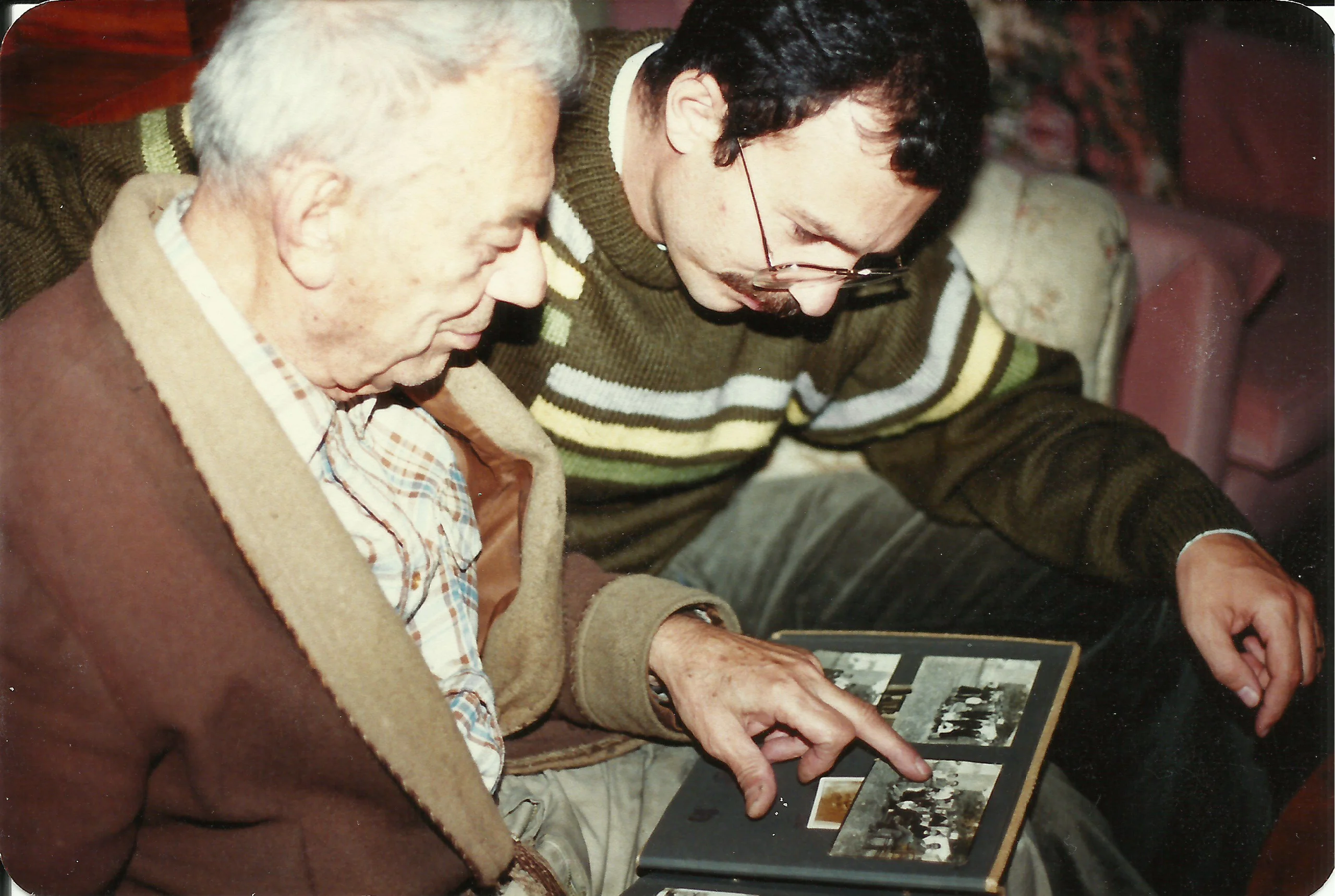
Cahit Arf
 Turkey
Birthday
October 24, 1910
Birth Sign
Libra
Birthplace
Thessaloniki, Ottoman Empire (now Greece)
Age
Died at 87
About
Cahit Arf stands as a preeminent Turkish mathematician and topologist whose foundational work in algebra, number theory, and topology secured his place as one of the most influential scientists of the 20th century. Born in Thessaloniki in 1910, he spent his life bridging European mathematical traditions with the development of modern science in Turkey. He is best known for the "Arf invariant," a concept crucial to quadratic forms in characteristic 2, which has found significant applications in knot theory and surgery theory. His legacy extends beyond pure mathematics into the institutional architecture of Turkish science, where he played a pivotal role in establishing TÜBİTAK (The Scientific and Technological Research Council of Turkey). As a national icon, his portrait appeared on the Turkish 10 Lira banknote, a rare distinction that cemented his status among the country's greatest figures. Today, his theorems remain essential reading for graduate students worldwide, and his influence persists through the thousands of students he mentored and the mathematical structures named after him.
Early Life & Background
Cahit Arf entered the world on October 24, 1910, in Thessaloniki, then part of the Ottoman Empire and now a major city in Greece. He came from a family of Ottoman officials, a background that likely provided him with early access to education and cultural resources. His childhood coincided with a period of immense geopolitical upheaval. Following the collapse of the Ottoman Empire and the subsequent population exchanges between Greece and Turkey, Arf's family relocated to Istanbul in 1923. This move marked the beginning of his formal education within the newly established Turkish Republic.
Arf displayed an early and intense aptitude for mathematics during his schooling. He attended Robert College in Istanbul, where he excelled academically and distinguished himself among his peers. His outstanding performance earned him a prestigious scholarship to study at the University of Berlin in Germany. There, he immersed himself in the rigorous European mathematical tradition, studying under prominent figures like Erich Hecke. He completed his doctorate in 1935 with a dissertation on quadratic forms in fields of characteristic 2, supervised by Hecke and influenced by the renowned Emil Artin. This training laid the groundwork for his future breakthroughs.
Upon returning to Turkey in 1935, Arf immediately began shaping the country's academic landscape. He joined Ankara University as a lecturer and associate professor, quickly rising through the ranks. During these formative years before his global recognition, he was already developing the concepts that would define his career. The 1940s saw him discover the Arf invariant, resolving long-standing problems in the classification of quadratic forms. These years were defined by his dedication to building a strong mathematical foundation in Turkey while simultaneously producing world-class research. He treated math not just as a profession but as a philosophical approach to existence, a sentiment captured in later educational accounts describing him as someone who adopted mathematics as a way of life.
Career Growth
Arf's career was defined by his tenure at Ankara University and his leadership in national scientific policy. After earning his Ph.D. from the University of Berlin in 1935, he returned to Turkey to teach. He served as a lecturer and associate professor until becoming Dean of the Faculty of Science from 1946 to 1948 and again from 1952 to 1953. His academic contributions during this period were profound, particularly his discovery of the Arf invariant in the 1940s, which became a standard tool in topology and algebra.
In the 1950s, Arf co-developed the Hasse–Arf theorem in ramification theory, a fundamental result in local class field theory. That same decade, he delivered a legendary lecture in Erzurum titled "Can Machines Think and How Can They Think?" Recent analysis suggests this may have been the world's first AI-themed conference, predating the formal coinage of "Artificial Intelligence" by over two decades. His foresight in this area remains a point of national pride and academic fascination.
His impact on institutional science peaked in 1971 when he played a central role in founding TÜBİTAK, serving as its first president. This organization became the backbone of scientific research in Turkey. In 1974, he was awarded the TÜBİTAK Science Award, the nation's highest scientific honor. From 1985 to 1989, he served as President of the Turkish Mathematical Society. His career culminated in a lifetime of service to Turkish science, ending with his death in 1997. Today, his theorems remain essential reading for graduate students worldwide.
Career Timeline
Public Image & Style
Cahit Arf is portrayed as a quiet genius, a man of intense intellect and humility. The media and educational institutions depict him as the "father of modern Turkish mathematics." His image is one of dignity and scholarly rigor, devoid of the flamboyance associated with pop stars. He is remembered for his ability to solve complex global problems while building the scientific infrastructure of his homeland. His appearance, primarily known through photographs used on the 10 Lira banknote and in academic portraits, depicts a distinguished gentleman of the mid-20th century. The narrative surrounding him emphasizes his role as a bridge between European mathematical traditions and the development of modern science in Turkey. He is seen as a national hero whose work transcended borders and generations. A notable feature article in Daily Sabah in February 2019 highlighted him as a genius who made his mark on mathematics, reinforcing this dignified public persona.
Fame & Fandom (iFAMOUS Rankings)
When Cahit Arf passed away in 1997, he left behind a legacy that Turkish schoolchildren still aspire to. Today, iFANN's Global Fame Engine has evaluated his standing, but he does not currently hold a placement in the published rankings, neither the Global Top 1,000 nor a Top-100 scope list. It's a quiet spot for a man whose face graces the 10 lira banknote, a singular honor that keeps his image in daily circulation across Turkey. Arf's fame is not the kind that spawns fan clubs or chart campaigns. There is no formal fandom name for him, and no organized community rallies behind his name. Instead, his veneration is institutional, driven by universities and state bodies.
The Cahit Arf Mathematics, Science and Civilization Museum in Aydın has become a pilgrimage site, drawing 730 teachers in a single organized visit in 2019. He was a founding member of the Turkish Mathematical Society and served as its president from 1985 to 1989, and his image on the banknote is a point of national pride. His intellectual footprint is vast: the Arf invariant, Arf rings, and Arf closure are standard concepts in algebra and number theory, and he mentored 17 doctoral students. But his fame extends beyond academia, a 2025 news report pondered whether his 1959 lecture in Erzurum, titled "Can Machines Think and How Can They Think?", was the world's first AI-themed conference, decades before the term "artificial intelligence" was coined. That foresight has turned him into a visionary figure, celebrated through retrospective national pride rather than fan-driven activity.
Interesting Facts and Legends
The 1959 lecture in Erzurum titled "Can Machines Think and How Can They Think?" is a legendary moment in Turkish scientific history. It is often cited as proof of Arf's extraordinary foresight, occurring decades before the term "artificial intelligence" entered the lexicon. A 2025 report even suggested it might have been the world's first AI-themed conference.
Being the face of the 10 Lira banknote is a rare honor for a scientist in Turkey. His portrait remained on the currency until the redenomination, making his image recognizable to the general public even after the note was replaced. This visual presence serves as a daily reminder of his contribution to the nation.
Educators describe Arf as someone who "adopted mathematics as a way of life." He treated math not just as a profession but as a philosophical approach to existence. This sentiment was captured in a 2018 Fikriyat piece that highlighted his unique lifestyle and dedication.
A minor legend from 2023 involves his American son-in-law praising a Turkish engineer in Turkish. This anecdote, covered by İhlas Haber Ajansı, illustrates the cross-cultural nature of his family connections and his integration into both cultures.
Notable Quotes
“Mathematics is not merely a profession; it is a way of life.”
“Can Machines Think and How Can They Think?”
Family & Personal Life
Public records do not contain detailed accounts of Cahit Arf's romantic relationships, dating history, or engagements. While sources confirm he had a family, specific details about a spouse's name, marriage dates, or children are not widely documented in public biographies. The available data indicates he lived a life focused almost exclusively on his intellectual pursuits. His son-in-law, an American engineer, was mentioned in a 2023 report by İhlas Haber Ajansı. This connection highlights the cross-cultural nature of his family, though the son-in-law's name and specific context were not fully detailed in the search results. Arf maintained a low profile regarding his personal life, keeping the focus firmly on his academic achievements and contributions to Turkish science.
Notable Connections
Emil Artin, Erich Hecke, Ali Nesin, Mehmet Ege Üniversitesi.
Relationships & Dating History
Public records do not contain detailed accounts of Cahit Arf's romantic relationships, dating history, or engagements. As a private individual dedicated to academia, he maintained a low profile regarding his personal life. While sources confirm he had a family, specific details about a spouse's name, marriage dates, or children are not widely documented in public biographies or news archives. The available data indicates he lived a life focused almost exclusively on his intellectual pursuits. Consequently, there is no chronological record of partners, divorces, or current relationship status, as he passed away in 1997. The only mention of his family structure comes from a 2023 report by İhlas Haber Ajansı, which noted his son-in-law, an American engineer. This brief reference highlights the cross-cultural nature of his family connections but provides no further details on his marital status or dating history. His legacy remains strictly tied to his professional achievements and contributions to Turkish science.
Death & Aftermath
Died
December 26, 1997 (aged 87)
Death Place
Bebek, Istanbul, Turkey
Cause of Death
Natural causes
Cahit Arf passed away on December 26, 1997, in the Bebek neighborhood of Istanbul at the age of 87. The specific medical details surrounding his final days were not released to the public, though his advanced age suggests natural causes. Unlike entertainment figures who might generate widespread public mourning or vigils, Arf's death was marked by a quiet reverence within the academic and scientific communities that he had helped build. Specific details regarding the funeral service, burial location, or attendees are not recorded in the available historical data.
While immediate post-death tributes like fan memorials are not documented, his legacy has only grown stronger in the decades since. He received the TÜBİTAK Science Award in 1974, the highest scientific honor in Turkey, and served as the president of the Turkish Mathematical Society from 1985 to 1989. His passing marked the end of an era for Turkish mathematics, but his influence persists through the thousands of students he mentored and the mathematical structures named after him. Recent years have seen a resurgence of interest in his visionary work. A 2019 profile in Daily Sabah highlighted him as a genius who made his mark on mathematics, while 2025 reports revisited his famous 1959 lecture in Erzurum titled "Can Machines Think and How Can They Think?" This talk is now celebrated as a pioneering moment in artificial intelligence history, predating the formal coinage of the term by over two decades. His image remains on the Turkish 10 Lira banknote, ensuring his face is recognized by the general public long after his passing.
Net Worth (Estate Value)
$0
iFANN Editorial Team estimate
As a public university professor and academic figure in mid-20th century Turkey, Cahit Arf did not accumulate wealth through commercial ventures, endorsements, or real estate speculation in the manner of modern celebrities. No credible financial estimates exist for his net worth. His income was derived from his academic salary and state stipends, which were modest by modern standards but sufficient for a life of scholarly dedication. As he died in 1997, there is no active "estate value" in the commercial sense. His assets were likely typical for a professor of that era, consisting mainly of personal belongings and perhaps some property. Any revenue generated today comes from the sale of textbooks referencing his theorems, museum admissions, and cultural merchandise related to his image on the old 10 Lira note. These funds go to the state or educational institutions rather than a private estate. The iFANN Editorial Team estimates his net worth at approximately $0, reflecting the lack of commercial accumulation in his lifetime.
Awards Won (1)
Cahit Arf received numerous accolades during his lifetime, reflecting his status as a national hero in the realm of science. He was awarded the TÜBİTAK Science Award in 1974, the highest scientific award in Turkey, recognizing his lifetime contributions to mathematics. He also served as the President of the Turkish Mathematical Society from 1985 to 1989. His work on the Arf invariant and the Hasse-Arf theorem earned him international respect within the mathematical community.
1974 · Lifetime Achievement
Contributions to Mathematics
Known For
Arf Invariant
1940 · Discovery
Hasse-Arf Theorem
1950 · Co-development
TÜBİTAK Founding
1971 · Founder and First President
Keywords
Sources
Quick Facts
- Profession
- mathematician, topologist
- Born
- October 24, 1910
- Birthplace
- Thessaloniki
- Died
- December 26, 1997
- Death Place
- Istanbul
- Gender
- Male
- Birth Sign
- Libra
Personal Details
- Full Name
- Cahit Arf
- Education
- Robert College (Boğaziçi University), University of Berlin
Frequently Asked Questions
What is Cahit Arf famous for?
When and where did Cahit Arf die?
Did Cahit Arf invent artificial intelligence?
Is Cahit Arf on any Turkish currency?
How many students did Cahit Arf mentor?
Similar People
Join the community
fans discussing