 Spain
SpainAbout
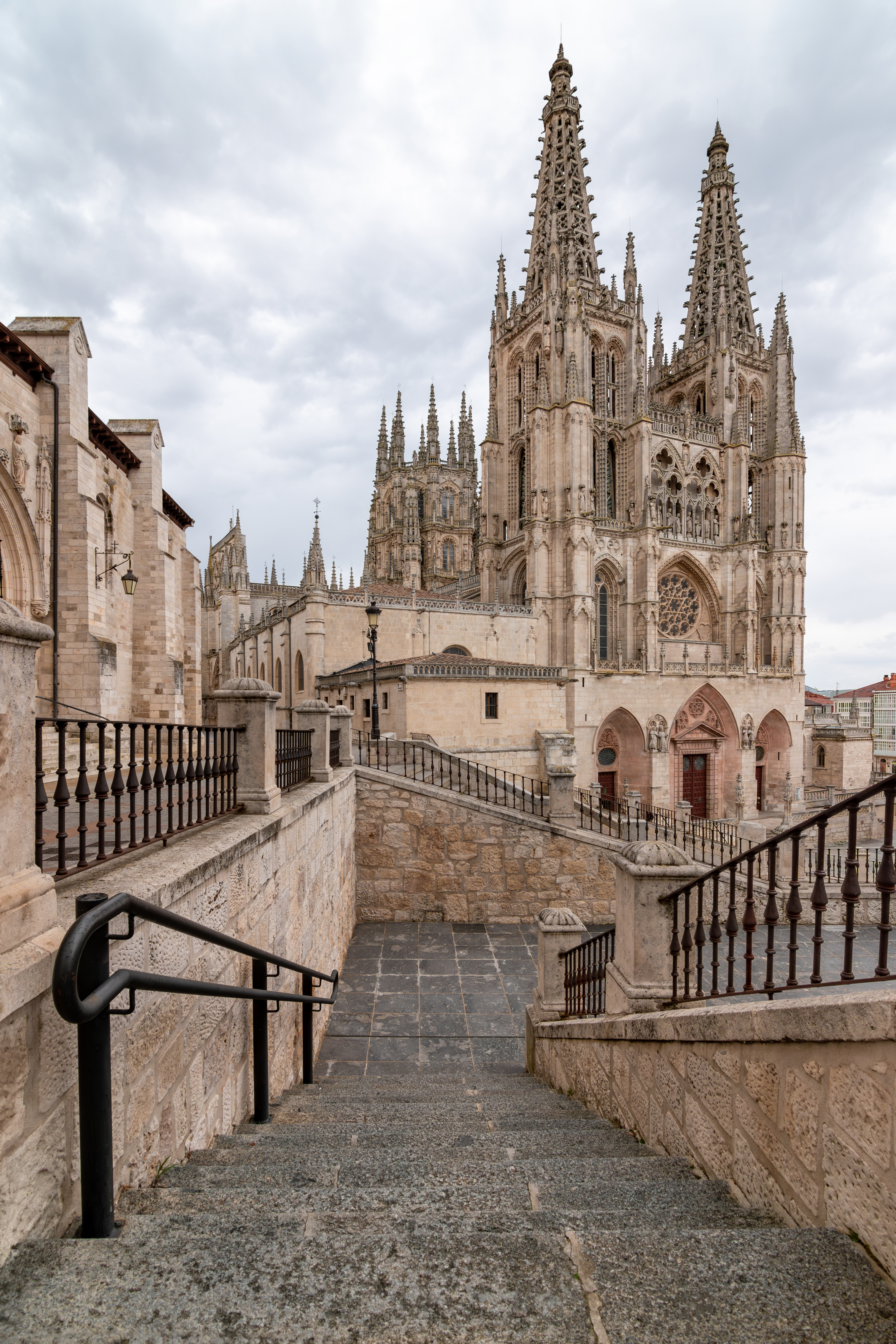
Burgos Cathedral, officially the Holy Metropolitan Cathedral Basilica Church of St Mary of Burgos, stands as one of Spain's most magnificent Gothic structures. Located in the historic center of Burgos, this Catholic cathedral is dedicated to the Virgin Mary and has served as the seat of the Archdiocese of Burgos since its foundation. King Ferdinand III of Castile laid the foundation stone on July 20, 1221, and the main Gothic construction spanned 346 years, concluding in 1567. The building's design, based on a Latin cross layout, evolved over centuries, with later Renaissance and Baroque additions enriching its predominantly Gothic character.
The cathedral is a key landmark on the Camino de Santiago pilgrimage route and attracts visitors from around the world. Its soaring spires, intricate stonework, and the celebrated Sarmental door with its 13th-century tympanum exemplify the evolution of Gothic art in Spain. In 1984, UNESCO designated the cathedral a World Heritage Site, recognizing its outstanding universal value. Today, it functions both as an active place of worship and a major cultural venue, hosting exhibitions and events that draw on its rich artistic heritage.
Mission
Burgos Cathedral serves as the primary place of worship for the Archdiocese of Burgos, continuing a tradition of Catholic liturgy that dates back over eight centuries. Its mission extends beyond religious practice to encompass the preservation of its architectural and artistic heritage, ensuring that future generations can appreciate its Gothic splendor. The cathedral also plays a vital role in cultural education, welcoming millions of visitors each year through guided tours and exhibitions that illuminate its history and significance.
History
Construction of Burgos Cathedral began in 1221 under the patronage of King Ferdinand III of Castile, who personally laid the first stone. The project was initiated in the French Gothic style, drawing inspiration from the great cathedrals of the Île-de-France. Work progressed through the 13th century, with the Sarmental door completed by mid-century, but a significant hiatus of nearly two centuries delayed the finishing touches. The final phase, from the 15th to the 16th century, saw the addition of soaring spires and intricate stonework, culminating in 1567. This prolonged timeline allowed the cathedral to incorporate Renaissance and Baroque elements, creating a unique architectural tapestry.
Throughout its history, the cathedral has been a center of religious and cultural life in Burgos. It survived the Spanish Civil War without major damage and has undergone continuous conservation efforts. In 1984, it was inscribed on the UNESCO World Heritage List, and in 2021, Pope Francis granted a special Jubilee Year to mark the 800th anniversary of its founding. The cathedral has also embraced contemporary art, hosting a monumental mural by street artists MonkeyBird in 2021 and the groundbreaking Picasso exhibition 'Biblical Roots' in 2026.
Notable People
Ferdinand III of Castile
Founder · 1221
Laid the foundation stone of the cathedral in 1221
Pablo Picasso
Visitor and inspiration · 1934
Visited the cathedral on his last trip to Spain; his connection is explored in the 2026 exhibition 'Biblical Roots'
Milestones
1221
Foundation stone laid by King Ferdinand III of Castile
1567
Main construction completed after 346 years
1984
Designated a UNESCO World Heritage Site
2021
Celebrated 800th anniversary with a Jubilee Year granted by Pope Francis
2026
Hosted 'Biblical Roots,' an exhibition exploring Picasso's religious influences
Sources
Organization Info
- Founded
- July 20, 1221
- Headquarters
- Burgos, Castile and León, Spain
- Country
- Spain
- Type
- Religious
- Founder
- Ferdinand III of Castile
- UNESCO World Heritage
- 1984
- Architectural style
- Gothic, with Renaissance and Baroque additions
Official Website
www.catedraldeburgos.es
Join the community
fans discussing