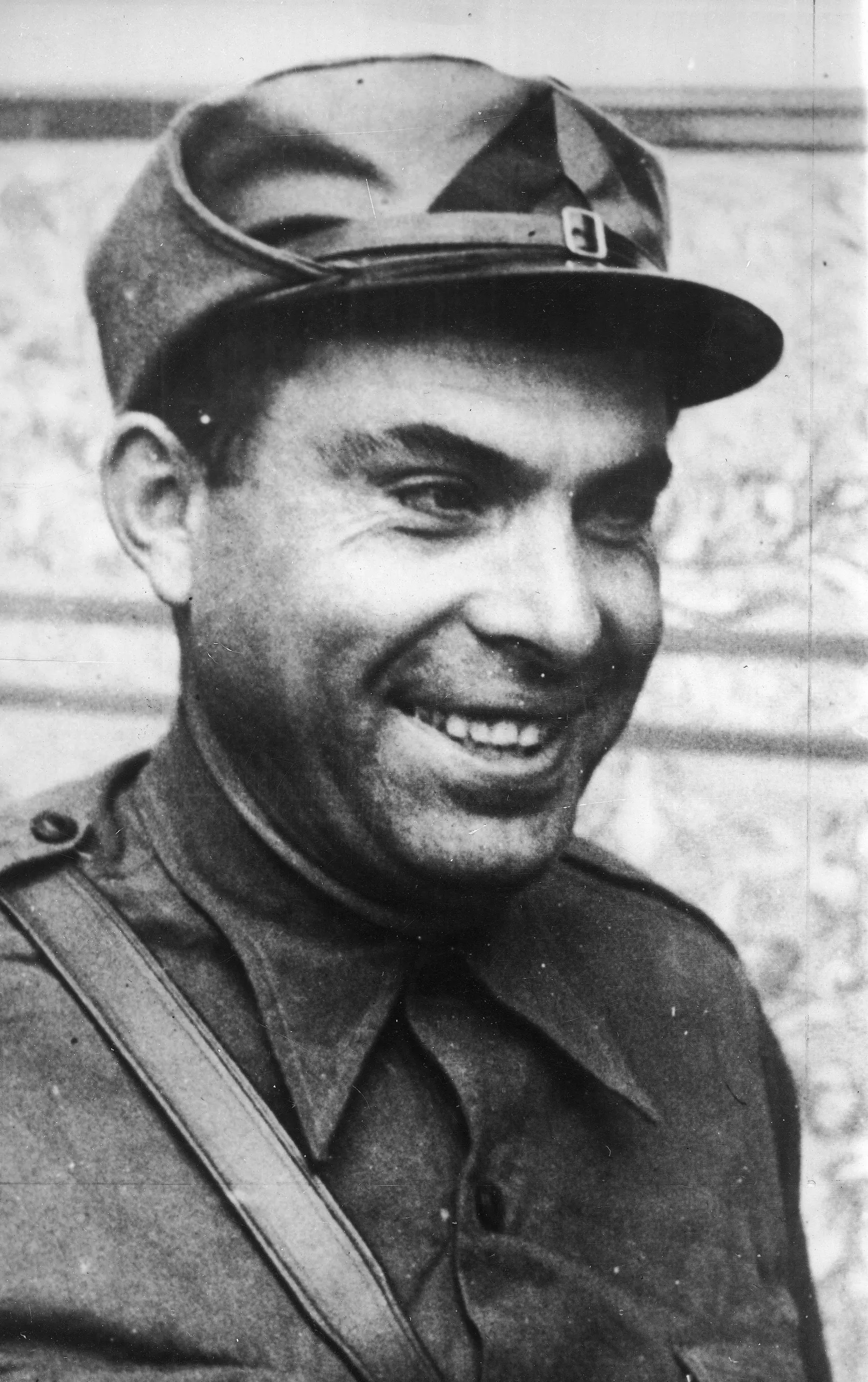
Buenaventura Durruti
 Spain
Spainanarcho-syndicalist•anarchist•trade unionist
Also known as: José Buenaventura Durruti Dumange, El Comandante Durruti
Birthday
July 14, 1896
Birth Sign
Cancer
Birthplace
León, Spain
Age
Died at 40
About
José Buenaventura Durruti Dumange was a Spanish anarcho-syndicalist militant and a central figure in the anarchist movement during the early 20th century. Born in León, he rose from humble beginnings as a mechanic to become one of the most iconic leaders of the Confederación Nacional del Trabajo (CNT) and the Federación Anarquista Ibérica (FAI). His life was defined by radical activism, armed resistance against fascism, and a legendary death during the Spanish Civil War that cemented his status as a martyr for the global left.
Durruti is best remembered for organizing the Durruti Column, a militia of approximately 3,000 armed workers who marched from Barcelona toward Zaragoza to fight Franco's Nationalists. He died in combat defending Madrid on November 20, 1936. His famous declaration that they were not afraid of ruins and intended to inherit the earth remains one of the most quoted lines in anarchist history. Though he never held political office, his influence on labor movements and revolutionary thought continues to resonate with activists and historians today.
Early Life & Background
José Buenaventura Durruti Dumange was born on July 14, 1896, in León, a mining region in northern Spain. He was the son of a miner and grew up in a working-class environment where poverty and labor exploitation were rampant. His father worked in the mines, exposing Durruti early to the harsh realities of industrial capitalism. As a youth, he became a mechanic, a trade that would later inform his organizational skills within the labor movement. This technical background gave him a practical understanding of machinery and logistics that proved vital during his later military campaigns.
His radicalization began in his late teens, triggered by state repression of the labor movement. In 1910, at age 14, he joined the CNT, though his active involvement intensified after witnessing the brutal suppression of strikes in León. By his early twenties, he had become a committed insurrectionary anarchist, rejecting parliamentary politics in favor of direct action. He was known for his physical strength, courage, and uncompromising stance against authority.
Before achieving fame as a revolutionary leader, Durruti spent years in exile and underground activity. In 1923, he formed part of Los Solidarios, a militant anarchist group alongside Francisco Ascaso, dedicated to funding activities through expropriations and assassinations. Between 1917 and 1923, he was actively involved in strike movements and imprisoned multiple times. These formative years forged his reputation as a fearless operative willing to risk everything for the cause.
Career Growth
Durruti's career was measured not in commercial success but in political influence and revolutionary action. After returning to Spain in 1931 following the establishment of the Second Republic, he became a leading organizer in the CNT's insurrectionist faction. Between 1932 and 1934, he organized failed uprisings in Casas Viejas and other locations, leading to further imprisonment.
When the Spanish Civil War broke out in July 1936, Durruti immediately took charge of the defense efforts. He organized the Durruti Column, a militia of approximately 3,000 armed workers who marched from Barcelona toward Zaragoza to fight Franco's Nationalists. This column became a powerful symbol of working-class self-organization and anarchist resistance. Although the campaign eventually stalled, the column's initial advance halted the Nationalist push toward Valencia and boosted Republican morale significantly.
Durruti led these forces until his death in November 1936. His leadership style was characterized by personal bravery and a refusal to retreat, earning him the respect of both comrades and enemies. Following his death, the column continued to fight under his name, and his image became a lasting icon of the anarchist struggle. His legacy influenced subsequent generations of labor organizers and revolutionaries across the globe.
Career Timeline
Public Image & Style
Durruti is portrayed as a fearless, uncompromising revolutionary who embodied the spirit of the working class. His image is often depicted in posters, murals, and propaganda art, emphasizing his strength, determination, and sacrifice. Media portrayals tend to focus on his defiance in the face of fascism and his commitment to direct action. He is remembered as a man of few words whose actions spoke louder than any rhetoric, a quality that made him a compelling figure for both supporters and detractors alike.
Fame & Fandom
Buenaventura Durruti's name may not top global celebrity charts, but his reach is immense in the worlds of anarchism, labor history, and revolutionary culture. As of September 2026, iFANN's Global Fame Engine has evaluated his legacy but found him without a placement in the published rankings, neither the Global Top 1,000 nor any Top-100 scope list. That absence says less about his importance and more about the nature of his fame: he is a figure whose renown is concentrated, passionate, and enduring, rather than diffuse and ephemeral.
His following has no formal name, no fan clubs, no self-designated community. What exists instead is a diffuse veneration among anarchists, historians, and activists who treat him as a martyr and a symbol. The Working Class History project commemorates his birth each July 14, and his death on November 20 is marked annually in Spanish anarchist circles as "20N." His quote about inheriting the earth circulates widely, a kind of political catechism. The International Institute of Social History in Amsterdam holds archives on his milieu, a pilgrimage site for researchers. His daughter Colette, who died in 2025, was a living link mourned by these communities. The Durruti Column remains a touchstone for anarcho-syndicalist movements. This is not fandom in the entertainment sense; it's a legacy kept alive through scholarship, commemoration, and political inspiration.
Interesting Facts and Legends
Durruti was a skilled mechanic before becoming a full-time revolutionary, a trade that informed his tactical approach to warfare. The first improbable bank robbery in Chile in July 1925 is a key part of his outlaw legend, framing him as a Robin Hood figure who robbed banks to fund revolutionary activities. His death is shrouded in mystery, with ongoing debates about whether it was enemy fire, friendly fire, or suicide, though no definitive proof exists. The phrase "We are going to inherit the earth" is one of the most quoted lines in anarchist history, originating from a 1936 interview with Pierre van Paasen of the Toronto Star. His daughter, Colette Durruti, died in April 2025, marking the end of the last direct familial connection to him.
Notable Quotes
“We are not in the least afraid of ruins. We are going to inherit the earth.”
“Fascism will not be defeated by laws or parliaments, but by the people themselves.”
Family & Personal Life
Durruti's personal life was largely intertwined with his political commitments. He was married to Émilienne Morin, a French anarchist and comrade. Their relationship was both romantic and political; they met in exile, likely in France or during their shared travels in Latin America. They had one daughter, Colette Durruti, who remained a living link to her father until her death in April 2025. The couple lived a nomadic life, often moving between countries to evade authorities and continue their work. There is no public record of other formal marriages or long-term romantic relationships outside of Émilienne Morin.
Notable Connections
Relationships & Dating History
Durruti's personal life was largely intertwined with his political commitments. He was married to Émilienne Morin, a French anarchist and comrade. Their relationship was both romantic and political; they met in exile, likely in France or during their shared travels in Latin America. They had one daughter, Colette Durruti, who remained a living link to her father until her death in April 2025. The couple lived a nomadic life, often moving between countries to evade authorities and continue their work. There is no public record of other formal marriages or long-term romantic relationships outside of Émilienne Morin. As of 2026, Durruti remains deceased, widowed in the sense that his spouse predeceased him, and there are no current partners.
- MarriedÉmilienne Morin? - 1936Met in exile; co-participants in anarchist activism. One child: Colette Durruti.
Death & Aftermath
Died
November 20, 1936 (aged 40)
Death Place
Madrid, Spain
Cause of Death
Gunshot wounds received in combat
Buenaventura Durruti died on the morning of November 20, 1936, at the Clínica de la Salud in Madrid's Chamberí district. He had been struck by a gunshot while leading a patrol near Casa de Campo to defend the city against Nationalist forces advancing from the west. While official accounts and contemporary reports attributed the wound to enemy sniper fire, the exact circumstances have remained a subject of intense historical debate for nearly a century. Some theories suggest it may have been accidental friendly fire from his own militia or even a suicide, though no formal autopsy or legal proceeding ever resolved the question definitively.
His death sparked immediate and widespread mourning across Spain and among international volunteers. The CNT and FAI declared him a martyr instantly, transforming his funeral on November 22, 1936, into a massive political rally rather than a somber burial. Hundreds of thousands of workers and foreign fighters lined the streets of Barcelona and Madrid to witness his procession. He was laid to rest at Montjuïc Cemetery in Barcelona, where speeches by prominent anarchists like García Oliver and Federica Montseny solidified his status as a symbol of resistance.
In the years following his death, the Durruti Column continued to fight under his name, and his image became a staple of anarchist propaganda art, including murals that appeared in Barcelona shortly after the event. His legacy has endured through decades of biographical literature and modern cultural tributes. In 2025, the libertarian musical Durruti, I Love You was promoted, and the comic book project Shadow Of The People was launched to introduce his story to new generations. Annual commemorations on November 20, known as "20N," remain a sacred date in anarchist circles worldwide, keeping his memory alive without the need for commercial endorsement.
Net Worth (Estate Value)
$0
iFANN Editorial Team estimate
As Durruti died in 1936, he left no personal fortune. His estate value is effectively zero in terms of liquid assets, though his legacy has generated significant cultural and historical value over the decades. His daughter, Colette Durruti, passed away in 2025, ending the last direct familial link to him. Posthumous revenue streams include licensing of his image and quotes for books, documentaries, and merchandise, as well as academic and archival access fees at institutions like the International Institute of Social History. Cultural productions inspired by his life, such as the 2025 musical and comic projects, also contribute to his enduring economic impact, though these revenues do not constitute a personal estate managed by heirs in the traditional sense. There is no publicly reported net worth for Durruti as of 2026, as his wealth was never accumulated in monetary form.
Awards & Accolades
View 3 records, honours and achievementsKnown For
Durruti Column
1936 · Leader
Spanish Civil War
1936 · Militant Leader
Keywords
Sources
Quick Facts
- Profession
- anarcho-syndicalist, anarchist, trade unionist
- Born
- July 14, 1896
- Birthplace
- León
- Died
- November 20, 1936
- Death Place
- Madrid
- Gender
- Male
- Spouse
- Émilienne Morin
- Birth Sign
- Cancer
Personal Details
- Full Name
- José Buenaventura Durruti Dumange
- Spouse
- Émilienne Morin
- Children
- Colette Durruti
Frequently Asked Questions
Who was Buenaventura Durruti?
When and how did Buenaventura Durruti die?
Did Buenaventura Durruti have children?
What is the significance of the Durruti Column?
Why is Buenaventura Durruti still remembered today?
Similar People
Join the community
fans discussing