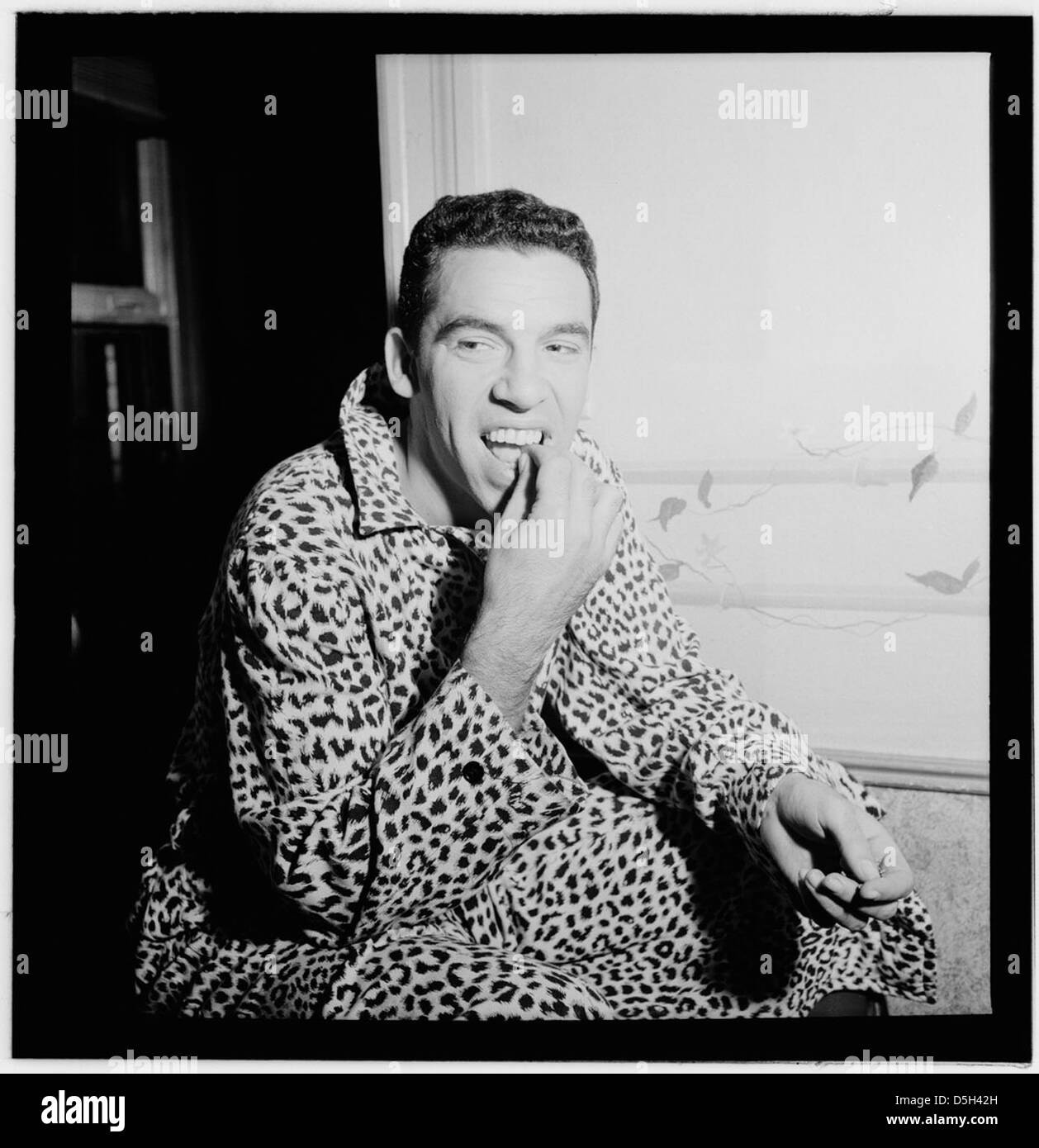
Buddy Rich
 United States
jazz drummer•bandleader•musician
Also known as: Traps, the Drum Wonder
Birthday
September 30, 1917
Birth Sign
Libra
Birthplace
Brooklyn, New York, USA
Age
Died at 69
Height
5 ft 7 in (1.70 m)
About
Buddy Rich was an American jazz drummer and bandleader whose speed, precision, and showmanship set a standard that remains the benchmark for drummers across genres. Born in Brooklyn in 1917, he was a child vaudeville prodigy billed as "Traps, the Drum Wonder." His tenure with the Tommy Dorsey Orchestra from 1939 to 1942 made him a national star, and his 1966 big band, the Buddy Rich Big Band, became his most famous vehicle. Rich's 1966 arrangement of West Side Story is a jazz landmark. He never learned to read music, memorizing parts by ear, a feat that astonished fellow musicians. As of 2026, his recordings continue to sell, and his estate, managed by his daughter Cathy Rich, keeps his big band touring. Rich died in 1987, but his legacy as the ultimate drummer's drummer endures.
Early Life & Background
Buddy Rich was born into vaudeville. His parents, Robert and Bess Rich, were performers, his father a drummer, his mother a dancer. By 18 months old, Buddy was tapping out rhythms on pots and pans. At age four, he was onstage, billed as "Traps, the Drum Wonder," performing a full drum solo in his father's act. He never attended school regularly; his education was the road, the theater, and the grind of one-night stands. By his teens, he was a seasoned showman, comfortable in front of any audience. His transition from vaudeville to jazz came in 1937 when he joined Bunny Berigan's band. That gig put him in the big-band world, but the real breakthrough arrived in 1939 when Tommy Dorsey hired him. Rich walked into the Dorsey Orchestra as a 21-year-old with little formal training but an instinct for swing that left seasoned players speechless.
Career Growth
Rich's time with Tommy Dorsey from 1939 to 1942 turned him into a household name. His drum solos, especially on "Quiet Please" and "The One I Love," were must-hear events. After serving as a Marine drill instructor during World War II, he formed his own orchestra in 1945, but it folded in 1948 due to financial struggles. For nearly two decades, he worked as a sideman and led small groups. The turning point came in 1966 when he formed the Buddy Rich Big Band. That same year, his arrangement of West Side Story became a sensation, showcasing his band's explosive power. The band toured relentlessly through the 1970s and 1980s, appearing on The Tonight Show and The Muppet Show (his 1981 drum battle with Animal is legendary). Rich's later albums, like Mercy, Mercy (1968) and Channel One Suite (1973), are considered classics. He never won a Grammy, but his influence on drumming is immeasurable.
Career Timeline
Public Image & Style
Buddy Rich's public persona was that of a volcanic genius. Onstage, he was all speed and power, his solos a blur of sticks and cymbals. Offstage, he was known for his perfectionism and short temper, often clashing with band members. The media portrayed him as the ultimate "drummer's drummer," a technician whose only rival was himself. Fans, mostly drummers and jazz enthusiasts, debate his solos with religious fervor. His official social media accounts post archival performances, keeping his legacy alive for new generations. Rich's image is one of uncompromising excellence, he demanded the best from his band and himself.
Fame & Fandom (iFAMOUS Rankings)
Buddy Rich's name still rings out in drumming circles and beyond, decades after his final bow. The iFANN Global Fame Engine has evaluated his enduring footprint, but as of August 2026, he does not hold a placement in the published rankings, neither the Global Top 1,000 nor any Top-100 scope list. That absence, though, says more about the engine's methodology than his cultural weight; it measures current media churn, search volume, and consumption signals worldwide, and Rich's legacy thrives in archives, tribute stages, and the practice rooms of every serious drummer.
His fanbase, built on reverence for sheer technical terror, has no formal name, no 'Buddy Heads' or 'Richards.' They are simply drummers, jazz purists, and historians who pass down his solos like scripture. The Buddy Rich Band, steered by his daughter Cathy, keeps the live flame alive, and institutional efforts like the Northup Drums Museum's memorabilia collection preserve his sticks and stories. A 2026 archival release, 'Just in Time: The Final Recording,' gave fans a last, previously unheard glimpse of his studio genius, and tribute concerts still draw crowds who want to witness the legend's echo.
Rich's mythology thrives on the impossible. The Concert of the Americas solo, circulated on YouTube under titles like 'BUDDY RICH IMPOSSIBLE DRUM SOLO,' is treated with near-religious awe, a blur of sticks that seems to defy physics. Tony Levin, a bassist who worked with Peter Gabriel and Robert Fripp, called Rich the most difficult person he ever worked with, an 'evil' bandleader, a reputation that has become part of the lore fans share with newcomers. That mix of awe and fear, of genius and abrasiveness, is precisely why Buddy Rich remains a permanent fixture in the drumming pantheon.
Interesting Facts and Legends
Rich never learned to read sheet music; he memorized every part by having a roadie play it on piano. He was also a gifted tap dancer and could have pursued musical theater. During World War II, he served as a Marine drill instructor, not a musician. He hated the word 'jazz' and called himself simply a drummer. He was a heavy smoker and loved fast cars, especially his Ferrari. His temper was legendary, he once fired an entire band mid-show. Despite his fierce reputation, he was close friends with his rival Gene Krupa, and the two often traded solos.
A story fans still retell: at the Concert of the Americas, his solo was so fast and clean that it seemed impossible, footage of that performance still circulates online, with titles calling it 'the impossible drum solo.' Another legend, confirmed by bassist Tony Levin, casts Rich as the most difficult bandleader he ever worked with, a man whose onstage fury was as legendary as his technique. And his vaudeville origin as 'Traps, the Drum Wonder' remains the foundational tale, a child prodigy who became one of the highest-paid performers of his era, a billing that followed him for life.
Notable Quotes
“I don't practice. I play.”
“The only thing that matters is the music. If you can't play, get off the bandstand.”
“I've never been a fan of the word 'jazz'. I'm a drummer. I play music.”
Family & Personal Life
Buddy Rich married Marie Allison, a former showgirl, in 1953. They had one daughter, Cathy Rich, who later managed his estate and the Buddy Rich Big Band. Marie and Buddy remained married until his death in 1987. Cathy has kept the band touring with guest drummers. Rich's parents, Robert and Bess, were vaudeville performers who introduced him to the stage. He had no siblings.
Notable Connections
Buddy Rich is closely associated with Tommy Dorsey, whose orchestra made him a star. He also played with Artie Shaw, Count Basie, Harry James, and Frank Sinatra. His primary rival and friend was Gene Krupa, with whom he famously traded solos. Arranger Quincy Jones collaborated with Rich on several projects.
Relationships & Dating History
Buddy Rich married Marie Allison in 1953. Marie was a former showgirl from New York. They met in the early 1950s and married quickly. The couple had one daughter, Cathy Rich, in 1954. Their marriage was stable and lasted until Rich's death in 1987. There are no widely reported instances of other romantic relationships. Rich was intensely focused on his music, and Marie supported his career. As of his death, he was married to Marie.
- MarriedMarie Allison1953 - 1987Married in 1953; remained married until his death. Had one daughter, Cathy.
Death & Aftermath
Died
April 2, 1987 (aged 69)
Death Place
Los Angeles, California, USA
Cause of Death
Congestive heart failure
On the morning of April 2, 1987, Buddy Rich passed away in his sleep at his home in Los Angeles, California. The legendary drummer had spent his final days managing declining health stemming from a long-standing heart condition, specifically congestive heart failure and an enlarged heart, though he remained active enough to perform with his big band earlier that year. His passing was treated as a natural occurrence by family and medical authorities. The jazz community reacted immediately with profound tributes, holding moments of silence at clubs worldwide while peers and institutions cemented his status as one of history's greatest drummers. A private funeral service followed his death, after which his ashes were interred at Hillside Memorial Park Cemetery in Culver City., the reverence for his craft spread rapidly through the genre.
Posthumous releases soon honored his final artistic output, most notably the album Just In Time: The Final Recording, which captured his last studio sessions and later garnered critical acclaim. He has since been inducted into the Modern Drummer Hall of Fame, and a documentary titled Unbeatable: The Life and Drumming of Buddy Rich documented his contributions to the art form. His widow, Cathy Rich, established the Buddy Rich Foundation and Scholarship Fund to support young drummers, ensuring his educational impact endures alongside the ongoing management of his estate.
Net Worth (Estate Value)
$5 Million
iFANN Editorial Team estimate
iFANN currently estimates Buddy Rich's estate at $5 million. At the time of his death in 1987, his net worth was estimated at $1 million, but the value has grown through careful management by his daughter Cathy Rich. Revenue comes from posthumous album reissues, licensing of his recordings for film and TV, merchandise sales, and royalties from his publishing catalog. The Buddy Rich Big Band continues to tour, generating income. His name and likeness are licensed for drum clinics and tribute events. The estate has also benefited from the discovery and release of previously unheard live recordings.
Awards Won (5)
Buddy Rich did not win major mainstream awards like Grammys or Emmys during his lifetime. His recognition came from the jazz community and posthumous honors. He was inducted into the Modern Drummer Hall of Fame in 1984, the DownBeat Jazz Hall of Fame in 1987, and the Big Band and Jazz Hall of Fame. His 1966 album Swingin' New Big Band was inducted into the Grammy Hall of Fame in 2000. He also received an honorary doctorate from Berklee College of Music in 1986.
2000 · Hall of Fame
Swingin' New Big Band
1984 · Hall of Fame
Known For
Buddy Rich Big Band
1966 · Founder and Leader
West Side Story Medley
1966 · Arranger and Performer
Tommy Dorsey Orchestra
1939 · Drummer
Keywords
Quick Facts
- Profession
- jazz drummer, bandleader, musician
- Born
- 1917-09-30
- Birthplace
- Brooklyn, New York, USA
- Died
- 1987-04-02
- Death Place
- Los Angeles, California, USA
- Gender
- Male
- Birth Sign
- Libra
Personal Details
- Full Name
- Bernard Rich
- Height
- 5 ft 7 in (1.70 m)
- Children
- Cathy Rich
Frequently Asked Questions
How did Buddy Rich die?
Did Buddy Rich read music?
Who was faster, Buddy Rich or Animal?
What is Buddy Rich's net worth in 2026?
Did Buddy Rich have any children?
Similar People
Join the community
fans discussing