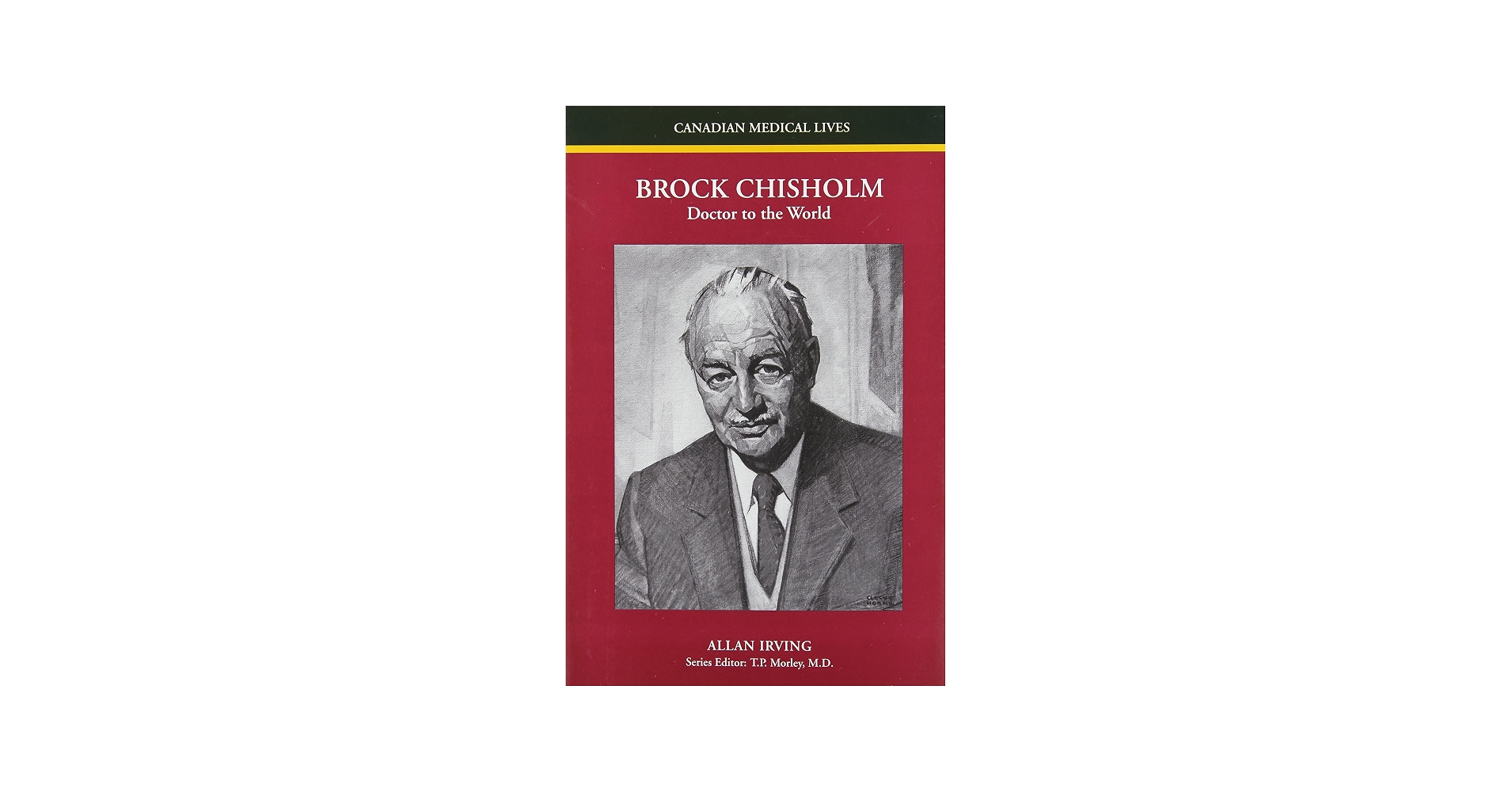
Brock Chisholm
 Canada
psychiatrist•physician•politician
Also known as: George Brock Chisholm, Dr. Brock Chisholm
Birthday
May 18, 1896
Birth Sign
Taurus
Birthplace
Oakville, Ontario, Canada
Age
Died at 74
About
George Brock Chisholm was a Canadian psychiatrist, physician, and military veteran who served as the first Director-General of the World Health Organization from 1948 to 1953. He also held the position of the 13th Canadian Surgeon General during the Second World War. His career bridged the gap between clinical psychiatry and high-level international diplomacy, making him a central figure in the establishment of modern global public health infrastructure.
Chisholm was known for his radical advocacy regarding mental health integration into general medicine and his outspoken criticism of religious dogma and the British Empire. Although he left the WHO amidst political friction, his definition of health as a state of complete physical, mental, and social well-being remains the organization's guiding principle today. He passed away in 1971, leaving behind a complex legacy of medical innovation and controversial social reform.
Early Life & Background
Born George Brock Chisholm on May 18, 1896, in Oakville, Ontario, he grew up as the son of a farmer. His formative years were interrupted by the outbreak of World War I while he was still a young man. In 1915, at the age of 19, Chisholm enlisted in the Canadian Army before completing his medical education. He served with the 28th Highlanders of Canada in France and Belgium throughout the conflict, rising to the rank of Major. Despite spending three years under fire, he emerged physically unscathed, though the experience profoundly shaped his worldview and later influenced his approach to treating trauma.
Following the war, Chisholm enrolled at the University of Toronto, where he earned his medical degree in 1920. He chose to specialize in psychiatry, becoming one of Canada's first psychoanalysts and a pioneer in psychological testing. His early professional life involved treating soldiers suffering from what was then called shell shock, now recognized as post-traumatic stress disorder. This work established him as an expert in the field long before he entered national administration. By the late 1930s, he had established a private psychiatric clinic in Toronto and become a leading figure within the Canadian Medical Association, setting the stage for his future rise to prominence.
Career Growth
Chisholm's trajectory shifted from clinical practice to military administration when he was appointed Chief Psychiatrist for the Canadian Army during the Second World War. In 1944, he took on the role of the 13th Canadian Surgeon General, responsible for the medical services of the entire armed forces. In this capacity, he implemented sweeping reforms to improve mental health care for soldiers and veterans, integrating psychological support into general medical practice.
His most significant achievement came after the war when he was selected as the first Director-General of the newly formed World Health Organization in 1948. During his tenure until 1953, he faced the immense challenge of defining the organization's mandate. He famously declared that health was not merely the absence of disease but a state of complete physical, mental, and social well-being. He launched aggressive campaigns against smallpox and other infectious diseases, laying the groundwork for global eradication efforts. However, his tenure ended in 1953 due to ideological clashes with member states, particularly the United States and the Vatican, over his outspoken views on religion and nuclear disarmament.
After leaving the WHO, Chisholm returned to Canada, continuing to write and speak on issues of world government and nuclear disarmament until his death. His post-WHO career focused on advocating for the removal of religious dogma from education and promoting scientific progress as a means to global peace.
Career Timeline
Public Image & Style
Chisholm projected an image of a serious, intellectual reformer who was unafraid to challenge established powers. Contemporary descriptions characterize him as a slight, friendly man with a modest and unassuming physical presence despite his powerful voice in debate. He was often seen as a radical thinker who prioritized scientific progress over tradition, which made him both a hero to some and a villain to others. His public persona was defined by his willingness to speak out against the Catholic Church, the British Empire, and the threat of nuclear war, earning him a reputation as an outspoken critic rather than a diplomat who stayed silent.
Fame & Fandom (iFAMOUS Rankings)
Brock Chisholm commanded a quiet, institutional reverence rather than the roaring adoration reserved for pop icons. His legacy rests on the solid ground of medical administration and international diplomacy, not on fan rituals or viral moments. There is no formal name for his audience; he was a public servant whose supporters were colleagues, historians, and global citizens rather than a dedicated fandom organizing campaigns or buying billboards. The Canadian Medical Hall of Fame inducted him as a Laureate, a professional honor that stands apart from grassroots fan movements. While he sparked intense debate over eugenics and nuclear disarmament during his tenure as the first Director-General of the World Health Organization, these controversies generated political discourse rather than celebrity legends. He died in 1971, long before the digital age allowed for fan-driven chart pushes or social media interactions. Consequently, iFANN has evaluated his standing in the modern cultural landscape and found no placement in its published rankings. Brock Chisholm is currently unranked in the Global Top 1,000 and holds no position on any Top-100 scope list. This absence reflects his status as a historical figure whose influence is measured in policy and public health infrastructure rather than contemporary fame metrics.
Interesting Facts and Legends
George Brock Chisholm served as the 13th Canadian Surgeon General before leading the newly formed World Health Organization from 1948 to 1953. A World War I veteran, he fought unscathed from 1915 to 1918 and earned the Military Cross for his service. Historical accounts describe him as a slight, friendly man with soft-spoken pronouncements at the time of his death in Victoria, BC, on February 4, 1971. Beyond his administrative achievements, Chisholm was known for his outspoken views on global issues, including nuclear disarmament and eugenics, which drew significant criticism and fueled political debates throughout the Cold War era. Some sources note his role as a pioneer in psychological testing prior to his WHO tenure. He received numerous accolades throughout his life, including the Order of Canada and the Order of the British Empire. In 2019, the Canadian Medical Hall of Fame inducted him as a Laureate, cementing his place in medical history.
Notable Quotes
“The greatest threat to the future of mankind is the atom bomb.”
“Health is a state of complete physical, mental and social well-being and not merely the absence of disease or infirmity.”
“We must be prepared to discard the old ideas... we must be willing to face the facts, however unpleasant.”
“The World Health Organization is not a charity; it is a necessity for the survival of the human race.”
Family & Personal Life
Brock Chisholm was married to Margaret Chisholm, née Margaret Macdonald. They met during his time as a medical student or early professional life, though specific details of their courtship are less documented than his public career. The couple had no children. Their marriage lasted until Chisholm's death in 1971. Unlike modern celebrities, Chisholm maintained a relatively private personal life, with little public record of romantic flings or dating history outside of his marriage. There are no credible reports of engagements, divorces, or other partners. He remained married to Margaret until the end of his life.
Notable Connections
Relationships & Dating History
Brock Chisholm was married to Margaret Macdonald. They met during his time as a medical student or early professional life, though specific details of their courtship are less documented than his public career. The couple had no children. Their marriage lasted until Chisholm's death in 1971. Unlike modern celebrities, Chisholm maintained a relatively private personal life, with little public record of romantic flings or dating history outside of his marriage. There are no credible reports of engagements, divorces, or other partners. He remained married to Margaret until the end of his life.
- MarriedMargaret Macdonald? - 1971Remained married until his death; no children.
Death & Aftermath
Died
February 4, 1971 (aged 74)
Death Place
Victoria, British Columbia, Canada
Cause of Death
Natural causes (old age)
George Brock Chisholm died on February 4, 1971, in Victoria, British Columbia, at the age of 74. The official cause was natural causes associated with old age, though specific medical details of his final days remain sparse in public records. A New York Times obituary published the following day described him as an indefatigable speaker who had spent decades challenging global powers and stirring controversy during the Cold War era.
Tributes poured in from international health officials and colleagues immediately after his death, acknowledging his foundational role in establishing the World Health Organization. While there is no detailed public record of a specific funeral service location or the full list of attendees, his legacy was honored through continued recognition by major medical institutions. The Canadian Medical Hall of Fame later inducted him as a Laureate in 2019, cementing his place in history as a pivotal figure in global public health. His name continues to anchor discussions on early WHO initiatives and historical analyses of the intersection between psychiatry and international diplomacy.
Net Worth (Estate Value)
$0
iFANN Editorial Team estimate
As a public servant and medical practitioner active in the mid-20th century, George Brock Chisholm did not accumulate personal wealth in the manner of modern celebrities or business tycoons. His income derived from his salaries as a military officer, a government surgeon general, and the Director-General of the World Health Organization. These positions provided a stable middle-class living typical for senior civil servants of that era, but they did not result in vast personal fortunes. Following his death in 1971, his estate likely consisted of standard personal assets such as his home and savings, managed by his widow, Margaret. There are no known posthumous revenue streams, royalties, or commercial ventures associated with his name that generate ongoing income for an estate. Any financial legacy he left is tied to the enduring value of the institutions he helped build, particularly the WHO, rather than personal assets.
Awards Won (5)
Chisholm received numerous accolades for his service and contributions to medicine and public health, including the Military Cross, the Order of the British Empire, the Efficiency Decoration, and being an inaugural recipient of the Order of Canada. He was also inducted into the Canadian Medical Hall of Fame in 2019.
1918 · Military Service
World War I Service
1944 · Public Service
Services during WWII
Known For
World Health Organization
1948 · First Director-General
Canadian Armed Forces
1944 · 13th Canadian Surgeon General
Psychiatry
1920 · Pioneer in Psychoanalysis
Keywords
Sources
Quick Facts
- Profession
- psychiatrist, politician, physician
- Born
- May 18, 1896
- Birthplace
- Oakville, Ontario
- Died
- February 4, 1971
- Death Place
- Victoria, British Columbia
- Gender
- Male
- Birth Sign
- Taurus
Personal Details
- Full Name
- George Brock Chisholm
- Spouse
- Margaret Macdonald
- Children
- Education
- University of Toronto (MD, 1920)
Frequently Asked Questions
Who was Brock Chisholm?
When did Brock Chisholm die?
What was Brock Chisholm's most controversial stance?
Did Brock Chisholm have any children?
What awards did Brock Chisholm receive?
Similar People
Join the community
fans discussing