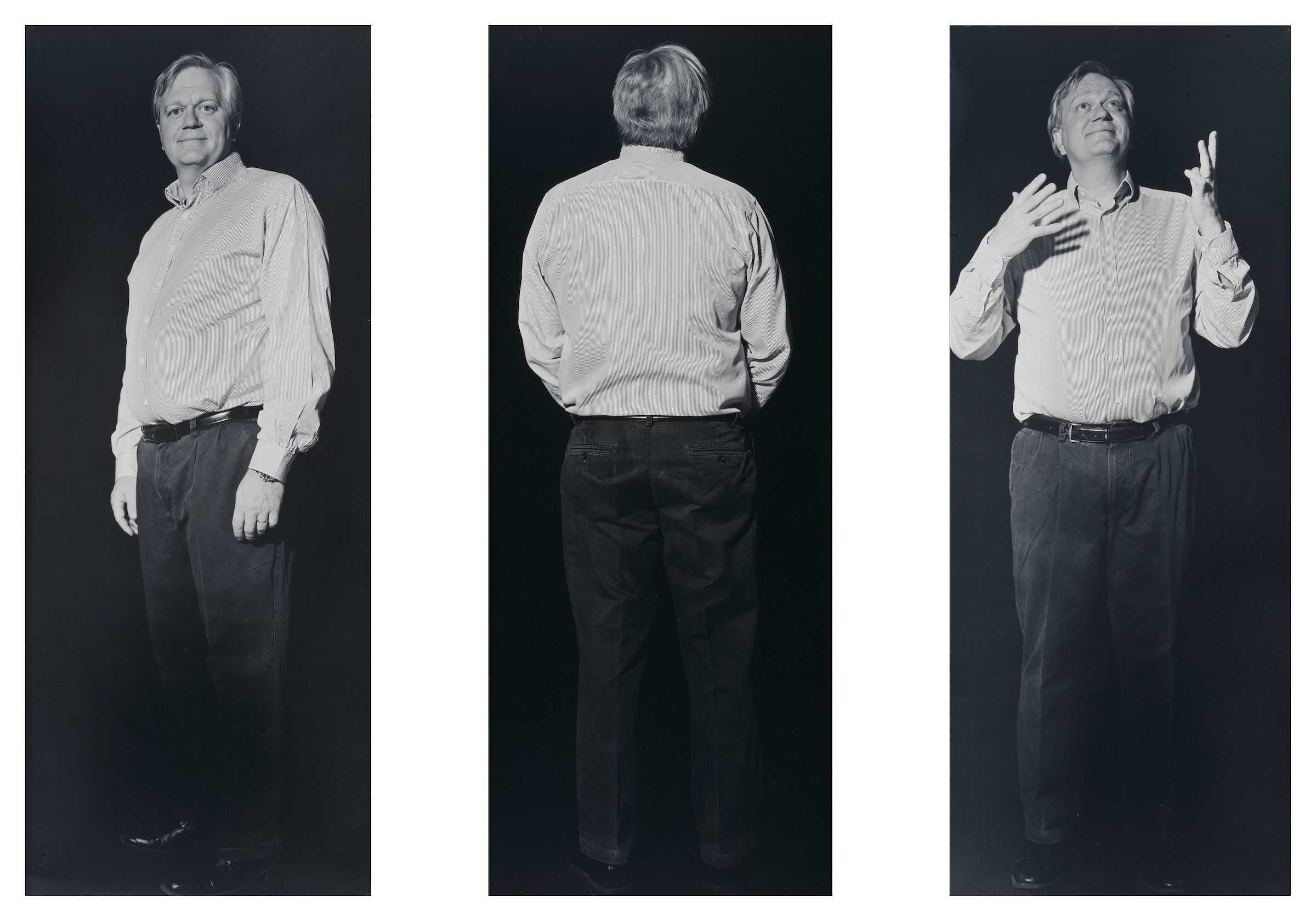
Brian Schmidt
 Australia
astrophysicist•university teacher•astronomer
Also known as: Brian P Schmidt, Brian P. Schmidt, Brian Paul Schmidt
Birthday
February 24, 1967
Birth Sign
Pisces
Birthplace
Missoula, Montana, USA
Age
59 years old
About
Brian Paul Schmidt is an American-Australian astrophysicist whose observations of distant supernovae revealed that the expansion of the universe is accelerating, a discovery that earned him the 2011 Nobel Prize in Physics. He is a Distinguished Professor at the Australian National University and served as the university's Vice-Chancellor from January 2016 to January 2024. Schmidt's work reshaped modern cosmology, showing that roughly 70% of the universe is composed of a mysterious force now called dark energy. He remains an active researcher at Mount Stromlo Observatory, where he has been instrumental in building the SkyMapper telescope, a facility mapping the southern sky in unprecedented detail. Beyond the lab, Schmidt is known for his engaging science communication and his side career as a Canberra winemaker, a combination that has made him a distinctive and approachable public figure in Australia.
Early Life & Background
Brian Paul Schmidt was born on 24 February 1967 in Missoula, Montana, the only child of Dana C. Schmidt, a fisheries biologist, and his wife, who were both just 19 when Brian was born. He has described the three of them as growing up together, sharing camping trips and a close household. When Schmidt was 13, the family moved to Anchorage, Alaska, where he attended Bartlett High School, graduating in 1985. Astronomy started as a hobby, sparked by the clear northern skies, but it was not yet a career plan. At the University of Arizona, he earned dual bachelor's degrees in physics and astronomy in 1989, then moved to Harvard for graduate work. Under Robert Kirshner, he completed a PhD in 1993 focused on Type II supernovae and their use as distance indicators. That training set the stage for his breakthrough. In 1994, a year after finishing his doctorate, Schmidt and Nick Suntzeff launched the High-Z Supernova Search Team, a collaboration of about twenty astronomers across five continents who used exploding stars to trace how the universe's expansion had changed over time. Their work would soon overturn a long-held assumption.
Career Growth
In 1995, Schmidt joined the Australian National University's Mount Stromlo Observatory as a post-doctoral fellow, and it was from there that the High-Z team made its landmark discovery. In 1998, they announced that distant supernovae were dimmer than expected, meaning the universe's expansion was speeding up, not slowing down. The finding was named Science magazine's Breakthrough of the Year. Schmidt's career then accelerated. He received the inaugural Malcolm McIntosh Award in 2000, the Pawsey Medal in 2001, and the Vainu Bappu Medal in 2002. A Federation Fellowship from the Australian Research Council followed in 2005. In 2006, he shared the Shaw Prize in Astronomy with Saul Perlmutter and Adam Riess, and in 2007 the Gruber Prize for Cosmology with his High-Z colleagues. The pinnacle came in 2011, when he, Perlmutter, and Riess shared the Nobel Prize in Physics. Schmidt was elected a Fellow of the Royal Society in 2012 and made a Companion of the Order of Australia in 2013. From 2016 to 2024, he served as ANU's Vice-Chancellor, overseeing a period of significant institutional growth.
Career Timeline
Public Image & Style
Schmidt is widely seen as a passionate advocate for science education and public engagement, frequently appearing in media and at public events. His dual identity as a Nobel laureate and a Canberra winemaker gives him a down-to-earth persona that resonates with the Australian public. His eight-year leadership of ANU cemented his influence in higher education. While he has no formal fandom name, his followers include science enthusiasts, students, and the academic community who appreciate his clear explanations of complex cosmology.
Fame & Fandom
Brian Schmidt commands a global audience defined by intellectual reverence rather than celebrity adoration, his name resonating primarily within the scientific community and among science enthusiasts who follow the frontiers of cosmology. Despite this profound impact on our understanding of the universe, the iFANN Global Fame Engine has evaluated his profile and found that he does not currently hold a placement in the published rankings (Global Top 1,000 or a Top-100 scope list). His fanbase has no formal name; there is no organized group known as "Schmidters" or similar. Instead, his supporters are scattered across academic institutions, university students, and the general public who engage with him through his professional roles at the Australian National University and his advocacy for dark sky preservation. Unlike pop stars, he has no fan-funded campaigns, birthday billboards, or viral social media movements dedicated solely to his person. Engagement occurs organically through institutional channels and public lectures where he discusses the accelerating expansion of the universe or the importance of winemaking alongside astrophysics.
Interesting Facts and Legends
Brian Paul Schmidt's parents were teenagers when he was born, a circumstance he describes as them all growing up together. He cultivates pinot noir at his Maipenrai Vineyard and Winery, a 2.7-acre operation in the Canberra District that serves as a personal counterpoint to his high-stakes research. At the 2011 Nobel ceremony, he presented a bottle of his wine to King Carl XVI Gustaf of Sweden, later designating it the official dinner wine at the Australian International Get-together during the 64th Lindau Nobel Laureate Meeting. His discovery that the universe is expanding at an accelerating rate confirmed a theory Einstein proposed in 1917 before dismissing it as his greatest blunder. Schmidt often emphasizes that scientists are normal people with wide-ranging interests, a philosophy reflected in his dual life as a Nobel laureate and a Canberra vintner. He remains active at Mount Stromlo Observatory, leading efforts to map the southern sky with the SkyMapper telescope.
Notable Quotes
“My Mom, my Dad and I sort of grew up together. I did whatever they did: I went to their parties, and we also had lots of camping and shared life together.”
“Successful scientists tend to be fairly normal people who enjoy life and have a wide range of interests. Unlike what people expect, scientists now are pretty normal people!”
Family & Personal Life
Schmidt was born to Dana C. Schmidt, a fisheries biologist, and his wife, who were both 19 at the time. As an only child, he grew up in a household where his parents and he shared experiences like camping trips and parties. The family moved from Montana to Alaska when he was 13. Today, Schmidt is married with two children, and the family lives on a farm near Canberra, Australia. He also runs a vineyard, Maipenrai, on the property.
Notable Connections
Relationships & Dating History
Public sources confirm that Schmidt is married, but they do not disclose his spouse's name or details of their courtship. His Nobel biography simply states that he is married with two children. The Lindau Mediatheque notes that he and his family live on a farm near Canberra. No public records detail any previous relationships, and no speculative pairings are reported. As of 2026, Schmidt remains married, with no reports of separation or divorce.
- MarriedCurrentSpouse's name not publicly disclosed; married with two children.
Salary, Net Worth In 2026
N/A
iFANN Editorial Team estimate
Brian Schmidt's net worth remains a figure absent from public records, a natural consequence of his career trajectory as an academic rather than a commercial mogul. His financial profile is built on the steady accumulation of university salaries at the Australian National University, targeted research grants, and the substantial prize money attached to his 2011 Nobel Prize in Physics. That specific award carried a purse of 10 million Swedish kronor, roughly US$1.5 million at the time, which was split among three laureates with Schmidt receiving a quarter share. The iFANN Editorial Team's research traces his additional revenue streams to his operation of the Maipenrai Vineyard and Winery, a small-scale but active business that supplements his primary income. As of 2026.
Awards Won (8)
Schmidt has won some of the most prestigious awards in science. He shared the 2006 Shaw Prize in Astronomy, the 2007 Gruber Prize for Cosmology, the 2011 Nobel Prize in Physics, and the 2014 Breakthrough Prize in Physics. In Australia, he received the inaugural Malcolm McIntosh Award in 2000, the Pawsey Medal in 2001, and the Vainu Bappu Medal in 2002. He was made a Companion of the Order of Australia in 2013.
2011 · Physics
Discovery of the accelerating expansion of the Universe
2014 · Physics
Discovery of the accelerating expansion of the Universe
Known For
Discovery of the accelerating expansion of the universe
1998 · Co-leader of the High-Z Supernova Search Team
Nobel Prize in Physics
2011 · Co-recipient
Keywords
Sources
Quick Facts
- Profession
- astrophysicist, university teacher, astronomer
- Born
- February 24, 1967
- Birthplace
- Missoula, Montana, USA
- Gender
- Male
- Birth Sign
- Pisces
- Nationality
- American-Australian
Personal Details
- Full Name
- Brian Paul Schmidt
- Children
- 2
- Education
- University of Arizona (B.S. in physics and astronomy, 1989); Harvard University (M.A. 1992, Ph.D. 1993)
Frequently Asked Questions
Is Brian Schmidt Australian?
How old is Brian Schmidt?
What did Brian Schmidt win the Nobel Prize for?
Does Brian Schmidt have children?
What is Brian Schmidt's net worth?
Social Media
Similar People
Join the community
fans discussing