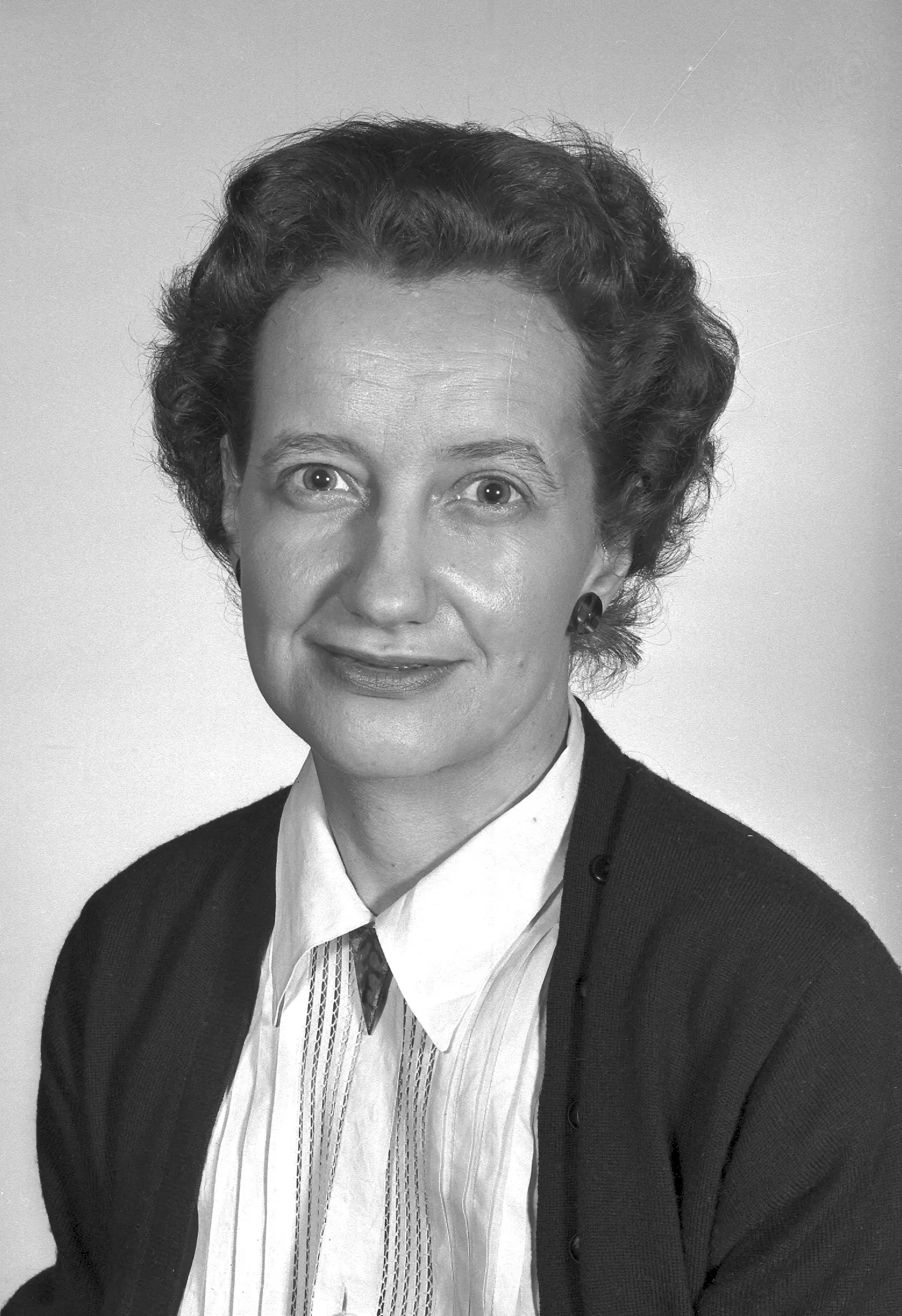
Brenda Milner
 Canada
Also known as: Brenda Langford
Birthday
July 15, 1918
Birth Sign
Cancer
Birthplace
Manchester, England
Age
108 years old
About
Brenda Milner is a British-Canadian neuropsychologist whose work transformed the science of memory. She is a professor in the Department of Neurology and Neurosurgery at McGill University and a professor of Psychology at the Montreal Neurological Institute. Her studies of patients with temporal lobe damage, especially the famous case of Henry Molaison (H.M.), revealed that the hippocampus is essential for forming new long-term memories. That insight helped establish neuropsychology as a field and reshaped how scientists think about the brain.
Milner's career has been extraordinarily long and productive. She continued working well into her hundreds, publishing and mentoring for more than seven decades. Her honors include the Balzan Prize in 2009 and the Kavli Prize in 2014, shared with John O'Keefe and Marcus Raichle. She has received over 25 honorary degrees and remains a revered figure in neuroscience, celebrated for her curiosity and rigor.
Early Life & Background
Brenda Langford was born in Manchester in 1918 to Samuel Langford, a music critic and pianist, and Leslie Doig, a singing teacher. Her father died of tuberculosis when she was eight, a loss that shaped her early years. She attended Withington Girls' School, where she discovered a love for mathematics. At home, she learned German fluently by age six and French from her mother.
In 1936, she won a Manchester City Scholarship to study mathematics at Newnham College, Cambridge. But she soon realized she would never be a top mathematician, so she switched to psychology, drawn by the department's focus on the brain. During World War II, she worked on radar research, where she met Peter Milner, an electrical engineer. They married in 1944 and moved to Montreal, where Peter had been invited to work on atomic research. Brenda began teaching psychology at the Université de Montréal and later earned her PhD at McGill under Donald Hebb, who gave her the chance to study patients at the Montreal Neurological Institute.
Career Growth
In 1955, Milner met Henry Molaison, a 29-year-old man who had undergone surgery to remove parts of his hippocampus to treat epilepsy. The surgery stopped his seizures but left him unable to form new long-term memories. Milner studied him for over three decades, and he never remembered her name. Her careful tests showed that the medial temporal lobe is critical for forming new memories, but not for all kinds of memory, such as motor skills. This was a breakthrough that changed neuroscience.
She published her landmark paper on the temporal lobes in 1965, and her work led to changes in surgical practice, discouraging operations that could harm memory. Milner directed the neuropsychology lab at the Montreal Neurological Institute and held the Dorothy J. Killam Professorship. She continued to research and publish into her nineties and beyond, exploring language, spatial memory, and aging. At 107, she was still active, saying, "I'm still nosy, you know, curious."
Career Timeline
Public Image & Style
Brenda Milner is celebrated as a pioneering, meticulous, and endlessly curious scientist. She is widely regarded as one of the founders of neuropsychology, and her name is synonymous with the study of memory. She is known for her careful patient observation and her ability to ask simple yet profound questions. In the scientific community, she is revered, and her story has been featured in educational materials, including a picture book biography. She has no official fandom, but she is a hero to many young scientists, especially women in neuroscience.
Fame & Fandom (iFAMOUS Rankings)
Brenda Milner stands as a towering figure in the annals of science, yet she exists outside the conventional machinery of celebrity fame. While her contributions to neuropsychology are legendary within academic circles, iFANN's Global Fame Engine has evaluated her profile and determined that she currently holds no placement in the published Global Top 1,000 rankings or any scope-specific list. She is not ranked among the world's most famous individuals because her influence operates through rigorous scholarship rather than mass media consumption or pop culture visibility. Her audience consists of scientists, medical professionals, and students dedicated to understanding the human mind, a group far removed from the general public that drives traditional fame metrics. This absence from the charts does not diminish her stature; it simply reflects the specialized nature of her legacy. The scientific community reveres her as a founder of her field, but there is no organized fanbase with a formal name, no fan rituals, and no commercial campaigns dedicated to her person. She remains a solitary giant in her discipline, respected by peers and admired by those who study the history of neuroscience, without the trappings of a modern fandom.
Interesting Facts and Legends
Milner survived the 1918 influenza pandemic alongside her mother and was fluent in German by age six before learning French as a child. She initially pursued mathematics at Cambridge before switching to psychology, and during World War II, she contributed to radar research before traveling to Canada on the Queen Elizabeth ocean liner alongside war brides. In 1983, she became the first woman to receive the Killam Prize, and her advice to students remains practical: "If you're in the wrong career, don't hesitate to change. I could be a mediocre math teacher in high school today." Beyond these facts, the legend of her work with patient H.M. defines her career. Through meticulous testing, she revealed that while the patient could not form new long-term memories, his short-term memory remained intact, proving the hippocampus is essential for creating new declarative memories. Another enduring story highlights her status as the "Still Nosy" centenarian. Despite being born in 1918, she refused to retire, continuing to publish papers and teach well past the age of 100. At 106, McGill University honored her continued vitality, and reports from 2025 confirm she remains active at 107 years old, serving as a living bridge between older psychiatric practices and modern neuroscientific precision.
Notable Quotes
“If you're in the wrong career, don't hesitate to change. I could be a mediocre math teacher in high school today.”
“I'm still nosy, you know, curious.”
Family & Personal Life
Brenda Milner married Peter Milner, an electrical engineer, in 1944. They met in 1941 while both worked on radar research during the war. After marrying, they moved to Montreal within two weeks, where Peter joined a team working on atomic research. The couple settled in Montreal, where Brenda built her career at McGill. They had no children. Peter's death date is not widely reported, and Brenda became widowed, but she remained dedicated to her research.
Notable Connections
Milner's work was deeply connected to several key figures. Her doctoral advisor was Donald Hebb at McGill. Neurosurgeon Wilder Penfield allowed her to study patients at the Montreal Neurological Institute. Her most famous subject was Henry Molaison, known as H.M., whose case defined her career. She shared the 2014 Kavli Prize with John O'Keefe and Marcus Raichle. Her husband, Peter Milner, was an electrical engineer and a constant support.
Relationships & Dating History
Brenda Milner met Peter Milner in 1941 while both were working on radar research during World War II. They married in 1944 and moved to Montreal, where Peter worked on atomic research. The couple settled in Montreal, and Brenda pursued her career at McGill. They remained married until Peter's death, though the date is not widely reported. As of 2026, Brenda is widowed and has not remarried. She has no children.
- MarriedPeter Milner1944 - presentMet in 1941 while both worked on radar research; married in 1944 and moved to Montreal.
Salary, Net Worth In 2026
$2 Million
iFANN Editorial Team estimate
Brenda Milner's net worth is not publicly documented in detail, as she was an academic rather than a commercial figure. Her income came from university salaries, research grants, and prize money. The Kavli Prize, which she shared, carried a monetary award of around $1 million, and the Balzan Prize also includes a significant cash component. Per iFANN's editorial analysis, her estimated net worth is around $2 Million, accumulated over a long career. She has no known commercial ventures or endorsements, and her wealth reflects her academic and scientific contributions.
Awards Won (8)
Brenda Milner has received numerous prestigious awards for her groundbreaking work. She won the Balzan Prize for Cognitive Neuroscience in 2009, the Kavli Prize in Neuroscience in 2014, and the Gairdner Award in 2005. She was the first recipient of the Wilder Penfield Prize in 1993 and the first woman to win the Killam Prize in 1983. In 2018, she received the Mensa Foundation International Lifetime Achievement Award. Her contributions have been recognized globally.
2014 · Neuroscience
For discoveries on the role of the hippocampus in memory
2009 · Cognitive Neuroscience
For pioneering studies of the hippocampus and memory
Known For
Discovery of the role of the hippocampus in memory
1955 · Researcher
Studies of patient H.M.
1955 · Neuropsychologist
Founding contributions to neuropsychology
1965 · Pioneer
Keywords
Sources
Quick Facts
- Profession
- Neuropsychologist, Professor
- Born
- July 15, 1918
- Birthplace
- Manchester, England
- Gender
- Female
- Spouse
- Peter Milner
- Birth Sign
- Cancer
Personal Details
- Full Name
- Brenda Langford
- Spouse
- Peter Milner
- Education
- Newnham College, Cambridge (BA); McGill University (PhD)
Frequently Asked Questions
Is Brenda Milner still alive?
What did Brenda Milner discover?
Who was Brenda Milner's husband?
How many honorary degrees does Brenda Milner have?
What is Brenda Milner's age?
Similar People
Join the community
fans discussing