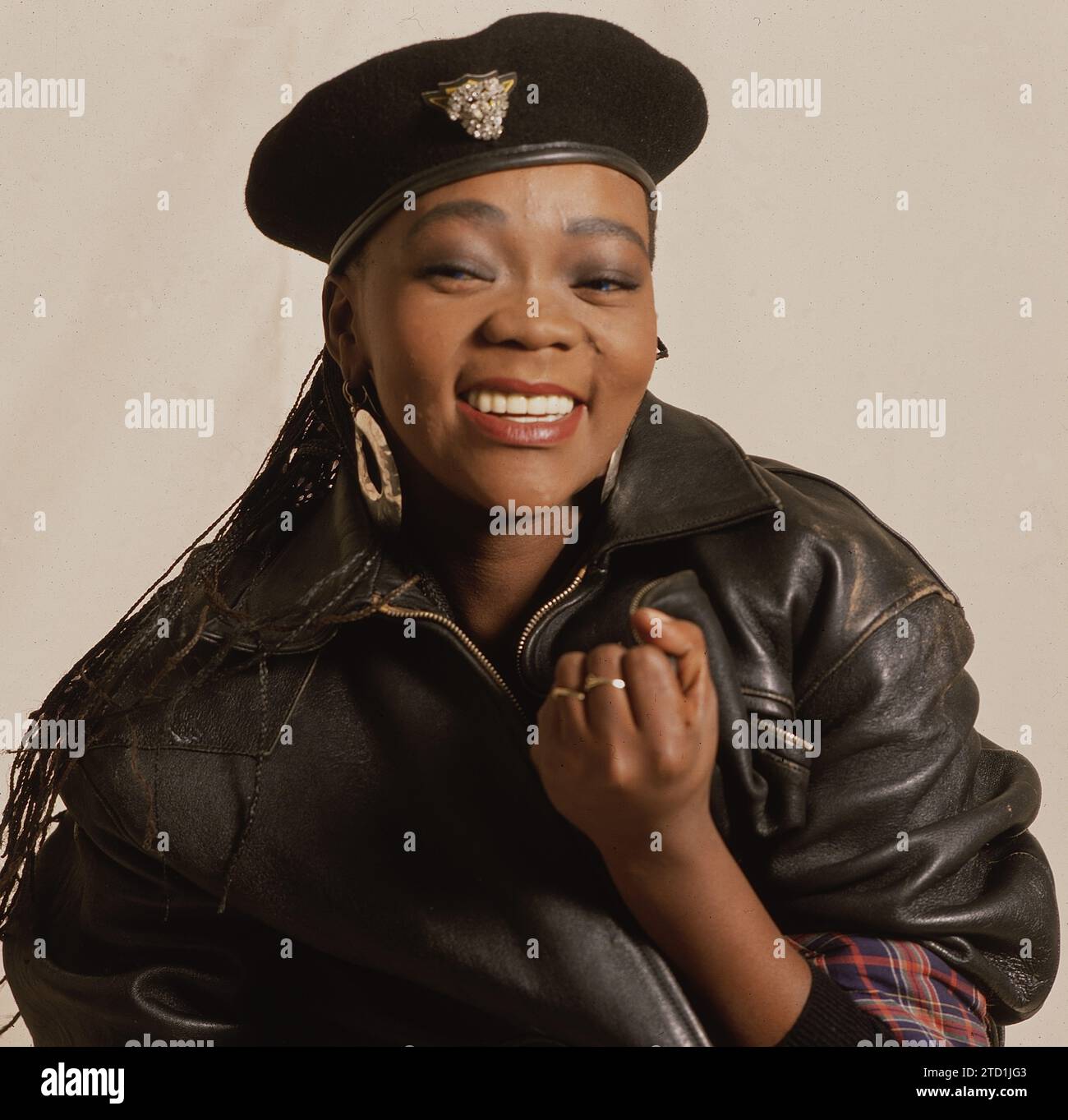
Brenda Fassie
 South Africa
singer•songwriter•dancer•activist
Also known as: MaBrrr, Queen of African Pop, Madonna of the Townships
Birthday
November 3, 1964
Birth Sign
Scorpio
Birthplace
Langa, Cape Town, South Africa
Age
Died at 39
Height
4 ft 3 in (130 cm)
About
Brenda Nokuzola Fassie was a South African singer-songwriter, dancer, and activist, widely celebrated as the "Queen of African Pop" and the "Madonna of the Townships." Known affectionately to her fans as MaBrrr, she possessed a powerful voice and an electrifying stage presence that captivated audiences across the globe. Her music often blended pop and kwaito sounds, and she courageously addressed social justice issues, making her a vital cultural voice during a transformative period in South Africa. Fassie's career spanned decades, producing numerous hit albums and singles that continue to resonate with listeners today. She was one of the most influential and greatest musicians on the African continent. She passed away on May 9, 2004, at the age of 39, leaving behind a profound musical and cultural legacy. Her influence extended beyond entertainment, as she became a symbol of resilience and authenticity for many, particularly through her open discussions about her personal struggles and her unwavering commitment to African heritage.
Early Life & Background
Brenda Nokuzola Fassie entered the world on November 3, 1964, in Langa, Cape Town, as the youngest of nine children. Her father, Matthew Mangaliso Fassie, died when she was just two years old. Her mother, Makokosie Fassie, a talented pianist and domestic worker, played a significant role in nurturing Brenda's early musical inclinations. The family environment was steeped in music; her father was also known for his singing prowess. By the tender age of five, Fassie was already performing, singing for tourists and at church events alongside her mother's children's band, the Tiny Tots. Her extraordinary talent quickly caught the eye of renowned music producer Hendrick "Koloi" Lebona. In 1981, at just 16 years old, Fassie made the pivotal move from Cape Town to Soweto, Johannesburg, determined to pursue a professional music career under Lebona's guidance. She initially joined the vocal group Joy as a temporary replacement and later became the dynamic lead singer for Brenda and the Big Dudes, setting the stage for her remarkable journey into stardom. She was named after the American singer Brenda Lee.
Career Growth
Brenda Fassie's breakthrough arrived in 1983 with Brenda and the Big Dudes, releasing the hit single Weekend Special. This track quickly became the fastest-selling record of its time in South Africa and garnered international attention, leading to tours across the United States, Britain, Europe, Australia, and Brazil. The group continued its success through the mid-1980s with popular songs such as Life Is Going On and Oh What A Night. A significant partnership began in the late 1980s with producer Sello "Chicco" Twala, which propelled her solo career to new heights. Her 1989 album, Too Late for Mama, achieved platinum status. In 1990, Fassie released the powerful song Black President, a tribute to Nelson Mandela, who was then a political prisoner. Despite being banned by the apartheid government, it became a significant anti-apartheid anthem, and Fassie had the honor of performing it for Mandela during his presidential inauguration in 1994. Around this time, she declared her intention to sing in African languages like isiZulu, isiXhosa, and Sesotho, moving away from English to celebrate her heritage. After a period of personal struggles, Fassie made a triumphant return in 1996 with her self-produced album Now Is the Time, featuring duets with Papa Wemba. Her 1998 album, Memeza, became South Africa's best-selling album that year, selling over half a million copies and earning her multiple South African Music Awards. She followed this with another multi-platinum success, Nomakanjani, in 1999, which also sold more than half a million copies. By 2001, Time magazine had dubbed her "The Madonna of the Townships." Her song Vulindlela, released in 2004, became a massive hit and remains a staple at African weddings, solidifying her enduring impact. Fassie won numerous awards, including Kora Awards and South African Music Awards, and received a posthumous Lifetime Achievement Award in 2005. A life-size bronze statue of Fassie was installed outside the Bassline Music Venue in Johannesburg.
Career Timeline
Public Image & Style
Brenda Fassie cultivated a public persona defined by uninhibited energy, a captivating stage presence, and a distinctive style that became highly influential in South African fashion. Her fans affectionately called her "MaBrrr," a nickname that captured her vibrant spirit. Media outlets frequently described her as a "Kwaito diva," noting her tempestuous and outspoken nature, yet also hailing her as a pioneer and an icon. Her artistry consistently blended pop aesthetics with the emerging kwaito sound, often weaving in social commentary and celebrating Black African heritage. Fassie's candidness about her bisexuality and her struggles with substance use further cemented her image as a brave and authentic figure. This openness fostered a deep connection with her audience, who saw in her a reflection of their own realities and aspirations. Brenda Fassie herself famously retorted to being called "The Madonna of the Townships" by Time magazine, "No, no, sweetie. Madonna is the Brenda of America."
Fame & Fandom
Brenda Fassie stands as the 58th most famous person in South Africa, a standing confirmed by the iFANN Global Fame Rankings for August 2026. Her global footprint remains equally commanding, placing her as the 77th most famous person from South Africa and the 25th most famous figure in Afrobeats according to the same authoritative sources. These positions reflect a legacy that transcends her passing, anchoring her firmly within the cultural consciousness of the continent and beyond. While specific movements in these rankings are not detailed for this cycle, her consistent presence underscores an enduring relevance that few artists achieve.
The devotion surrounding MaBrrr is defined by deep affection rather than formal organization. Fans honor her through digital preservation and vibrant tributes, such as the November 2025 campaign that projected her image onto Times Square alongside Johannesburg. This resurgence was bolstered by Spotify's "Out of Africa" initiative, which reintroduced her work to new generations. The fandom's energy was palpable at the Basadis event in August 2026, where contemporary fashion paid homage to her iconic aesthetic. Cultural narratives continue to thrive, evidenced by the hit play *Brenda and I* at the National Arts Festival and the casting of Brenda Ngxoli to portray her life on screen. There is no single formal name for her fanbase, yet the collective reverence for the "Queen of African Pop" serves as their unifying ritual.
Interesting Facts and Legends
Brenda Fassie's full name, Nokuzola, meant "quiet" or "calm," creating a striking contrast with her flamboyant public persona. She shared a close personal bond with Nelson Mandela, often referred to as his honorific niece due to their shared Xhosa heritage. Her career included South Africa's first notable music industry feud when rapper Senyaka targeted her in the 1993 diss track *Ma-Gents*. A multilingual artist, she wrote songs in English, isiZulu, isiXhosa, and Sesotho. Over her lifetime, she reportedly sought help at drug rehabilitation clinics approximately 30 times.
Legends of her life often center on the song *Vulindlela*, released in 1997. This track became a cultural touchstone that sparked intense debate regarding sexuality and national identity in post-apartheid South Africa, cementing her role as an activist voice. Another widely retold story involves her association with cocaine addiction, a narrative that became central to her tragic mythos and influenced family discussions on sobriety for years after her death. Fans also cherish the anecdote that she was named after the American singer Brenda Lee, highlighting the global reach of her early influences.
Notable Quotes
“No, no, sweetie. Madonna is the Brenda of America.”
“I am proud to be an African.”
Family & Personal Life
Brenda Fassie was the youngest of nine children, growing up in a musically inclined household in Langa, Cape Town. Her mother, Makokosie Fassie, was a pianist who fostered Brenda's early talents, while her father, Matthew Mangaliso Fassie, was also known for his singing before his passing when Brenda was very young. This foundation shaped her early life and career path. Fassie had one son, Bongani Fassie, born on August 26, 1985. Bongani's father was Dumisani Ngubeni, a fellow musician from Brenda and the Big Dudes. Bongani later had two children, Brenda Nombuso Fassie, named after her grandmother, and Bongani Junior Fassie, continuing the family line.
Notable Connections
Relationships & Dating History
Brenda Fassie's dating history was often public and drew considerable attention. One of her earliest significant relationships was with fellow Big Dudes musician Dumisani Ngubeni, with whom she had her son, Bongani Fassie, born in 1985. In 1989, Fassie married Nhlanhla Mbambo. Their marriage was short-lived, however, ending in divorce in 1991. Fassie reportedly called the press from Paris to announce their separation, citing Mbambo's refusal to send her money. A later relationship involved Poppie Sihlahla, a female lover. This relationship gained public scrutiny in 1995 when Fassie was found with Sihlahla's body in a hotel room; Sihlahla had died of an apparent overdose. This tragic event prompted Fassie to enter rehabilitation. Brenda Fassie was openly bisexual, having relationships with both men and women, and her candor about her sexuality was a source of inspiration for many. Brenda Fassie passed away on May 9, 2004, and was not in a publicly reported relationship at the time of her death.
- DatedDumisani Ngubeni? - 1985They had one son, Bongani Fassie, born in 1985. Ngubeni was a fellow musician in Brenda and the Big Dudes.
- DivorcedNhlanhla Mbambo1989 - 1991They married in 1989 and divorced in 1991. Fassie announced the divorce from Paris.
- DatedPoppie Sihlahla? - 1995Sihlahla was Fassie's female lover. Her death in 1995 led Fassie to enter rehabilitation.
Death & Aftermath
Died
May 9, 2004 (aged 39)
Death Place
Johannesburg, Gauteng, South Africa
Cause of Death
Reported as cardiac arrest from asthma attack triggered by cocaine overdose
The family of Brenda Fassie confirmed her passing on May 9, 2004, stating that the cause was a cardiac arrest resulting from an asthma attack triggered by a cocaine overdose. She had been admitted to Netcare Milpark Hospital in Johannesburg earlier that day after collapsing from respiratory distress, marking the end of a period marked by severe substance abuse struggles. While official statements cited heart failure and drug-induced complications, long-standing public disputes regarding the exact sequence of events have persisted. Tributes poured in immediately from peers and institutions, including Nelson Mandela, while fan vigils gathered spontaneously outside her home and in major cities like Cape Town and Johannesburg.
Her music saw a significant surge in sales and radio airplay following her death, with hits like Weekend Special and Vulindlela re-entering charts globally. A large public funeral took place on May 16, 2004, in her hometown of Langa, attended by thousands of mourners who honored her life with performances of her greatest hits. She was buried in the Langa cemetery, where her grave has since become a site of pilgrimage for admirers. Posthumous honors include the biographical film I'm Not Your Weekend Special, induction into various halls of fame, and multiple awards from the South African Music Awards.
In recent years, her legacy has been cemented through digital tributes, including a dedicated electronic billboard in New York City's Times Square in November 2025 and a global Spotify exhibition unveiled in late 2025. The Brenda Fassie Foundation and scholarships were established to support young artists and those affected by HIV/AIDS, reflecting her lifelong activism.
Net Worth (Estate Value)
$10 Million
iFANN Editorial Team estimate
iFANN currently estimates Brenda Fassie's estate value at $10 Million. This figure reflects the continued generation of income primarily through royalties from her extensive and beloved music catalog. Her numerous hit songs, including *Weekend Special*, *Black President*, and the enduringly popular *Vulindlela*, ensure a steady stream of earnings from airplay, streaming, and licensing for various media projects. The consistent demand for her music, particularly in South Africa and across the African continent, underpins the estate's financial stability. While specific details about the estate's management or its exact earnings trajectory since her passing in 2004 are not publicly detailed, the sustained popularity of her work indicates consistent revenue. Her albums sold millions of copies during her lifetime, establishing a strong foundation for posthumous earnings. The estate's value reflects not only past sales but also ongoing intellectual property rights, merchandise, and the continued cultural relevance of her artistry, which ensures her music remains a valuable asset for generations. She was posthumously awarded the South African Music Awards' Lifetime Achievement Award.
Awards Won (11)
Brenda Fassie garnered significant recognition throughout her career, primarily through the South African Music Awards (SAMAs) and Kora Awards. She received multiple SAMAs, including Best Female Artist and Song of the Year for Vulindlela, alongside several Best Album accolades. Her talent was also acknowledged internationally with Kora Awards for Most Promising Female Artist of Africa and Best Female Artist of Africa.
2005 · Lifetime Achievement Award
2004 · Best Selling Release of the Decade
2004 · Best Song of the Decade
2001 · Best Album
Amadlozi
2000 · Best Album
Nomakanjani
1999 · Best Female Artist
1999 · Song of the Year
Vulindlela
1999 · Best Album
Memeza
2001 · Jury Special Award
1996 · Most Promising Female Artist of Africa
1996 · Best Female Artist of Africa
Known For
Weekend Special
1983 · Lead Singer
Too Late for Mama
1989 · Singer
Black President
1990 · Singer
Memeza
1998 · Singer
Vulindlela
2004 · Singer
Keywords
Sources
Quick Facts
- Profession
- singer, songwriter, dancer, activist
- Born
- November 3, 1964
- Birthplace
- Langa, Cape Town, South Africa
- Died
- May 9, 2004
- Death Place
- Sunninghill, Johannesburg, South Africa
- Gender
- Female
- Birth Sign
- Scorpio
- Nickname
- MaBrrr
- Parents
- Makokosie Fassie (mother), Matthew Mangaliso Fassie (father)
- Children
- Bongani Fassie
Personal Details
- Full Name
- Brenda Nokuzola Fassie
- Height
- 4 ft 3 in (130 cm)
- Children
- Bongani Fassie
Frequently Asked Questions
Who was Brenda Fassie?
When did Brenda Fassie die and what was the cause?
What was Brenda Fassie's net worth at the time of her death?
Did Brenda Fassie have any children or was she married?
What were some of Brenda Fassie's most famous songs?
Join the community
fans discussing