 Japan
Japan“Suzuki's 'Branded to Kill' is a fever dream of a movie, a wild ride through the dark corners of the human psyche.”
A.O. Scott
The New York Times
Gorô Hanada stands as the third most feared hitman in Japan, a man whose life revolves around precision and a peculiar ritual involving the steam of cooked rice. His career ends abruptly when he hesitates during an assassination, allowing his target to escape. This single moment of hesitation marks him as a liability in the rigid yakuza hierarchy, triggering a death sentence from within his own organization.
Seijun Suzuki directs this 1967 Nikkatsu production with a visual style that defies the studio's expectations for standard gangster fare. The film follows Hanada as he navigates a neon-soaked Tokyo while being hunted by Number One, a ghostly assassin whose identity remains shrouded in mystery. Joe Shishido delivers a performance filled with deadpan charm and underlying madness, supported by Annu Mari as Misako Nakajô, a woman whose motives blur the line between ally and enemy.
Availability and pricing can change. Confirm on the provider's site before purchasing.
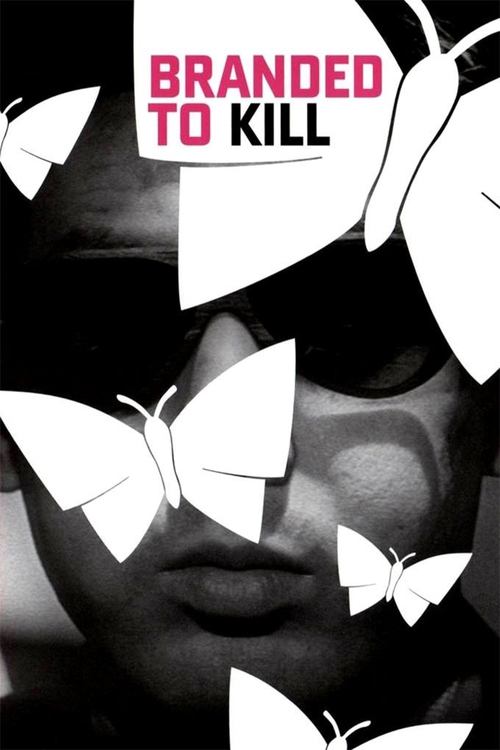
The story opens with Gorô Hanada executing a hit on a high-profile target, only to freeze at the critical moment. He stares at a butterfly fluttering near the victim before pulling the trigger too late, letting the man escape. In the brutal world of organized crime, a failed job is not just a mistake; it is a capital offense. Hanada returns to his boss, Michihiko Yabuhara, expecting punishment or execution, but instead receives a chilling ultimatum: he must be killed to maintain the organization's reputation.
Hanada goes into hiding, realizing that someone has been hired to take him out. The killer is known only as Number One, a figure so legendary that even the yakuza bosses fear crossing him. As Hanada flees through the bustling streets of Tokyo, he encounters a series of surreal obstacles. He visits an optometrist who claims to have seen him coming, meets a jeweler who knows his secrets, and runs into other assassins who seem to know more about him than he does. Each encounter feels like a step deeper into a nightmare where reality begins to fracture.
Misako Nakajô enters the picture as a beautiful stranger who approaches Hanada with a proposition. She offers him a chance to kill a target protected by the very organization that wants him dead. Her charm masks a dangerous agenda, and her presence forces Hanada to question whether he is hunting Number One or if he is simply running in circles. The film shifts between gritty noir sequences and dreamlike montages, capturing Hanada's deteriorating mental state.
Throughout the journey, Hanada relies on his wits and his gun, but the psychological pressure mounts. He sees butterflies everywhere, hears whispers in the wind, and struggles to distinguish between memory and hallucination. The supporting cast adds layers of absurdity, from a bartender who speaks in riddles to a rival assassin named Ko who treats murder like a game. Suzuki uses these characters to highlight the futility of violence in a world that has lost its moral compass.
As the hunt intensifies, Hanada realizes that the only way to survive is to confront his pursuer directly. The narrative builds toward a climax that challenges the viewer's perception of the story. Suzuki employs rapid editing, jarring camera angles, and symbolic imagery to create a sense of disorientation. The audience is left wondering if Hanada is truly being hunted by an external force or if he is trapped inside his own fractured psyche. The film refuses to offer easy answers, leaving the final resolution open to interpretation.
Branded to Kill (1967) Original Trailer [FHD]
Branded to Kill - Criterion Collection Trailer
Critical Consensus
Suzuki's surrealist masterpiece blends noir aesthetics with absurdist humor to tell the story of a hitman hunting his own reflection. Its bold experimentation and iconic imagery cemented its status as a cult classic.
“Suzuki's 'Branded to Kill' is a fever dream of a movie, a wild ride through the dark corners of the human psyche.”
A.O. Scott
The New York Times
“A brilliant, bizarre, and utterly unforgettable film that defies all conventions of the crime genre.”
Peter Bradshaw
The Guardian
“Suzuki's most insane and exhilarating work, a film that feels like a hallucination brought to life.”
David Edelstein
New York Magazine
Joe Shishido
Gorô Hanada
Kōji Nanbara
No. 1
Isao Tamagawa
Michihiko Yabuhara
Annu Mari
Misako Nakajô
Mariko Ogawa
Mami Hanada
Director
Seijun Suzuki
Writers
Seijun Suzuki, Seiichirō Yamaguchi, Chūsei Sone, Yasuaki Hangai, Yōzō Tanaka
Composer
Naozumi Yamamoto
Cinematographer
Kazue Nagatsuka
Producers
Takiko Mizunoe, Kaneo Iwai
Mainichi Film Awards (1967)
Best Director: Won
Kinema Junpo Awards (1967)
Best Film: Won
Sight & Sound Critics' Poll (2018)
Top 100 Films of All Time: Ranked #14
Join the community
fans discussing