 United States
About
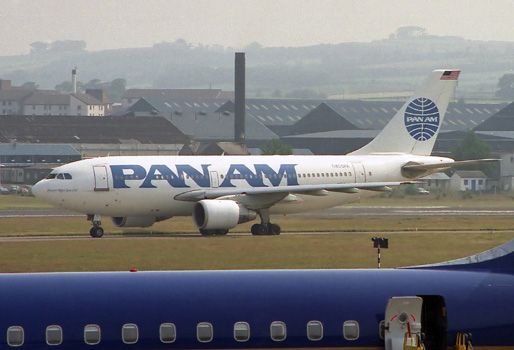
Pan American World Airways, widely recognized as Pan Am, stood as a titan of the skies, serving as the United States' largest international air carrier and its de facto flag carrier for a substantial part of the 20th century. This pioneering airline was the first to offer flights around the globe, introducing transformative innovations like the Boeing 707, the first American jetliner in 1958, and later the iconic Boeing 747 jumbo jet. Computerized reservation systems also trace their origins to Pan Am. Until its operations ceased on December 4, 1991, Pan Am was synonymous with the luxury and allure of international travel. Its distinctive blue globe logo, often called "The Blue Meatball," the use of "Clipper" in its aircraft names, and the crisp white pilot caps, all contributed to its enduring status as a cultural emblem of the 20th century.
The airline's journey began on March 14, 1927, initially as Pan American Airways, with a modest airmail and passenger service connecting Key West, Florida, to Havana, Cuba. Under the visionary leadership of entrepreneur Juan Trippe, Pan Am embarked on a path of rapid expansion throughout the 1930s. The acquisition of a fleet of flying boats allowed the airline to concentrate on routes across Central and South America, eventually extending its reach to transatlantic and transpacific destinations. By the mid-20th century, Pan Am had effectively secured a near-monopoly on international flight paths.
During its zenith, from the late 1950s through the early 1970s, Pan Am commanded an advanced fleet and employed highly trained personnel, offering unparalleled amenities. In 1970, the airline transported 11 million passengers to 86 countries, with service reaching every continent save Antarctica. In an era where many national carriers were government-owned, Pan Am emerged as the unofficial representative of American aviation on the global stage. Its influence was such that it became a founding member of the International Air Transport Association (IATA), the primary global body for airlines.
The latter half of the 1970s marked the beginning of significant challenges for Pan Am, both internally and externally. The deregulation of the American airline industry in 1978 intensified competition. Despite multiple efforts at financial reorganization and rebranding throughout the 1980s, the airline progressively divested assets. The culmination of these struggles was its bankruptcy filing on December 4, 1991, leading to the cessation of all operations. At the time of its closure, Pan Am's trademark held the second-highest global recognition. For many travelers and Americans, its demise symbolized the end of a golden era in air travel. The brand's legacy and imagery were subsequently acquired in 1998 by the railroad holding company Guilford Transportation Industries, which rebranded as Pan Am Systems and adopted the airline's iconic logo.
Products & Sub-brands
Frequently Asked Questions
Who were the primary founders of Pan Am?
When did Pan Am cease operations?
What was Pan Am most famous for?
Does the original Pan Am airline still exist?
What happened to Pan Am's assets after its closure?
Keywords
Company Info
- Founded
- March 14, 1927
- Founder
- Juan Trippe
- Headquarters
- New York City
- Industry
- Aviation
- First flight route
- Key West, Florida to Havana, Cuba
- Introduced Boeing 707
- 1958
- Global destinations by 1970
- 86 countries
- Bankruptcy date
- December 4, 1991
- Brand acquired
- 1998
Official Website
www.panam.org
Join the community
fans discussing