London Underground
 United Kingdom
"The world's first underground railway, still moving London 160 years on"
About
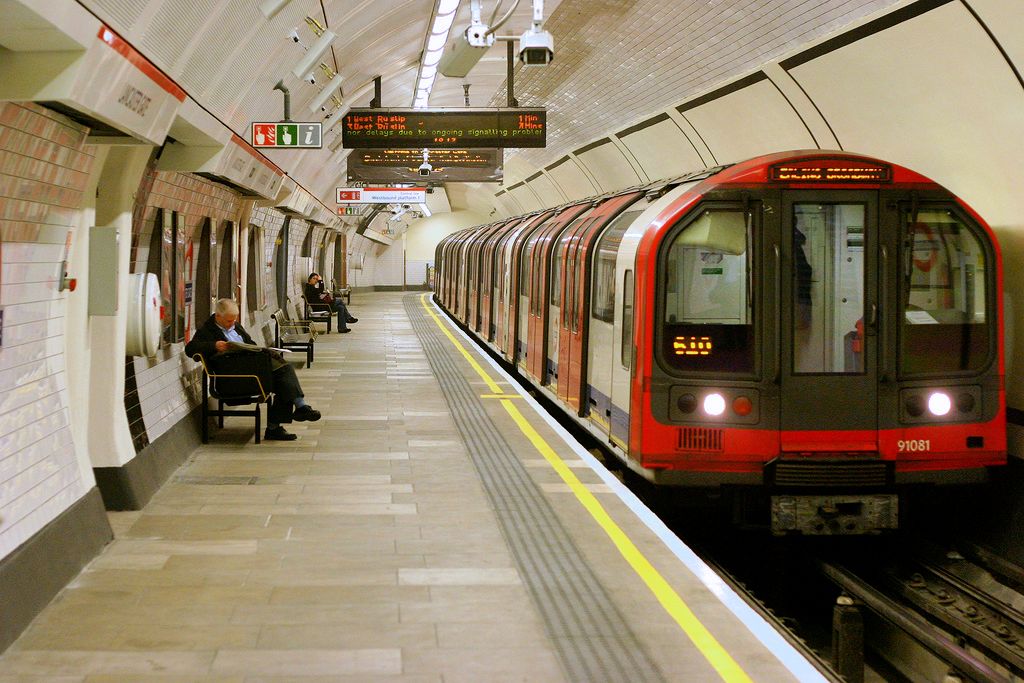
Every weekday morning, more than a million people descend staircases and escalators into a 160-year-old warren of tunnels beneath London. The London Underground, known to nearly everyone as the Tube, carries roughly 1.2 billion passenger journeys a year across 11 lines and 272 stations. Transport for London runs the network, which stretches 250 miles from the center of the city out into Buckinghamshire, Essex, and Hertfordshire. Only about 45 percent of the track is actually underground. The rest runs on the surface, mostly north of the Thames.
The system began on January 10, 1863, when the Metropolitan Railway opened the world's first underground passenger line. Early routes were built by cut-and-cover digging just below the streets. Deeper circular tunnels came later, and the City and South London Railway pioneered electric traction underground in 1890. Competing private companies ran separate lines until the brand and then the ownership were consolidated, first under the Underground name in the early 20th century and then as London Transport in 1933. The Victoria and Jubilee lines arrived after the war. Transport for London took over in 2000 and operates the system through its subsidiary, London Underground Limited.
Design has been part of the story from the start. Edward Johnston's 1916 typeface, the roundel logo, and Harry Beck's 1931 schematic map turned a transit system into a template for wayfinding around the world. The map's logic still shapes how London presents its buses, trains, and bikes on a single diagram. Under the hood, the network runs on a four-rail DC system and has absorbed major changes over the decades: signalling upgrades, the weekend Night Tube, and stricter safety rules after the 1987 King's Cross fire. Ticketing moved from the Travelcard in 1983 to the Oyster card in 2003, then to contactless bank cards in 2014, a first for a major public transit network.
Products & Sub-brands
Frequently Asked Questions
Who owns the London Underground?
Who is the CEO of London Underground?
How much is the London Underground worth?
Is the London Underground still running?
How does the London Underground compare to other metro systems?
Keywords
Sources
Company Info
- Founded
- January 10, 1863
- CEO
- Andy Lord (Commissioner of Transport for London)
- Headquarters
- Palestra, 197 Blackfriars Road, London SE1
- Industry
- urban and suburban passenger land transport, passenger transport, rail transport
- Parent Company
- Transport for London (TfL)
- Number of lines
- 11
- Number of stations
- 272
- Track length
- 250 miles (400 km)
- Annual journeys
- 1.2 billion
- Commissioner of TfL
- Andy Lord
- Mayor of London
- Sadiq Khan
Official Website
tfl.gov.uk/modes/tube/
Join the community
fans discussing