London School of Economics and Political Science
 United Kingdom
"Understanding the causes of things"
About
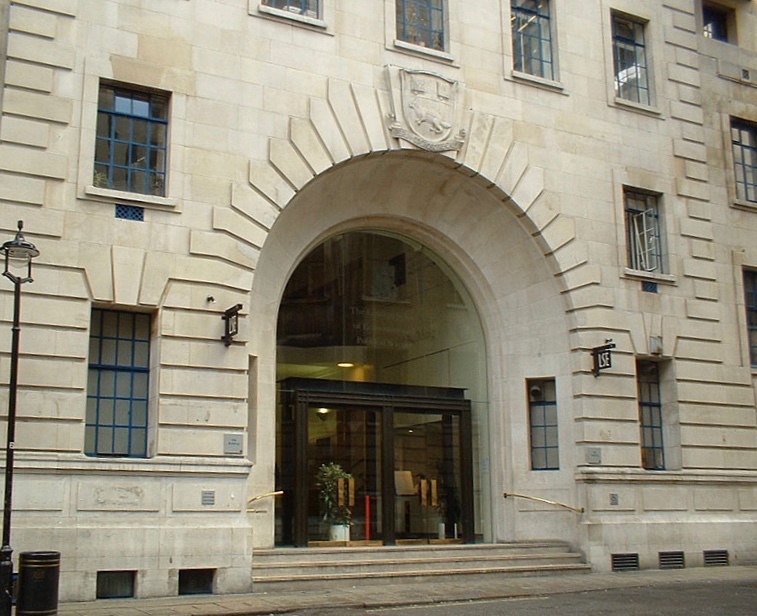
The London School of Economics and Political Science, better known as LSE, is a public research university tucked into the bustling heart of London. It specializes in the social sciences, both pure and applied, and has earned a reputation as one of the world's leading institutions in these fields. Founded in 1895 by a group of Fabian Society intellectuals, including Sidney and Beatrice Webb and the playwright George Bernard Shaw, LSE was created with a mission to study and address the pressing social issues of the day. It joined the University of London in 1900 and began awarding its own degrees in 2008, becoming a fully independent university within that federation in 2022.
LSE sits in the London Boroughs of Camden and Westminster, right on the edge of Covent Garden and Holborn, in an area historically known as Clare Market. As of the 2023/24 academic year, it has fewer than 13,000 students, with a majority pursuing postgraduate studies and nearly two-thirds hailing from outside the UK. This international flavour is a defining characteristic of the school. Financially, LSE is robust, boasting the sixth-largest endowment among UK universities and an income of £548.2 million in 2024/25, with £39.2 million coming from research grants.
The university is a member of the prestigious Russell Group and the Association of Commonwealth Universities, and it's often grouped with Oxford and Cambridge as part of the "golden triangle" of southern English research institutions. Its main library, the British Library of Political and Economic Science, is one of the world's largest dedicated to the social sciences. LSE's alumni network is nothing short of extraordinary: since 1990 alone, it has produced 24 prime ministers or presidents, the second-highest number of any UK university. Over its history, more than 40 world leaders, 21 Nobel laureates, and several presidents of the European Commission and International Court of Justice have studied or taught here.
Products & Sub-brands
Frequently Asked Questions
Is LSE part of the University of London?
Who is the current Director (CEO equivalent) of LSE?
How much is LSE worth or what is its annual budget?
How does LSE compare to Oxford or Cambridge?
Is LSE still in business and what is its current status?
Keywords
Sources
Company Info
- Founded
- 1895
- Founder
- Sidney Webb, Graham Wallas, Beatrice Webb, George Bernard Shaw
- Headquarters
- London, United Kingdom
- Industry
- Higher Education
- Revenue
- £548.2 million (2024/25)
- Employees
- 3,000+ (academic and professional services staff)
- Motto
- Rerum cognoscere causas
- Students
- ~13,000 (2023/24)
- Endowment
- Sixth largest among UK universities
- Affiliation
- Russell Group, University of London
Official Website
lse.ac.uk
Join the community
fans discussing