 France
About
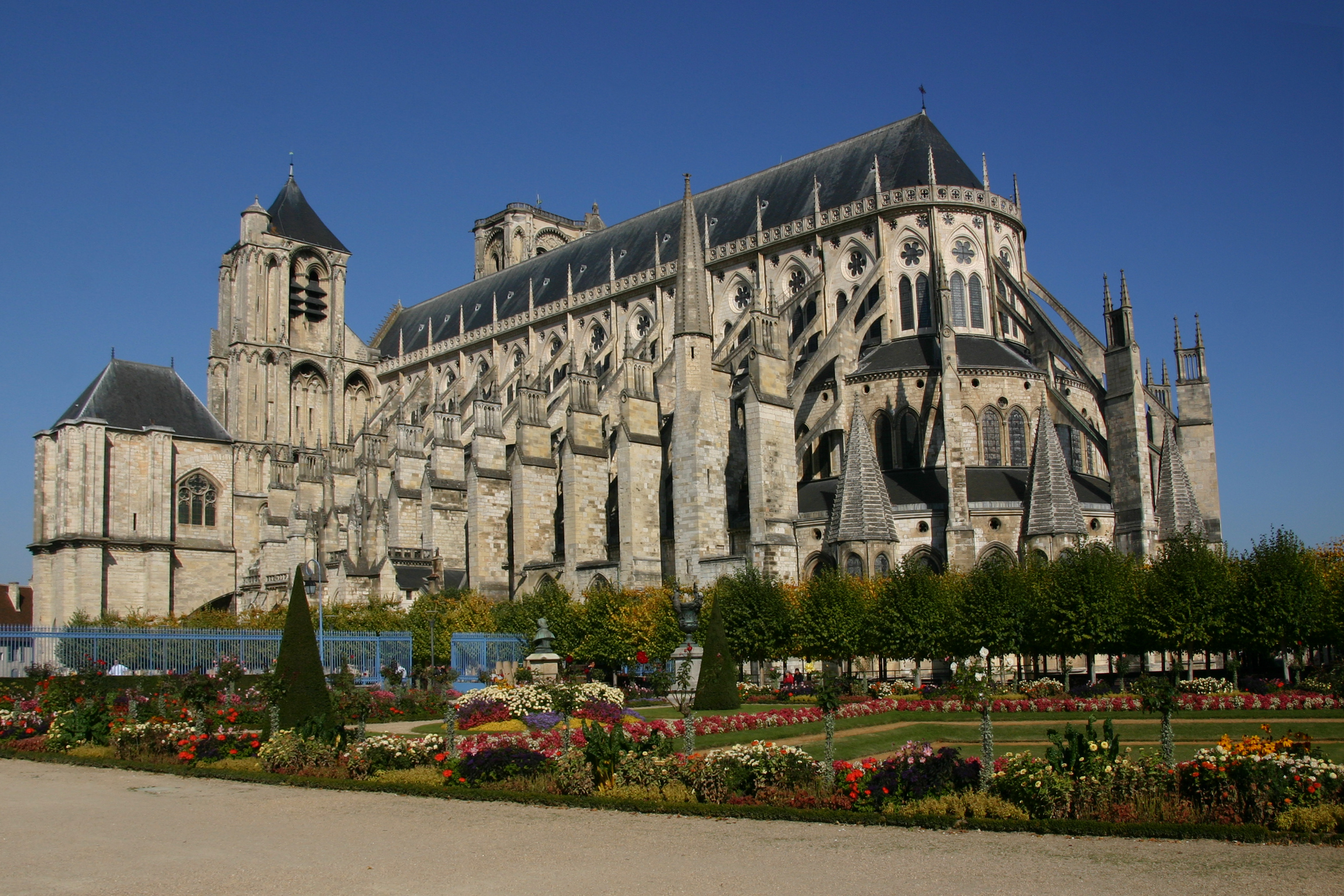
Bourges Cathedral, officially the Cathedral of Saint Stephen of Bourges (Cathédrale Saint-Étienne de Bourges), stands as a masterwork of French Gothic architecture in the heart of the Berry region. This Roman Catholic church, dedicated to Saint Stephen, serves as the seat of the Archbishop of Bourges. Construction began in 1195 on the site of an earlier Romanesque structure and continued until 1230, placing it in the same era as Chartres Cathedral. The cathedral is celebrated for its harmonious proportions, its remarkable stained glass windows, and its unusually wide nave, which lacks the typical transept. Its facade, with five portals, is a striking example of High Gothic design. The building has been a UNESCO World Heritage Site since 1992, recognized for its architectural significance and its role in the development of Gothic style. While not as widely known as Notre-Dame de Paris or Chartres, Bourges Cathedral is a hidden gem that draws visitors with its serene beauty and historical depth.
The cathedral's design breaks with convention. Most Gothic cathedrals feature a transept, but Bourges omits it entirely, allowing the nave, choir, and apse to flow as one continuous space. This creates an interior of remarkable unity and light, with double aisles on both sides giving a sense of expansive width. The west front, completed in the mid-13th century, is adorned with five richly sculpted portals, each telling biblical stories in stone. The tympanum of the central portal depicts the Last Judgment, a theme that would influence later cathedrals. The stained glass, dating from the 13th to the 17th centuries, is among the finest in France, including the famous 15th-century Annunciation window. These windows not only illuminate the interior with color but also served as a visual Bible for a largely illiterate medieval congregation.
Today, Bourges Cathedral remains an active place of worship, with daily masses and a vibrant parish community. It also functions as a major tourist destination, drawing over 600,000 visitors each year, and as a venue for concerts and cultural events. Its crypt, which houses the remains of the earlier Romanesque church, and its tower, offering panoramic views of the city, are open to the public. The cathedral's blend of architectural innovation, artistic splendor, and living faith makes it a unique treasure, not just for France but for the world.
Mission
Bourges Cathedral serves as the mother church of the Archdiocese of Bourges, dedicated to the worship of God and the proclamation of the Christian faith. Its mission is to provide a sacred space for liturgy, prayer, and the sacraments, and to preserve and share its rich spiritual and artistic heritage with pilgrims, visitors, and future generations. The cathedral also functions as a center for community life, offering concerts, exhibitions, and educational programs that connect the local population and tourists with its history and beauty.
History
The story of Bourges Cathedral begins in the late 12th century, when the city of Bourges, a royal seat since 1100, had outgrown its earlier Romanesque cathedral. In 1195, Archbishop Henri de Sully, brother of the Bishop of Paris, laid the foundation stone for a new, larger church. The ambitious project was financed by the crown and local nobility, reflecting the city's rising importance. The main construction phase lasted until about 1230, remarkably swift for a Gothic cathedral, though work on the facade and towers continued into the 13th century. By 1324, the cathedral was essentially complete, with the north tower, known as the Tour de Beurre, added later in the 15th century, funded by donations from the faithful who were allowed to eat butter during Lent.
The cathedral's design, attributed to an unknown architect, was revolutionary. Instead of the traditional cruciform plan, the builders chose a basilical layout with no transept, creating a vast, uninterrupted interior. The use of iron reinforcement, confirmed by radiocarbon dating in 2014, was a pioneering technique that allowed for thinner walls and larger windows. This structural innovation, combined with the soaring rib vaults, gave the cathedral an ethereal lightness. Over the centuries, the cathedral weathered the Wars of Religion and the French Revolution, when much of its interior decoration was destroyed or looted. In the 19th century, architect Eugène Viollet-le-Duc oversaw restoration work, and in 1992, UNESCO recognized the cathedral's global significance, inscribing it on the World Heritage List.
Notable People
Stained-glass windows of Crypt of Cathédrale Saint-Étienne de Bourges
Milestones
1195
Construction begins under Archbishop Henri de Sully
1230
Main building campaign ends; cathedral largely complete
1324
Building essentially finished
15th century
North tower (Tour de Beurre) added
1992
Inscribed as UNESCO World Heritage Site
Sources
Organization Info
- Founded
- 1195
- Headquarters
- Bourges, France
- Country
- France
- Type
- Religious
- UNESCO World Heritage Site
- 1992
- Annual visitors
- 600,000+
- Dedicated to
- Saint Stephen
Official Website
www.belleseglises.com/eglises/79
Join the community
fans discussing