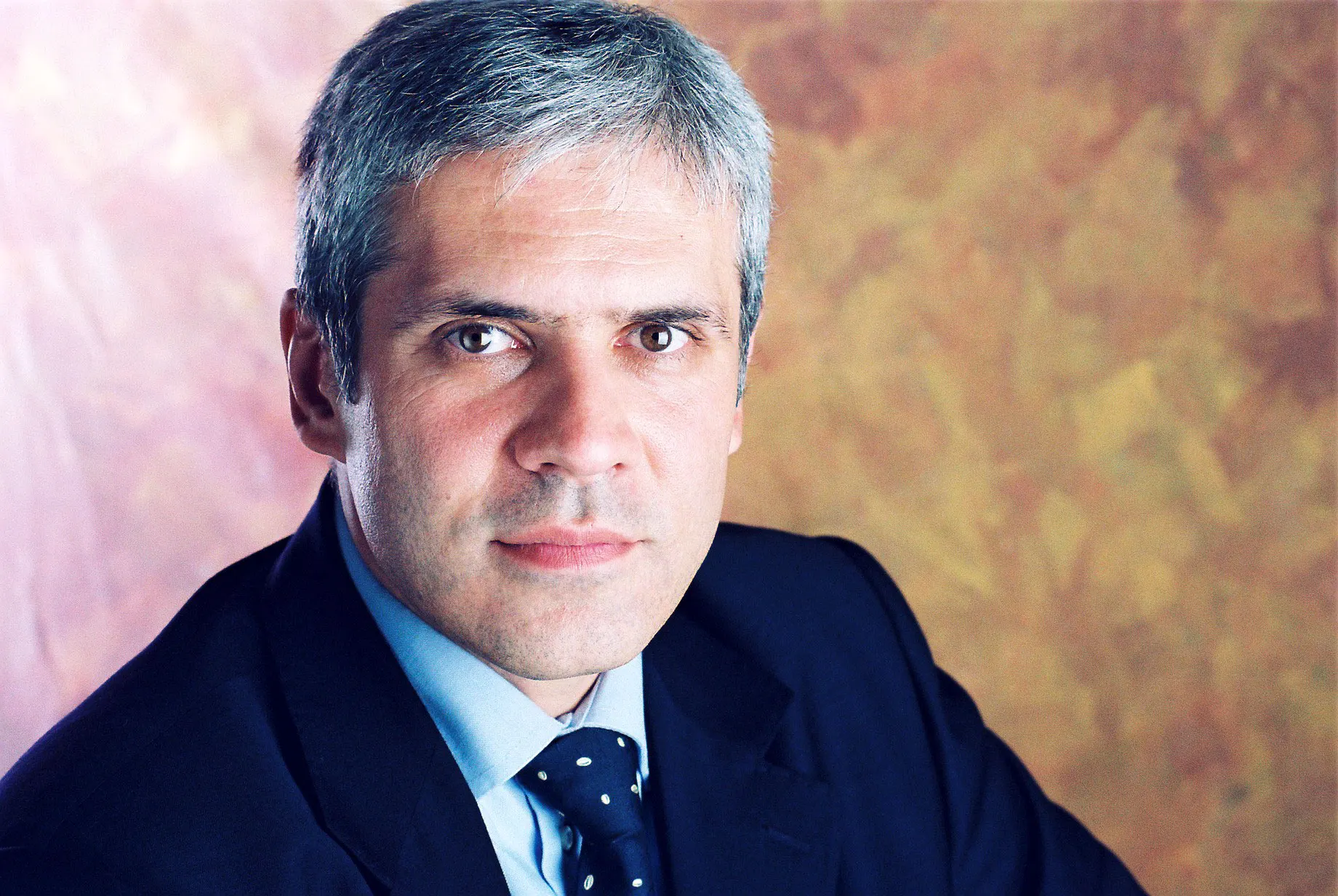
Boris Tadić
 Serbia
Birthday
January 15, 1958
Birth Sign
Capricorn
Birthplace
Sarajevo, Bosnia and Herzegovina
Age
68 years old
Height
5 ft 11 in (180 cm)
About
Boris Tadić is a Serbian politician and psychologist who served as the third President of Serbia from 2004 to 2012. He led the Democratic Party (DS) during the same period and later founded the Social Democratic Party (SDP). Known for his pro-European stance, Tadić was a central figure in Serbia's post-Milošević transition, advocating for regional reconciliation and EU integration.
Tadić's political career includes roles as Minister of Telecommunications and Minister of Defence before his presidency. His tenure saw Serbia sign the Stabilisation and Association Agreement with the EU, achieve candidate status, and cooperate with the International Criminal Tribunal for the former Yugoslavia. He was the first Serbian head of state to visit the Srebrenica Genocide Memorial, a gesture that defined his legacy.
As of 2026, Tadić remains politically active as the leader of the SDP, engaging in coalition talks and commentary on regional affairs. His intellectual demeanor and measured speaking style distinguish him in a region often marked by populist rhetoric.
Early Life & Background
Boris Tadić was born on January 15, 1958, in Sarajevo, to a Serb father and a Bosniak mother. The family moved to Belgrade, where he attended the First Belgrade Gymnasium. His mixed heritage later informed his dedication to reconciliation in the Balkans.
Tadić enrolled at the University of Belgrade's Faculty of Philosophy, earning a degree in psychology in 1981 and a master's in social psychology in 1986. Before entering politics, he worked as a military psychologist in the Yugoslav People's Army, a journalist, and a teacher at his old gymnasium, where he taught psychology to high school students.
His political awakening came in 1990 when he joined the Democratic Party shortly after its founding. He was elected to the National Assembly of the Federal Republic of Yugoslavia in 1993. Following the democratic changes of October 2000 that ousted Slobodan Milošević, Tadić's rise was rapid. He was appointed Minister of Telecommunications in 2001 and then Minister of Defence in 2003.
The assassination of DS leader Zoran Đinđić in 2003 thrust Tadić into the party's leadership. He assumed the role in 2004 and ran for president, defeating Tomislav Nikolić in the second round. This victory made him the first pro-Western president of Serbia since the fall of Milošević.
Career Growth
Tadić's presidency began in 2004 with a focus on European integration and regional stability. In 2005, he made a historic visit to the Srebrenica Genocide Memorial, publicly acknowledging the massacre as genocide. He championed a parliamentary resolution condemning the massacre in 2010.
His first term saw Serbia sign the Stabilisation and Association Agreement with the EU in 2008, leading to visa-free travel to the Schengen Area and EU candidate status. Serbia also fulfilled its obligations to the ICTY, including the arrest of Ratko Mladić in 2011.
Re-elected in 2008, Tadić's second term was complicated by Kosovo's declaration of independence that same year and the global financial crisis. In 2012, facing protests led by Nikolić's Serbian Progressive Party, he called for early elections and lost to Nikolić.
After stepping down as DS leader in November 2012, Tadić left the party to form the New Democratic Party, renamed the Social Democratic Party in 2014. The SDP boycotted the 2020 elections but remains active. As of 2026, Tadić is engaged in coalition negotiations with the Socialist Party of Serbia, signaling his continued influence in Serbian politics.
Career Timeline
Public Image & Style
Boris Tadić's public image is that of a measured, intellectual statesman. He is often seen in conservative suits and glasses, projecting an academic rather than populist persona. His speeches are calm and deliberate, a contrast to the fiery rhetoric common in the region.
Media and fans perceive him as a pro-Western reformer who prioritized EU integration and regional reconciliation. His visit to Srebrenica in 2005 endeared him to international observers but drew domestic criticism from nationalists.
On social media, Tadić maintains an active but controlled presence on X (Twitter), where he posts commentary on geopolitics and regional affairs. His follower count is modest compared to pop stars, focusing on policy-oriented discourse. He is respected for his intellectual rigor and commitment to democratic values.
Fame & Fandom (iFAMOUS Rankings)
Boris Tadić commands a distinct public profile defined by his role as a statesman rather than an entertainer, resulting in a fanbase with no formal name or organized cultural mythology. Unlike pop figures who inspire viral rituals or street gatherings, his supporters are typically observers of political discourse and regional diplomacy who engage through policy alignment rather than fandom campaigns. His legacy is anchored in the stability he projected during Serbia's transition, drawing respect from international institutions and domestic reformers alike without the chaotic adoration reserved for celebrities. Despite this measured appeal, his global recognition remains significant within specific geopolitical contexts. According to the iFANN Global Fame Rankings, Boris Tadić holds the position of the 24th most famous person from Serbia, a standing that has remained steady across recent measurement cycles. This placement reflects his enduring visibility in Balkan history and European integration narratives. The rankings, which track global attention across media coverage, search activity, and consumption signals worldwide, confirm his status as a prominent figure among Serbian leaders. While he does not appear on lists of global entertainment icons, his consistent presence in diplomatic archives ensures his rank remains stable within national boundaries. He is recognized not for fleeting viral moments but for sustained contributions to regional reconciliation and EU accession talks. The data indicates that while his fame is concentrated in Europe and the former Yugoslavia, it retains enough weight to secure a high ordinal ranking relative to his countrymen. This specific placement underscores the lasting impact of his presidency and his continued relevance in discussions regarding post-Milošević Serbia.
Interesting Facts and Legends
Boris Tadić is fluent in English, French, and German, languages that facilitated his extensive diplomatic engagements throughout his career. He possesses a deep appreciation for classical music and frequently attends concerts in Belgrade. Prior to dedicating himself to psychology and politics, he briefly entertained the possibility of a professional tennis career. His signature aesthetic consists of conservative suits and glasses, a visual choice reflecting his academic background. A lesser-known detail is that he once taught psychology at the First Belgrade Gymnasium, the very institution where he had been a student. He has served as a member of the Club de Madrid and the European Leadership Network, organizations comprising former world leaders. His calm, measured speaking tone stands in contrast to the more populist rhetoric common in the region, establishing an intellectual approach to political discourse. Among the verified events of his public life, his resignation as President of Serbia on April 4, 2012, marked a pivotal moment that paved the way for early presidential elections scheduled for May 6. His tenure also featured significant diplomatic milestones, such as his official visit to Sarajevo in July 2011 aimed at improving relations between Bosnia-Herzegovina and Serbia. Additionally, he held high-profile meetings with international leaders, including Russian President Vladimir Putin at the Kremlin in January 2008 and U.S. Under Secretary Marc Grossman in September 2009.
Notable Quotes
“I am here to say sorry... I apologize for what happened in Srebrenica.”
“Serbia must choose between the past and the future.”
“We cannot build a modern society on the ruins of the past.”
Family & Personal Life
Boris Tadić is married to Tatjana Tadić (née Jovanović), a psychologist. The couple met during their university years at the University of Belgrade in the late 1970s and married in the early 1980s. Their relationship has been one of the longest-standing partnerships in Serbian political life.
They have two children: a daughter, Milica, and a son, Marko. Milica has occasionally appeared in media contexts related to her father's humanitarian work, while Marko has largely stayed out of the public eye.
Tadić's mixed heritage, with a Serb father and Bosniak mother, shaped his commitment to ethnic reconciliation. The family has maintained a private life, rarely sharing personal details with the press.
Notable Connections
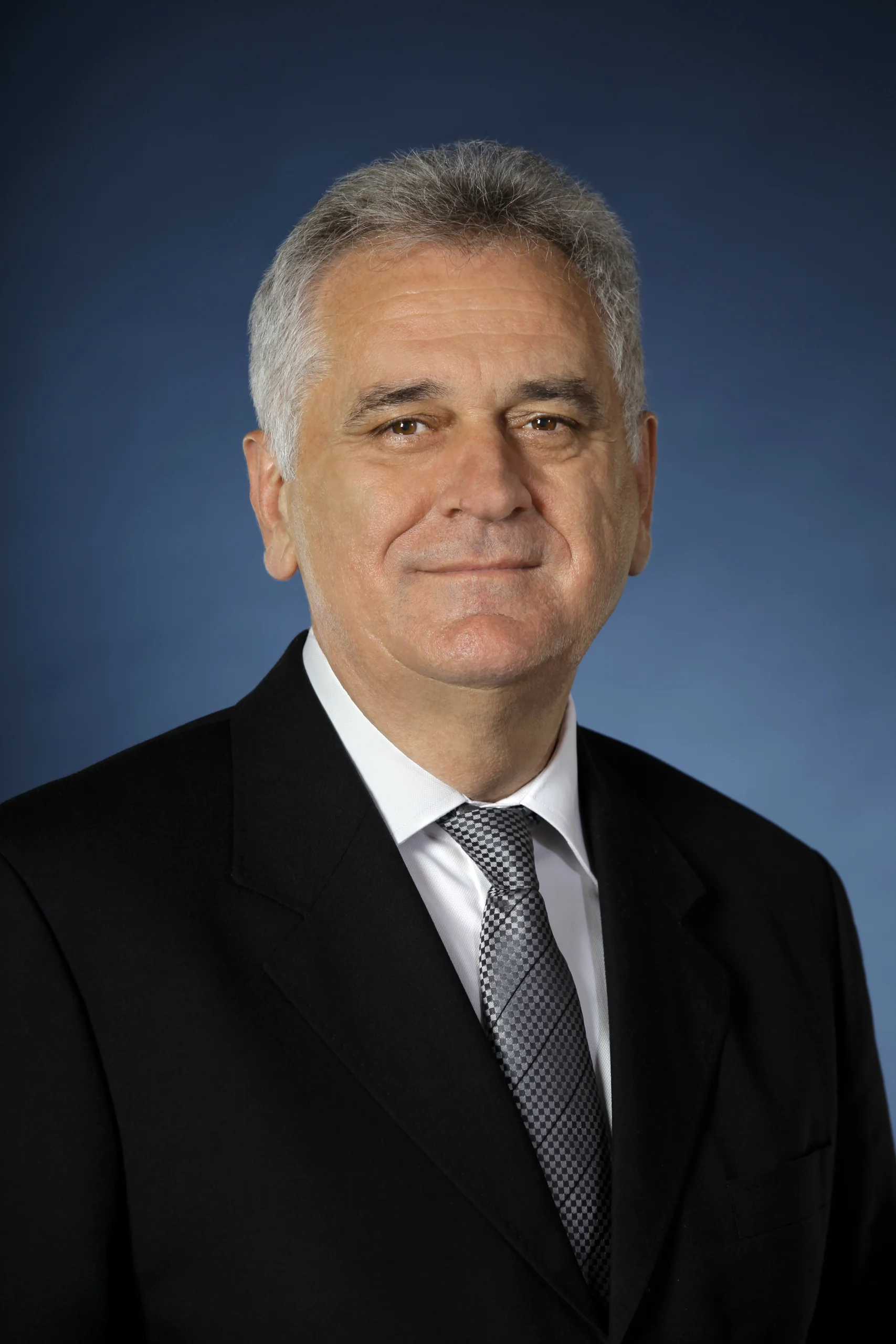
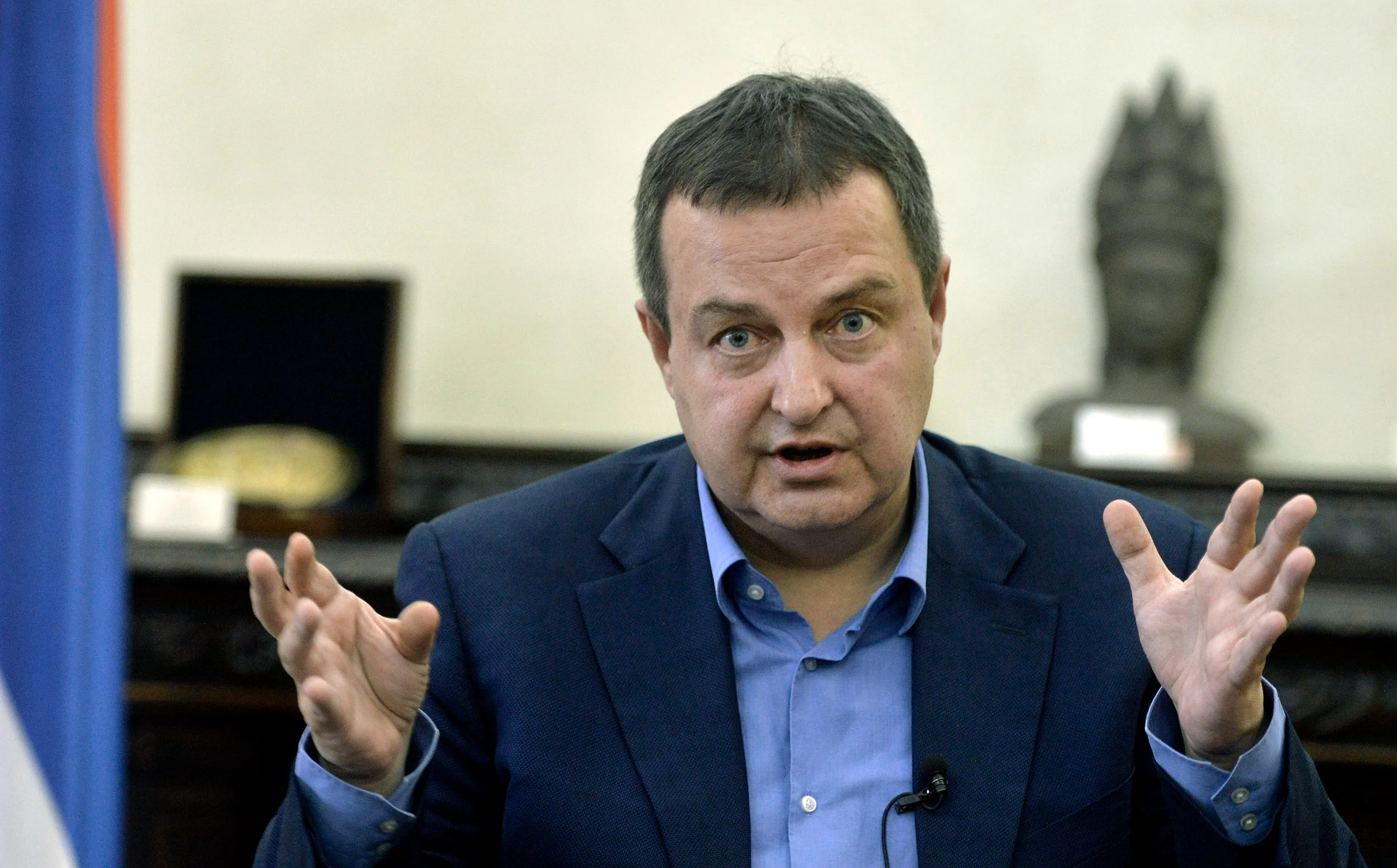
Boris Tadić is associated with several key figures in Serbian and European politics. His wife, Tatjana Tadić, is a psychologist. He worked closely with Zoran Đinđić, the assassinated DS leader, and later with Tomislav Nikolić, his political rival. In recent years, he has engaged with Ivica Dačić of the Socialist Party of Serbia. During his presidency, he collaborated with European leaders such as Angela Merkel and François Hollande.
Relationships & Dating History
Boris Tadić has had a notably private personal life compared to many public figures. He married Tatjana Jovanović, a psychologist, in the early 1980s, after meeting her during their university years at the University of Belgrade. Their relationship has been one of the longest-standing in Serbian political history.
As of 2026, Tadić remains married to Tatjana, with no reports of divorce or separation. They have two children, Milica and Marko. No other public romantic relationships or flings have been documented by credible sources. Tadić's public image is consistently tied to his family unit with Tatjana.
- MarriedTatjana Tadić1982 - presentCurrentMet at university in Belgrade; married in the early 1980s.
Salary, Net Worth In 2026
$1 Million
iFANN Editorial Team estimate
iFANN currently estimates Boris Tadić's net worth at $1 Million as of 2026. This figure reflects his long career in public service, where salaries are modest compared to business leaders. His income derives primarily from his academic work, book royalties, and speaking engagements post-presidency. As a former president and party leader, Tadić has received standard state pensions and benefits. He has not engaged in major business ventures or endorsements, consistent with his public image as a dedicated public servant. Financial reports from Serbian sources suggest a comfortable middle-class accumulation over four decades of service. His speaking engagements at international forums, such as the Concordia Summit and European Leadership Network events, contribute to his income. These appearances are often related to his expertise in regional politics and reconciliation. Overall, his net worth is modest compared to international politicians, but sufficient to maintain a stable lifestyle.
Awards Won (3)
Boris Tadić has received several diplomatic honors for his work on regional stability and reconciliation. These include the Order of the White Eagle from Poland, the Grand Cross of the Order of Merit from Germany, and the Order of St. Sava from the Serbian Orthodox Church. He has also been granted the Freedom of the City from several European municipalities.
2006 · State honor
For contributions to regional stability
2007 · State honor
For contributions to international cooperation
Known For
President of Serbia
2004 · President
Srebrenica visit
2005 · First Serbian head of state to visit memorial
EU integration
2008 · Signed Stabilisation and Association Agreement
Keywords
Sources
Quick Facts
- Profession
- politician, psychologist
- Born
- January 15, 1958
- Birthplace
- Sarajevo
- Gender
- Male
- Spouse
- Tatjana Tadić
- Birth Sign
- Capricorn
Personal Details
- Full Name
- Boris Tadić
- Height
- 5 ft 11 in (180 cm)
- Spouse
- Tatjana Tadić
- Children
- Milica Tadić, Marko Tadić
- Education
- University of Belgrade (B.A. in psychology, 1981; M.A. in social psychology, 1986)
Frequently Asked Questions
What is Boris Tadić's current political role?
Is Boris Tadić still married?
Why did Boris Tadić lose the 2012 election?
What is Boris Tadić's net worth?
What is Boris Tadić best known for?
Social Media
Similar People
Join the community
fans discussing