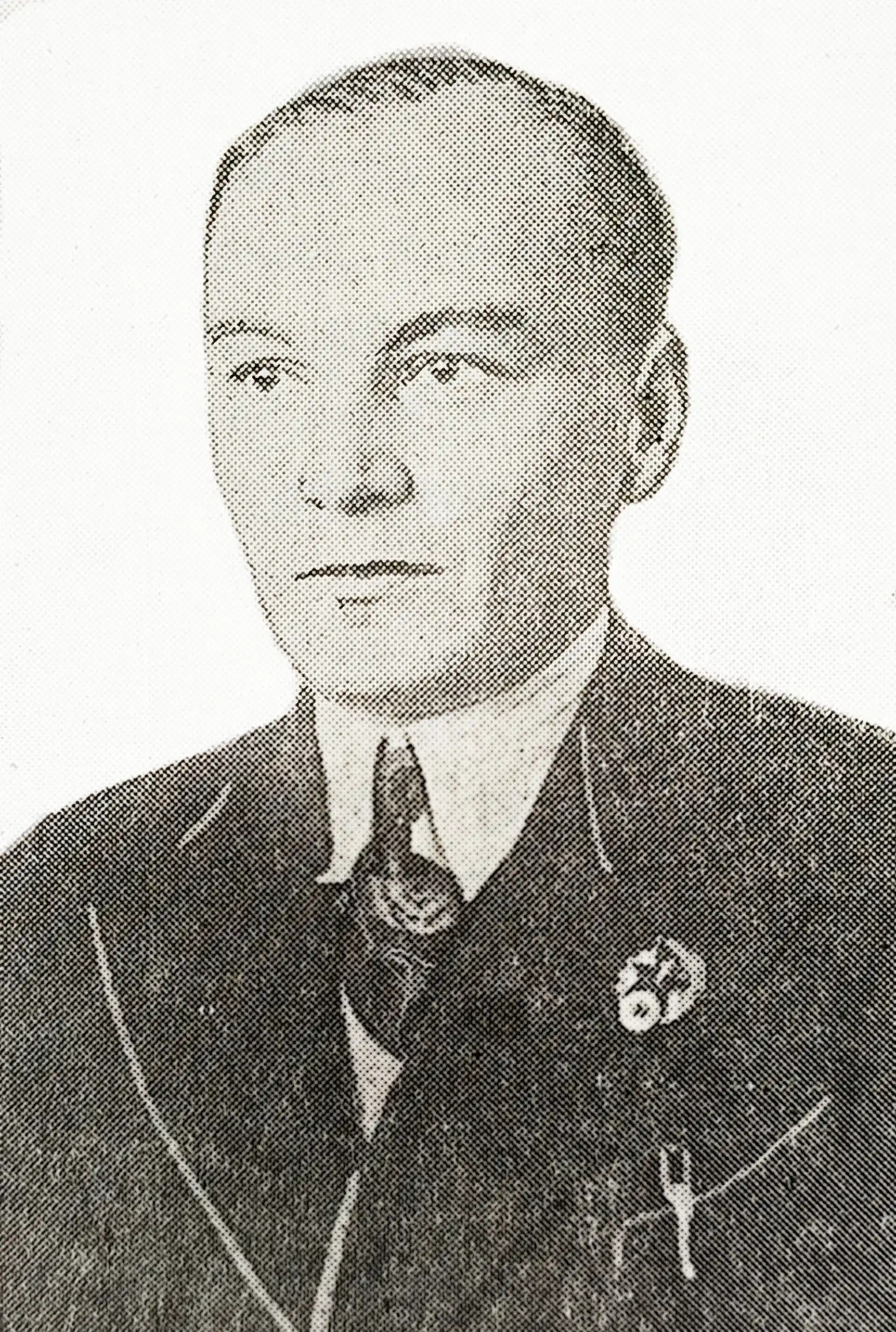
Boris Balinsky
 South Africa
Biologist•Embryologist•Entomologist
Also known as: Borys Ivanovych Balinsky, Boris Ivan Balinsky, Boris Ivanovich Balinsky
Birthday
September 23, 1905
Birth Sign
Virgo
Birthplace
Kyiv, Ukraine
Age
Died at 91
About
Borys Ivanovych Balinsky was a Ukrainian-South African biologist, embryologist, and entomologist. He is best remembered for authoring the landmark textbook An Introduction to Embryology and for pioneering the use of electron microscopy in developmental biology.
Balinsky held professorships at Kyiv University and later the University of the Witwatersrand in Johannesburg, where he headed the Department of Zoology for nearly 25 years. His research on amphibian development and insect morphology influenced generations of scientists.
Today, his legacy lives on through the many students he mentored and the widespread use of his textbook, which shaped embryology education globally. The University of the Witwatersrand held a symposium in his honor in 2024, underscoring his enduring impact on the field.
Early Life & Background
Borys Balinsky was born in Kyiv, Ukraine, on September 23, 1905, during a time of great political upheaval. Growing up in the Russian Empire, he witnessed the Russian Revolution and the subsequent Soviet consolidation of power, which would later shape his life's path.
From an early age, he showed a keen interest in the natural sciences. He enrolled at Kyiv University, where he studied biology and zoology, quickly distinguishing himself as a gifted student. His academic rise was meteoric: at just 28, he earned his Doctor of Biological Sciences and was appointed professor, making him one of the youngest in the Soviet academic system.
During the 1930s, Balinsky conducted pioneering research in experimental embryology at Kyiv University, focusing on amphibian development. His early work laid the groundwork for his later international reputation. However, the outbreak of World War II in 1941 forced him to flee the Soviet Union, interrupting his career and setting him on a path that would eventually lead to South Africa.
Career Growth
In 1949, Balinsky joined the University of the Witwatersrand in Johannesburg as Professor and Head of the Department of Zoology, a position he held until his retirement in 1973. At Wits, he continued his research in experimental embryology and became a leader in applying electron microscopy to biological specimens, a then-novel technique that opened new frontiers in developmental biology.
His most enduring contribution came in 1960 with the publication of An Introduction to Embryology. The textbook became a standard reference worldwide, running through multiple editions and influencing countless students. During his tenure, he also served as Dean of the Faculty of Science, further cementing his role as a leader in academia.
Balinsky's work earned him deep respect as a scientist, teacher, and mentor. His research on amphibian development and insect morphology continued to push boundaries, and his legacy was honored with a symposium at Wits in 2024, celebrating his contributions to the field.
Career Timeline
Public Image & Style
In the scientific community, Balinsky is remembered as a dedicated researcher and mentor. His reputation rests on his pioneering work in embryology and electron microscopy, as well as his influential textbook. He was known for his rigorous approach and his ability to explain complex concepts clearly.
His Ukrainian heritage and his survival of 20th-century upheavals, including fleeing the Soviet Union during World War II, are recurring themes in retrospectives. He is seen as a symbol of resilience and scientific dedication, respected by colleagues and students alike.
Fame & Fandom
Boris Balinsky's fame is a quiet, scholarly flame rather than a blazing celebrity spotlight. He is not ranked in iFANN's Global Top 1,000 or any Top-100 scope list as of August 2026, according to the Global Fame Engine's evaluation. This is unsurprising for a man whose renown is rooted in university lecture halls and the pages of a seminal textbook, not in tabloid headlines. Yet within the scientific community, his name carries weight. His textbook, An Introduction to Embryology, became a global standard, and his pioneering use of electron microscopy in developmental biology cemented his reputation. The University of the Witwatersrand, where he spent nearly 25 years as head of zoology, still honors him with an annual symposium. His legacy is kept alive not by fan clubs or viral campaigns, but by the generations of students he mentored and the institutions that preserve his memory. There is no formal fandom name for Balinsky's admirers; they are simply scientists, educators, and historians who respect his contributions. His story, fleeing the Soviet Union and rebuilding a career in South Africa, resonates as a tale of resilience, but his fame remains measured, enduring, and deeply respected where it matters most.
Interesting Facts and Legends
Balinsky was known for his meticulous attention to detail, a trait that served him well in electron microscopy. He was one of the first to use this technology on biological specimens, a pioneering move that helped establish the technique in developmental biology. Despite facing immense political turmoil, he rebuilt his career twice: first in the Soviet Union and then in South Africa. His ability to adapt and thrive in different environments was remarkable. His textbook An Introduction to Embryology was translated into multiple languages, making it accessible to students worldwide. Balinsky also had a passion for entomology, and his studies on insect morphology were highly regarded. A lesser-known fact: he was born on September 23, 1905, under the sign of Virgo, and his birth date is sometimes listed as September 10 due to the Julian calendar.
One of the most intriguing stories about Balinsky involves a dual career that defies expectations. A social media post from the Ukrainian Society of South Africa celebrates him as not only a world-renowned biologist but also 'a famous actor and director.' This claim is not corroborated in academic biographies, but it remains a piece of folklore that fans of his life story still retell, adding a layer of theatrical mystery to his already remarkable journey.
Family & Personal Life
Details about Balinsky's family life are scarce. He was born in Kyiv to a Ukrainian family, but little is known about his parents or siblings. He grew up during a period of significant political change, which likely shaped his worldview.
After emigrating to South Africa, he settled in Johannesburg, where he lived until his death. There is no public record of a spouse or children. His focus remained on his scientific work, and he is remembered primarily through his professional achievements.
Notable Connections
Balinsky collaborated with and mentored many scientists during his career. Notably, Vladimir Korzh wrote a retrospective article on his life in BioEssays in 2005, and A. G. Desnitskiy authored a 2014 piece on his contributions to comparative embryology. His colleagues at Wits, including E. S. Grossman, also documented his legacy.
Relationships & Dating History
Death & Aftermath
Died
September 1, 1997 (aged 91)
Death Place
Johannesburg
Cause of Death
Natural causes associated with old age
The scientific community marked the enduring impact of Boris Balinsky's career through the organization of a symposium at the University of the Witwatersrand in Johannesburg, honoring his tenure as Head of the Department of Zoology and his seminal textbook An Introduction to Embryology. This academic tribute served as the primary public acknowledgment of his passing, reflecting the deep respect held by peers who recognized his pioneering work with electron microscopy in developmental biology. Boris Ivanovych Balinsky passed away on September 1, 1997, in Johannesburg, South Africa, at the age of 91.
As an emeritus professor who had retired from active service in 1973, his final days were consistent with a long life dedicated to science, and he succumbed to natural causes associated with old age. While specific details regarding funeral arrangements or burial locations remain unrecorded in available biographical summaries, the legacy of his contributions to amphibian development and insect morphology continued to flourish. His estate and intellectual property were managed quietly, allowing his widely adopted textbooks to maintain their status as standard references worldwide without interruption.
Net Worth (Estate Value)
$1 Million
iFANN Editorial Team estimate
As an academic scientist who passed away in 1997, Balinsky's net worth is not well-documented. His primary financial assets were likely his book royalties from An Introduction to Embryology, which was widely adopted internationally and went through multiple editions. These royalties would have provided a steady income during his lifetime and continued to benefit his estate after his death. His estate also included academic assets and personal property. As of 2026, iFANN currently estimates the value of his estate to be $1 Million, reflecting the typical earnings of a university professor and author of a successful textbook.
Awards & Accolades
View 7 records, honours and achievementsKnown For
An Introduction to Embryology
1960 · Author
Pioneering electron microscopy in biology
1960s · Researcher
Keywords
Sources
Quick Facts
- Profession
- Biologist, Embryologist, Entomologist
- Born
- September 23, 1905
- Birthplace
- Kyiv, Ukraine
- Died
- September 1, 1997
- Death Place
- Johannesburg, South Africa
- Gender
- Male
- Birth Sign
- Virgo
- Education
- Kyiv University (Doctor of Biological Sciences)
Personal Details
- Full Name
- Borys Ivanovych Balinsky
- Education
- Kyiv University (Doctor of Biological Sciences)
Frequently Asked Questions
Who was Boris Balinsky?
What is Boris Balinsky famous for?
Where was Boris Balinsky born?
When did Boris Balinsky die?
What was Boris Balinsky's contribution to embryology?
Join the community
fans discussing