Russell–Einstein Manifesto
Bertrand Russell
Overview
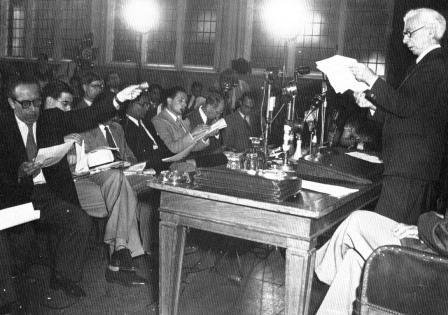
On July 9, 1955, Bertrand Russell stood before the press in London to release a document that would echo through the Cold War. The Russell–Einstein Manifesto was a stark warning about the existential threat of nuclear weapons, urging global leaders to abandon war and pursue diplomacy. Russell drafted the text, but its most famous signatory was Albert Einstein, who added his name just days before his death on April 18, 1955. Ten other prominent scientists and intellectuals joined them, including Max Born and Percy Bridgman. The manifesto called for a conference where scientists could discuss disarmament, and philanthropist Cyrus S. Eaton soon stepped in to sponsor it. That gathering took place in July 1957 in Pugwash, Nova Scotia, Eaton's hometown, launching the Pugwash Conferences on Science and World Affairs. The manifesto itself is a short, urgent document, running just a few pages, but its impact has been long-lasting. It remains a landmark in the history of nuclear activism, a reminder that even in the depths of the Cold War, reason could still speak out.
Keywords
Book Info
- Author
- Bertrand Russell
- Published
- +1955-07-09
- Language
- German
- Signatories
- 11 scientists including Albert Einstein, Max Born, Percy Bridgman
- Resulting conference
- Pugwash Conferences on Science and World Affairs (first held July 1957)
Join the community
fans discussing