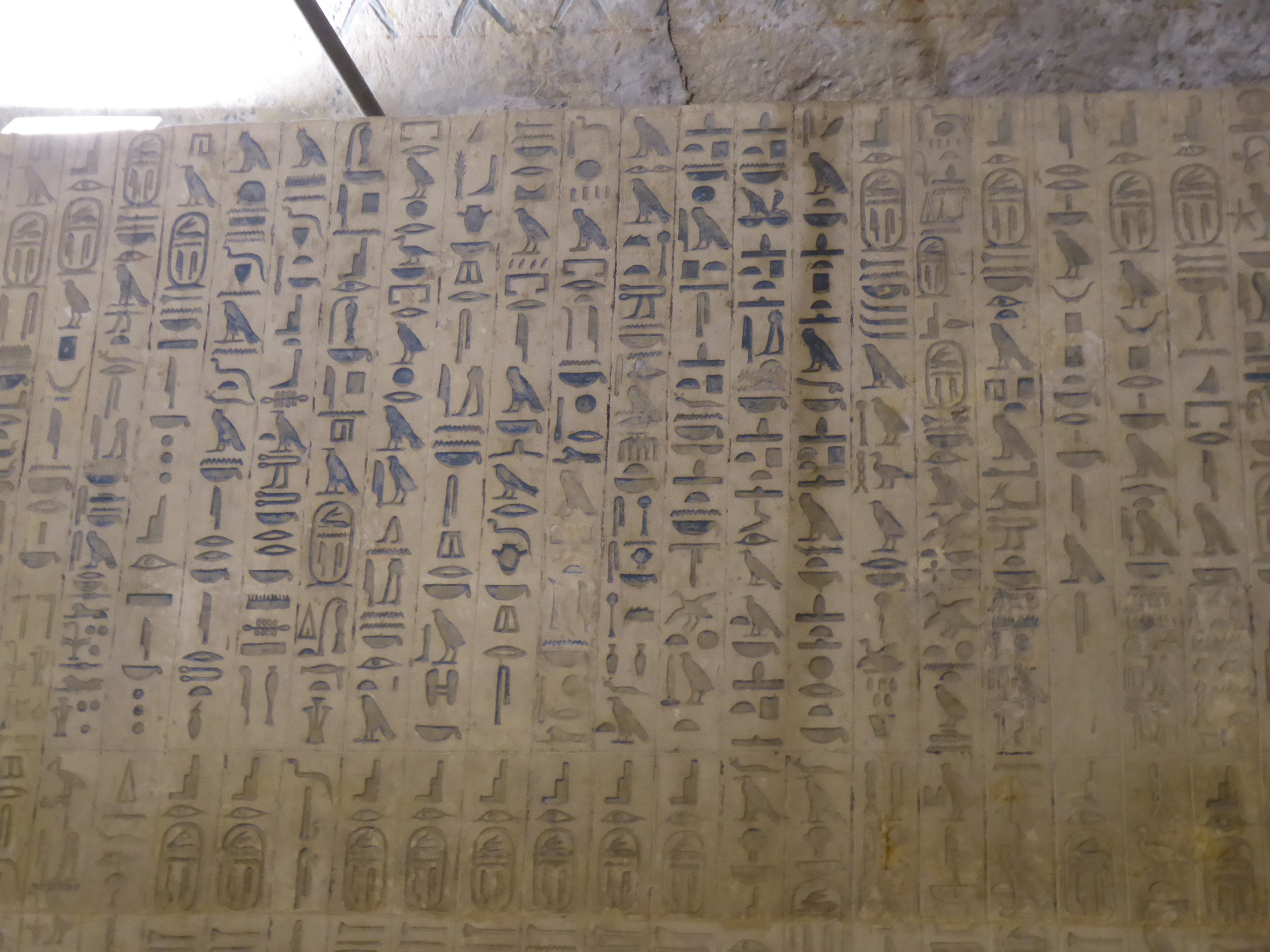
Pyramid Texts
"The Oldest Known Corpus of Ancient Egyptian Religious Literature"
Overview
King Unas stepped into his burial chamber at Saqqara around 2375 BCE, the first pharaoh to have religious spells carved directly onto the stone walls surrounding his sarcophagus. These inscriptions marked a radical shift in funerary practice, moving from simple magical formulas to a dense collection of over 700 prayers, hymns, and incantations designed to secure the king's resurrection. The texts describe the monarch ascending to the sky to join the sun god Ra or merging with Osiris in the underworld, transforming himself into a star that never sets. Unlike later guides such as Coffin Texts or The Book of the Dead, these carvings contained no illustrations and were reserved exclusively for royalty, with rare exceptions for queens like Wedjebten, Neith, and Iput.
Royal scribes compiled these works over centuries during the late Old Kingdom, specifically under kings from Djedkare Isesi to Pepi II. The original language is Old Egyptian, written in hieroglyphs that focus on cosmology and the mechanics of the afterlife rather than narrative storytelling. Modern scholars regard these documents as primary sources for understanding ancient Egyptian thought, revealing how the culture viewed the structure of the universe and the role of the gods. While the physical tradition faded from royal pyramids by the Middle Kingdom, the concepts persisted and influenced subsequent funerary literature for millennia.
Keywords
Sources
Book Info
- Published
- +2400
- Language
- Old Egyptian
- First Appearance
- Pyramid of King Unas (c. 2375 BCE)
- Location
- Saqqara necropolis
- Total Spells
- Over 700
- First Systematic Publication
- 1894 by Gaston Maspero
- Standard English Edition
- R.O. Faulkner (1969)
Join the community
fans discussing