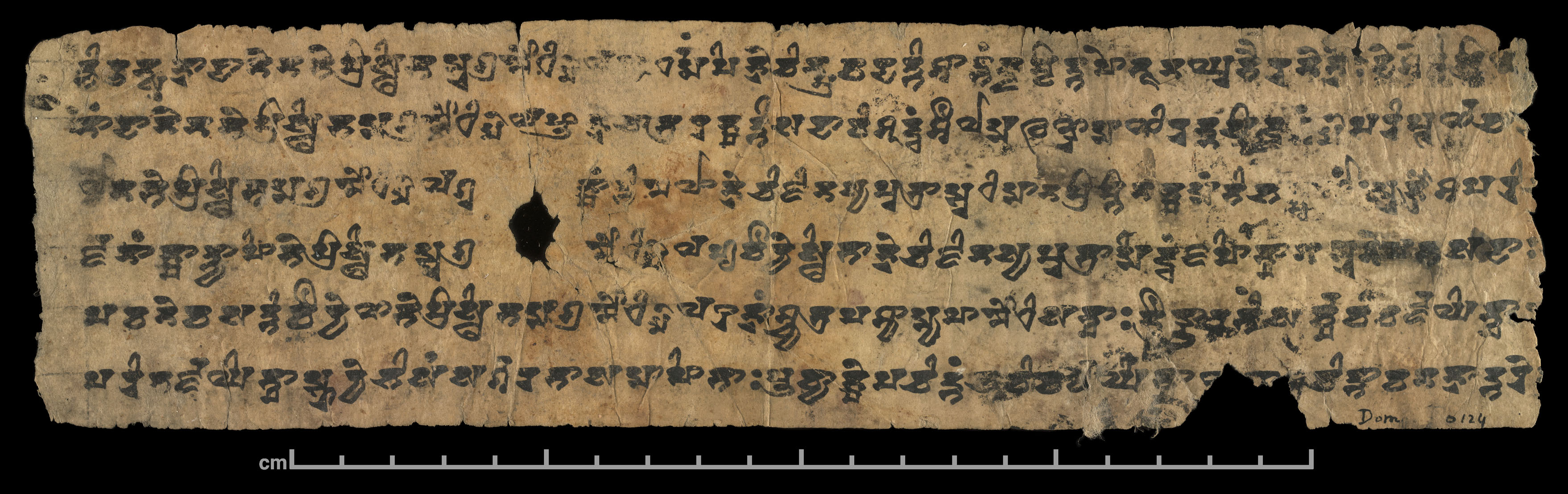
Lotus Sutra
"Saddharma Puṇḍarīka Sūtram"
Overview
The Lotus Sūtra stands as a cornerstone of Mahāyāna Buddhism, offering a radical reimagining of the path to enlightenment. Written in Sanskrit with the full title Saddharma Puṇḍarīka Sūtram, this text translates to 'Sūtra on the White Lotus of the True Dharma.' Scholars date its composition between the first and second centuries CE, though exact authorship remains anonymous. The work spans roughly 27,000 words across multiple chapters, presenting a narrative where Shakyamuni Buddha reveals that his previous teachings were merely skillful means. Two core concepts define the scripture: the doctrine of the One Vehicle, which unifies all Buddhist practices under a single goal of Buddhahood, and the revelation that the Buddha's lifespan is immeasurable rather than ending in final Nirvana.
Narrative structure drives the text through parables like the Burning House and the Phantom City, illustrating how provisional goals guide beings toward ultimate truth. A central figure, the Bodhisattva Never Disparaging, bows to all people regardless of their behavior, affirming their future Buddhahood. The Dragon King's daughter attains enlightenment instantly, challenging earlier notions about gender and spiritual capacity. These stories culminate in a prophecy regarding the Buddha's future name, Universal Light, and an assurance that hearing even a single verse guarantees eventual liberation.
While originally composed in India, the text survived primarily through Classical Chinese translations. Kumarajiva's version from 406 CE became the standard for East Asia, superseding earlier attempts by Dharmarakṣa and Xuanzang. Modern critical editions, such as the 2007 digital release by the Bukkyo Dendo Kyokai, continue to make the original Sanskrit accessible alongside scholarly commentaries. Recent cultural preservation efforts include the 2025 restoration of a Goryeo-era gold and silver inscribed copy at the National Library of Taiwan.
Keywords
Sources
Book Info
- Publisher
- Bukkyo Dendo Kyokai (Modern Digital Edition)
- Published
- 3rd Century CE (Final Redaction)
- Pages
- 27000
- Language
- Buddhist Hybrid Sanskrit, Classical Chinese
- Original Language
- Buddhist Hybrid Sanskrit
- Standard Translation
- Miao Fa Lian Hua Jing (Kumarajiva, 406 CE)
- Chapter Count
- 28
- Estimated Word Count
- 27,000
- Key Parable Figures
- Father (Burning House), Dragon King's Daughter, Bodhisattva Never Disparaging
- Major Restoration Date
- June 2025 (Taiwan)
Join the community
fans discussing