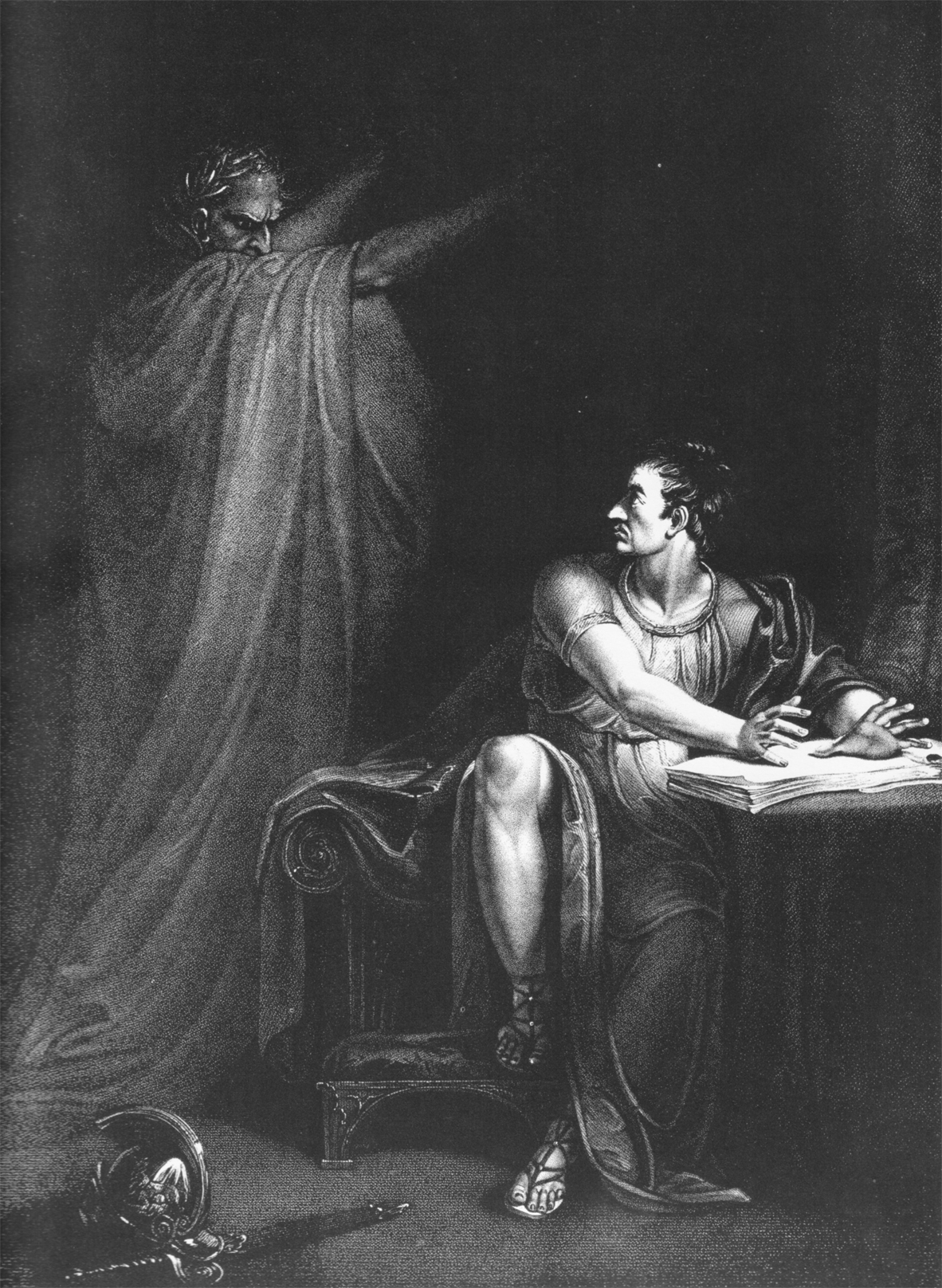
Julius Caesar
"The Tragedy of Julius Caesar"
William Shakespeare
Overview
Shakespeare wrote The Tragedy of Julius Caesar around 1599, drawing heavily from Sir Thomas North's 1579 English translation of Plutarch's Parallel Lives. The play dramatizes the conspiracy that led to the assassination of the Roman dictator on the Ides of March in 44 BC and the civil war that followed. It opens with the Roman populace celebrating Caesar's return after defeating Pompey's sons, a victory that alarms senators fearing his rise to tyranny. Cassius recruits Brutus to join a plot to kill Caesar, arguing that the Republic must be saved from a potential monarch.
Despite warnings from a soothsayer and ominous dreams from his wife Calpurnia, Caesar proceeds to the Senate where he is stabbed by the conspirators. Brutus attempts to justify the murder to the crowd as an act of liberty, but Mark Antony delivers a funeral oration that turns public opinion violently against the assassins through irony and emotional appeal. The conflict ends at the Battle of Philippi, where the forces of Antony and Octavius defeat Brutus and Cassius. Brutus takes his own life rather than face capture, and Antony declares him the only conspirator who acted out of honor.
Although the title character dies early in the third scene, dramatic focus often rests on Marcus Brutus and his internal struggle between personal loyalty and public duty. The work explores themes of ambition versus tyranny, the power of political rhetoric, and the cyclical nature of violence. Famous lines such as Et tu, Brute? and Friends, Romans, countrymen, lend me your ears have become embedded in global culture. The play was first published in the First Folio of 1623 as the sixth entry in the Tragedies section.
Keywords
Sources
Book Info
- Author
- William Shakespeare
- Language
- English
- First performed
- 1599
- First published
- 1623 (First Folio)
- Source material
- Plutarch's Parallel Lives (North translation)
Join the community
fans discussing