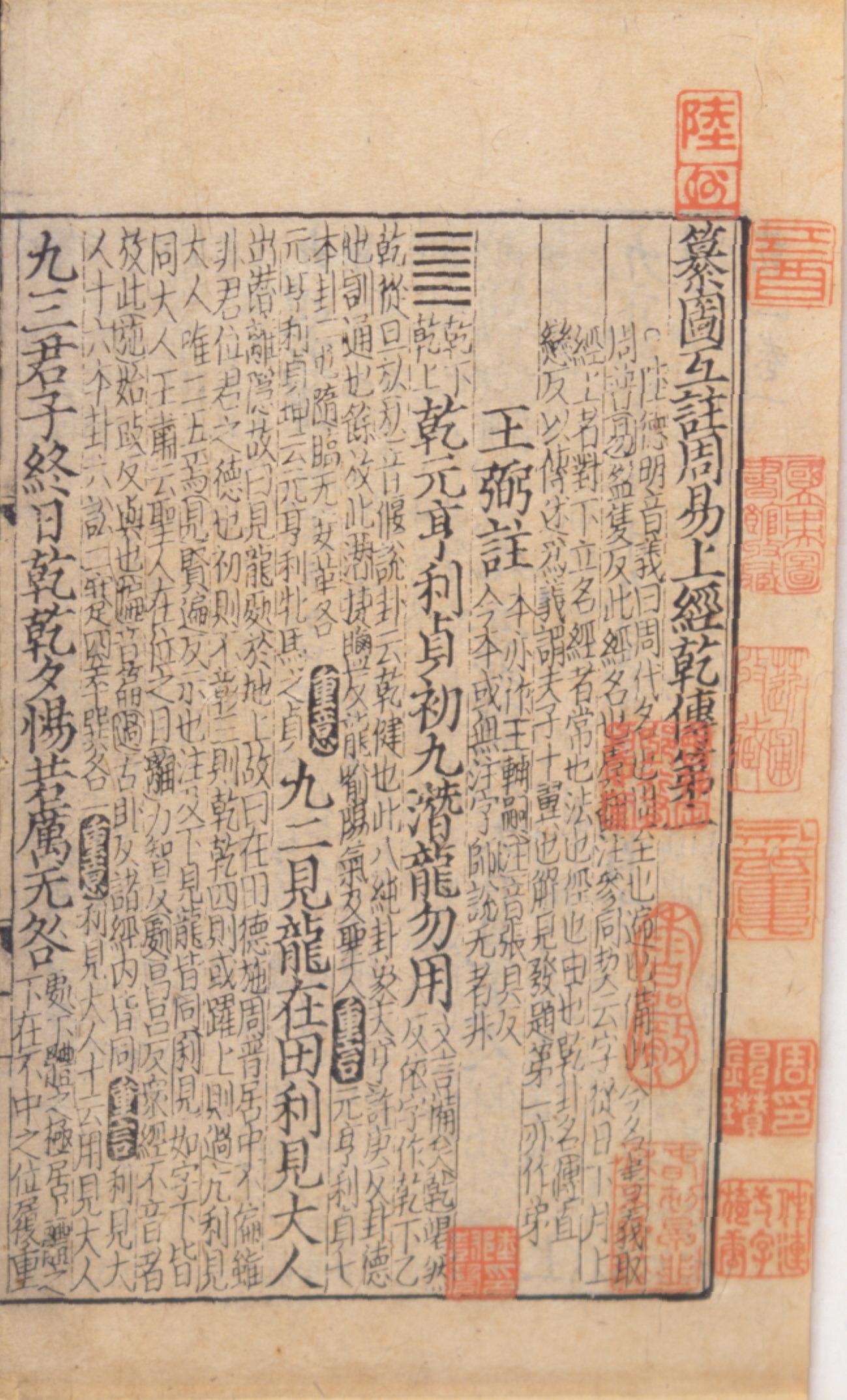
I Ching
"Classic of Changes"
Fuxi
Overview
Traditional accounts credit the mythical Fuxi with carving the eight trigrams around 2852 BC, but modern historians date the actual text to the Western Zhou period between 1000 and 771 BC. This ancient manual started as a practical guide for diviners using yarrow stalks before scholars during the Warring States era appended philosophical commentaries known as the Ten Wings.
The book organizes its wisdom into 64 hexagrams made of six stacked lines that are either broken or unbroken. These symbols map the dynamic interplay of opposing forces like yin and yang, offering advice on how to align with natural shifts rather than predicting fixed outcomes. By the second century BC, the text secured its place among the Five Classics and became essential reading for Confucian and Taoist thinkers alike.
Carl Jung found deep resonance in the work's concept of synchronicity, noting how the oracle reflected patterns in the unconscious mind. The text gained widespread attention in the West during the 20th century, influencing everything from G.W. Leibniz's binary code to the creative processes of musicians and writers navigating personal chaos.
Keywords
Sources
Book Info
- Author
- Fuxi
- Publisher
- Princeton University Press
- Published
- c. 1000 BC
- Language
- Old Chinese
- Series
- Five Classics #1
- Mythic Origin
- Fuxi (c. 2852 BC)
- Actual Compilation
- Western Zhou Period (1000–771 BC)
- Commentary Addition
- Ten Wings (Warring States Period, 475–221 BC)
- Canonization
- Second Century BC
- Key Translator
- Richard Wilhelm
- Influence on Science
- G.W. Leibniz (Binary Logic)
- Cultural Icon Moment
- John Lennon's 'Lost Weekend' (1968)
- Modern Art Exhibition
- Tai Kwun, Hong Kong (2026)
- Film Project
- Dice-Ching-O-Mat (2026)
Join the community
fans discussing