Hebrew Bible
"Tanakh"
Overview
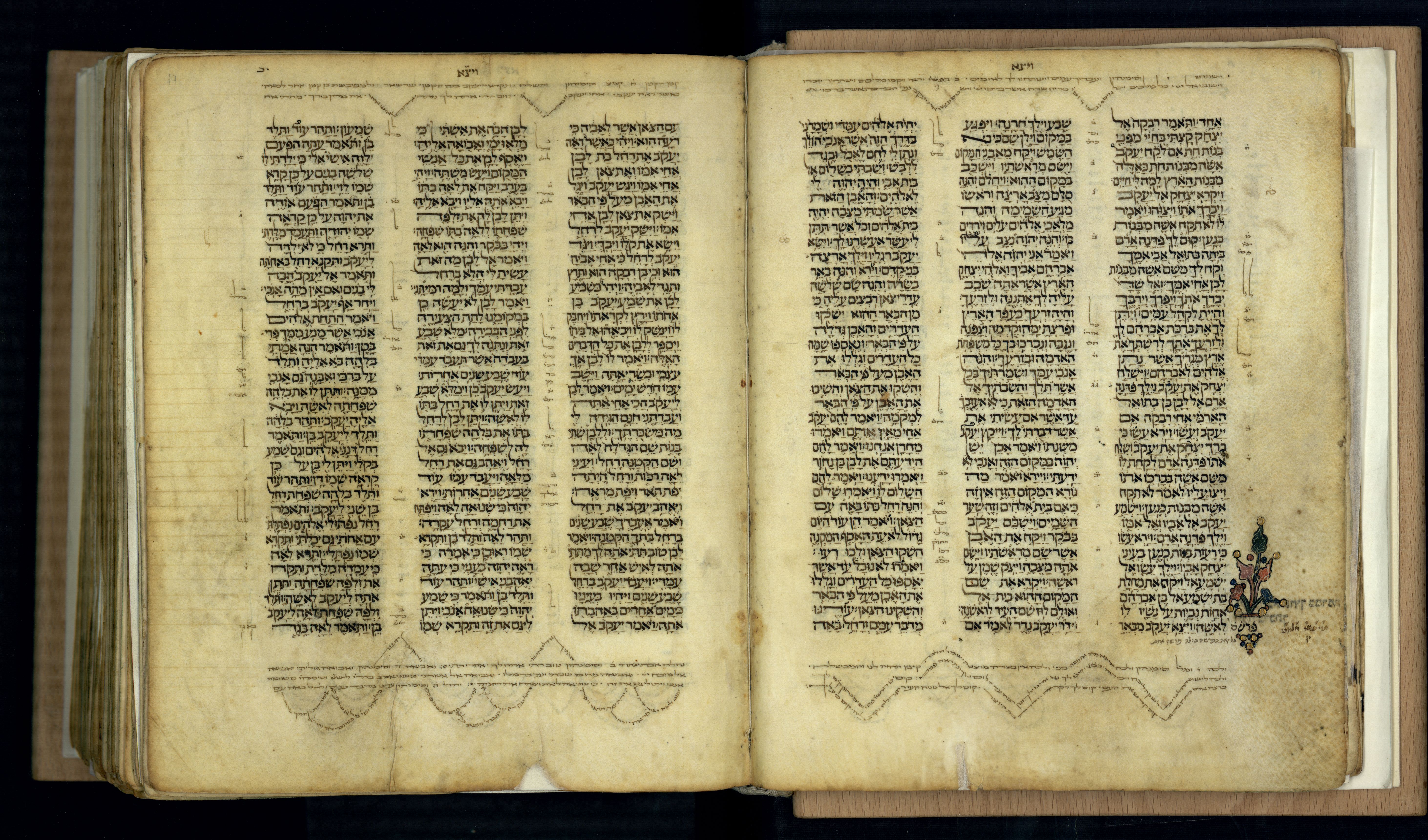
The Tanakh forms the canonical core of Jewish scripture, comprising 24 books arranged into three distinct sections: the Torah, Nevi'im, and Ketuvim. The Torah opens with creation narratives and traces the lineage of Israel through the patriarchs, culminating in the Exodus and the revelation at Sinai. The Nevi'im follows with historical accounts of the conquest of Canaan and the monarchy before shifting to prophetic warnings and visions found in Isaiah, Jeremiah, and Ezekiel. The final section gathers diverse writings ranging from the poetic Psalms to wisdom texts like Proverbs and narrative works such as Ruth and Daniel.
Transmission of these texts occurred primarily through handwritten scrolls rather than modern printing presses until recent centuries. Scholars identify the Masoretic Text as the authoritative version codified between the seventh and tenth centuries CE by Jewish scribes known as Masoretes. Earlier textual traditions include the Greek Septuagint and the Samaritan Pentateuch, while fragments discovered among the Dead Sea Scrolls reveal variations that existed during the Second Temple Period. Modern digital platforms now host searchable versions of the Hebrew text alongside commentaries.
Composed over several centuries from the Iron Age through the Hellenistic period, the work reflects a complex history of oral tradition, composition, and redaction. Biblical Hebrew dominates the text, though portions of Daniel and Ezra appear in Biblical Aramaic. Contemporary scholarship continues to examine how these ancient documents shaped legal systems, ethical frameworks, and literary traditions across Western civilization.
Keywords
Sources
Book Info
- Language
- Biblical Hebrew, Biblical Aramaic
- Total Books
- 24
- Primary Language
- Biblical Hebrew
- Secondary Language
- Biblical Aramaic (Daniel, Ezra)
- Composition Period
- 10th century BCE to 2nd century BCE
- Standard Text Codification
- 7th to 10th centuries CE
- Three Sections
- Torah, Nevi'im, Ketuvim
Join the community
fans discussing