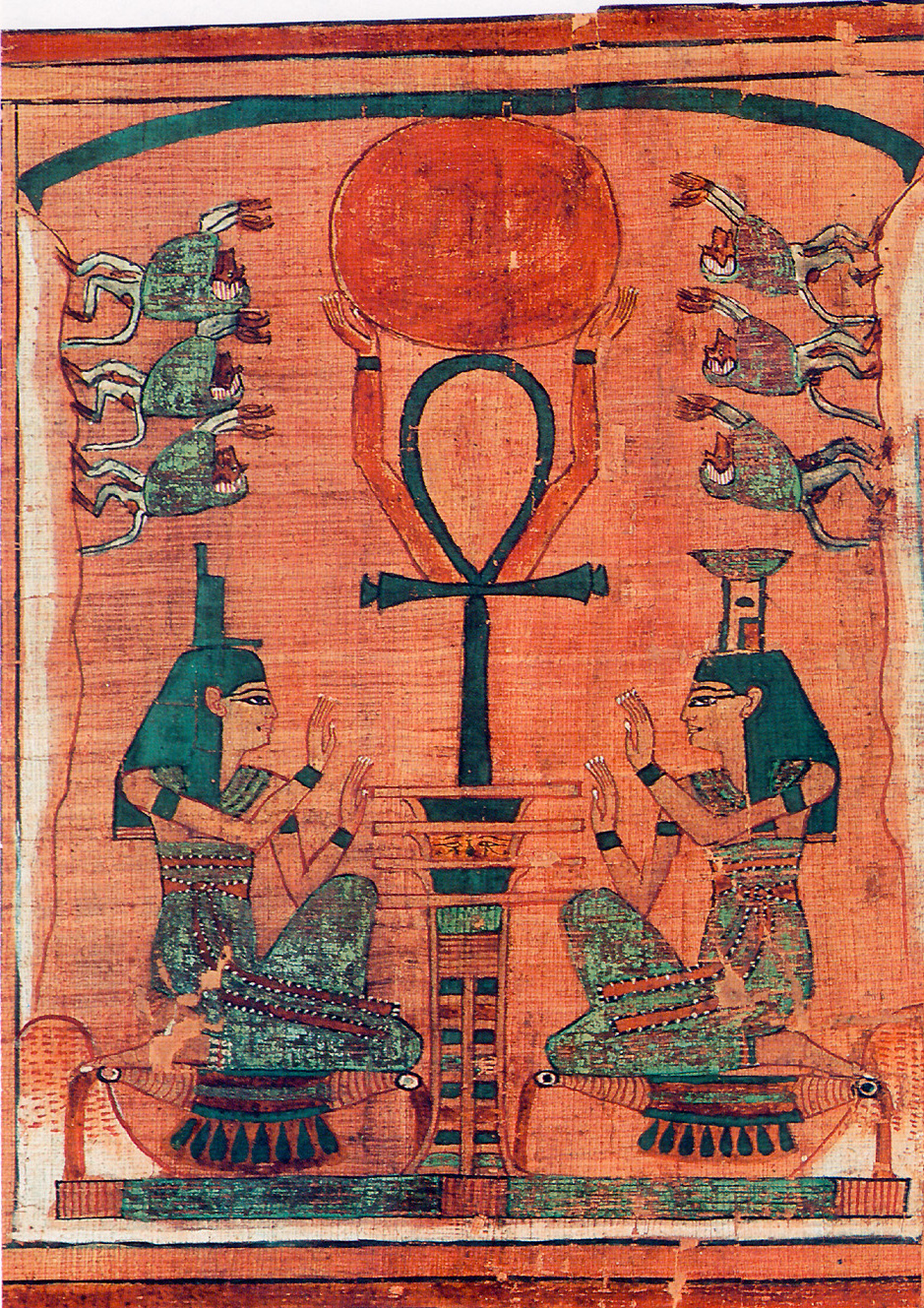
Book of the Dead
"Spells of Coming Forth by Day"
Thoth
Overview
Ancient Egyptians called this collection of spells rw nw prt hrw, or Spells of Coming Forth by Day. Scholars now refer to it as the Book of the Dead, though the text never had a single fixed edition. Priests compiled these scrolls for individual burials between roughly 1550 BC and 50 BC. They selected specific passages from a vast pool of magical formulas to match the status and needs of the deceased. This fluid process replaced earlier funerary traditions like the Pyramid Texts carved on walls or the Coffin Texts painted on sarcophagi.
The document acts as a survival manual rather than a biography. It offers tools to help the soul navigate the Duat, the underworld, avoiding demons and physical barriers. The most critical sequence involves the Weighing of the Heart ceremony where Osiris judges the soul against the feather of Ma'at. If the heart is lighter, the deceased achieves eternal life; if heavier, the monster Ammit devours them. Spells also allow the dead to transform into birds, lotuses, or gods to bypass obstacles.
Recent discoveries have reshaped our understanding of these manuscripts. In 2026, researchers found a massive 15-meter scroll intact in a 3,500-year-old grave near Luxor. Analysis published that same year revealed traces of ancient correction fluid used by scribes to fix errors. These findings prove the texts were practical working documents subject to revision rather than flawless religious artifacts. Later that year, Egypt reopened Amenhotep III's tomb located 46 feet underground, which features additional hieroglyphs from the corpus.
Keywords
Sources
Book Info
- Author
- Thoth
- Language
- Egyptian
- Original Name
- rw nw prt hrw (Spells of Coming Forth by Day)
- Time Period
- c. 1550 BC – 50 BC
- Famous Manuscript
- Papyrus of Ani
- Discovery Year
- 2026 (15-meter scroll)
- Primary Deity
- Osiris
- Divine Author
- Thoth
Join the community
fans discussing