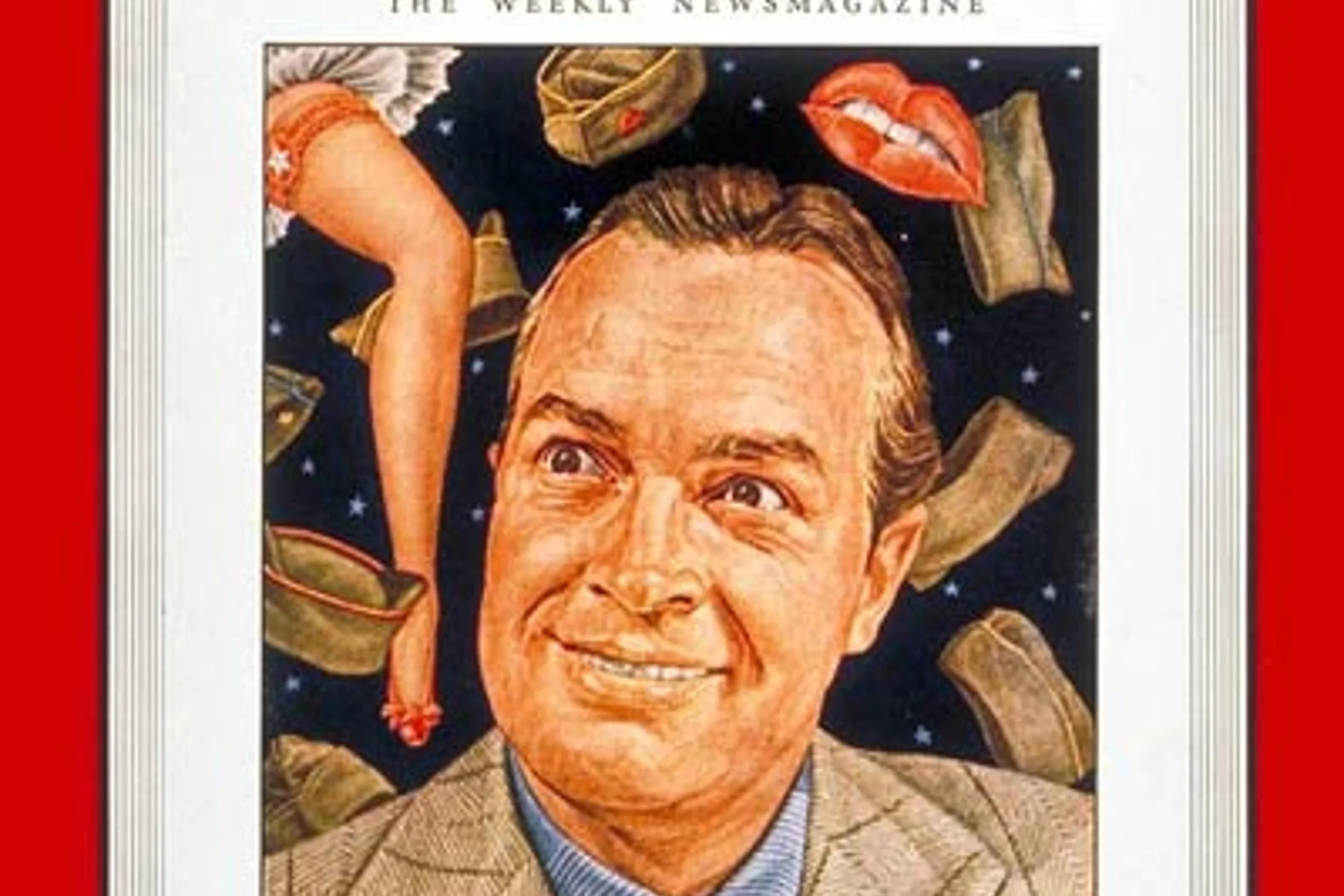
Bob Hope
 United Kingdom
Also known as: Leslie Townes Hope, Bob Hope Sr., The King of Comedy
Birthday
May 29, 1903
Birth Sign
Sagittarius
Birthplace
Well Hall, London, England
Age
Died at 100
Height
5 ft 9 in (175 cm)
About
Lester Townes "Bob" Hope was a British-born American comedian, actor, and humanitarian whose career spanned nearly 80 years. Born in London, he immigrated to the United States at age four and grew up near Cleveland, Ohio. He became one of the most recognizable faces in entertainment history, known for his rapid-fire delivery of self-deprecating one-liners and his signature song "Thanks for the Memory." Hope starred in over 70 films, including the iconic Road to... series with Bing Crosby, and hosted the Academy Awards a record 19 times.
Beyond his film and television work, Hope is best remembered for his tireless service to the U.S. military. Between 1941 and 1991, he made 57 trips to entertain troops in conflict zones around the world through the United Service Organizations (USO). His dedication earned him an honorary veteran status from Congress in 1997. He lived to see his 100th birthday just two months before his death in 2003, leaving behind a legacy of humor and patriotism that defined an era of American culture.
Early Life & Background
Leslie Townes Hope arrived in the United States from Eltham, London, in 1908 when he was five years old. His family settled near Cleveland, Ohio, where he grew up as the fifth of seven sons in a working-class household. His father worked as a tailor, and the family struggled financially during the early years of the 20th century. Hope attended Central Technical School, where he developed an interest in boxing and performance arts. By the late 1910s, he was competing as an amateur boxer under the ring name "Packy East," winning several matches in Cleveland before realizing his true talent lay elsewhere.
His transition to the stage began in vaudeville around 1915. He initially performed alongside his brothers as "The Three Bobs," a comedy act that helped him hone his timing and stage presence. As a teenager, he started performing solo acts, developing the rapid-fire delivery of one-liners that would become his trademark. By the mid-1920s, he had moved to New York City to pursue a full-time entertainment career. He worked various jobs while trying to break into the big time, eventually landing roles in Broadway revues and radio shows. His persistence paid off, leading to his first major film role in 1934 and setting the stage for a decades-long reign as America's premier entertainer.
Career Growth
Hope's breakthrough in Hollywood came quickly after his film debut in The Big Broadcast in 1934. By the mid-1930s, he was a major star on radio and stage. His most enduring cinematic legacy is the "Road to..." series of seven musical comedies co-starring Bing Crosby, beginning with Road to Singapore in 1940. These films defined the genre of screwball comedy and cemented his status as America's leading entertainer. Beyond acting, Hope hosted the Academy Awards ceremony a record 19 times between 1940 and 1978. He also served as a cultural ambassador through the USO, making 57 trips to entertain U.S. troops from World War II through the Gulf War, a service that earned him honorary veteran status from Congress in 1997.
His career extended far beyond the screen. Hope released numerous comedy albums, won multiple Grammy Awards, and authored 14 books. He remained active in television, hosting specials and appearing in guest roles well into the 1990s. In 1991, after the death of his wife Dolores, he continued to tour and record, proving his resilience and enduring appeal. His final years saw him receiving numerous honors, including the Presidential Medal of Freedom and the Kennedy Center Honors. Even as he aged, he remained a beloved figure, celebrated for his ability to bring joy to audiences during difficult times.
Career Timeline
Public Image & Style
Bob Hope cultivated a public image as the quintessential American patriot and charming rogue. His style was characterized by sharp suits, slicked-back hair, and a confident, self-deprecating demeanor. He was known for his quick wit and ability to improvise, often tailoring his jokes to the specific audience or situation. His persona was that of a friendly neighbor who could make anyone laugh, even in the face of adversity. This image was reinforced by his USO tours, where he connected with soldiers on a personal level.
Media portrayals often highlighted his longevity and adaptability. He successfully transitioned from vaudeville to radio, film, and television, remaining relevant for decades. His signature song "Thanks for the Memory" became an anthem of sorts, reflecting his sentimental side. Hope was also known for his philanthropy, frequently donating to charities and supporting veterans' causes. His public image was one of warmth, humor, and unwavering loyalty to his country.
Fame & Fandom (iFAMOUS Rankings)
iFANN has not yet collected fame data for this person. While Bob Hope remains a legendary figure in entertainment history, the current iFANN rankings do not include him in their published lists as of September 2026. His fame is now historical, rooted in his immense contribution to 20th-century culture rather than current search trends.
There is no formal fandom name associated with Bob Hope. His audience was broad and diverse, spanning generations who grew up watching his films and TV specials. Fans often refer to him simply as "Bob Hope" or "the King of Comedy." His fanbase is characterized by a deep appreciation for his classic work and his humanitarian efforts. Many fans organize events to celebrate his legacy, such as screenings of his movies and tributes to his USO tours. The emotional connection fans have with him is based on nostalgia and respect for his enduring impact on American society.
Interesting Facts and Legends
Bob Hope was the only person to be awarded an honorary rank in every branch of the U.S. military. He held the title of General in the Army, Navy, Air Force, Marine Corps, and Coast Guard. Despite never serving in the armed forces himself, his USO tours were so extensive that Congress officially designated him an honorary veteran in 1997. He was also the first person to receive the Kennedy Center Honors and the AFI Life Achievement Award in the same year, 1979. His signature catchphrase, "Thanks for the Memory," was written specifically for him and became synonymous with his brand.
Hope was a talented artist who painted hundreds of portraits, many of which were auctioned to raise money for charity. He also had a passion for golf and founded the Bob Hope Classic tournament, which became a staple on the PGA Tour. One famous legend tells of how he once visited troops in Vietnam and joked that he was there to "drop a few bombs" before realizing he had no bombs, leading to a hilarious moment with the soldiers. His ability to adapt his material to different cultures and languages made him a global icon.
Notable Quotes
“I'm not afraid of death. I just don't want to be there when it happens.”
“A man's got to do what a man's got to do. But if he can do it with a smile, all the better.”
“The secret of staying young is to live honestly, eat slowly, and lie about your age.”
“I've always believed that you should enjoy every minute of your life, because you never know when it might end.”
“Humor is mankind's greatest blessing.”
Family & Personal Life
Bob Hope was married to Dolores Hope (née Mary Elizabeth Sissel) for 57 years until her death in 1991. They met in 1934 while Hope was performing in a show in New York. Dolores was a dancer and singer who became his manager and business partner, playing a crucial role in managing his career. The couple had no biological children together but adopted two daughters: Linda Hope, born in 1936, and Tonya Hope, born in 1940. Linda later became a writer and producer, while Tonya pursued a career in music and acting.
Hope was the fifth of seven sons, and his large family often appeared in his early vaudeville acts. His parents, William and Effie Hope, were immigrants from Ireland and England. The family lived in a modest home in Cleveland, where they faced financial hardships that shaped Hope's early work ethic. After his wife's death, Hope lived alone in his estate in Toluca Lake, California, surrounded by memories of their long partnership. He remained close to his adopted daughters and their families throughout his life.
Notable Connections
Bing Crosby, Dean Martin, Frank Sinatra, Carol Burnett, Michael J. Fox.
Relationships & Dating History
Bob Hope had only one romantic relationship throughout his life: his marriage to Dolores Hope. They met in 1934 while Hope was performing in a show in New York. Dolores was a dancer and singer who became his manager and business partner. The couple remained married for 57 years until her death in 1991. They had no biological children together, but they adopted two daughters: Linda Hope (born 1936) and Tonya Hope (born 1940). Bob Hope died on July 27, 2003, leaving him widowed at the time of his passing. As of 2026, Bob Hope remains deceased; there are no current partners.
- MarriedDolores Hope1934 - 1991Met in 1934; she became his manager and business partner. Adopted two daughters together.
Death & Aftermath
Died
July 27, 2003 (aged 100)
Death Place
Toluca Lake, Los Angeles, California
Cause of Death
Pneumonia
Bob Hope passed away on July 27, 2003, at his home in Toluca Lake, Los Angeles. He was 100 years old and had reached his centennial just 59 days prior to his death. Medical records and family statements confirmed the cause as pneumonia following a period of declining health. His final public appearance involved recording a message for troops during the Gulf War era, though he remained active in charity work well into his nineties.
The entertainment world and the United States government reacted with immediate tributes. President George W. Bush issued a statement honoring Hope's decades of service to the military and his impact on American culture. The Kennedy Center released a tribute noting that Hope had been seen by more people than any other entertainer in history. Vigils were held across the country, and streaming numbers for his classic films surged in the days following his passing.
A private funeral service took place on August 1, 2003, at Forest Lawn Memorial Park in Hollywood Hills. Dignitaries, family members, and close friends attended the ceremony, which focused on his life and humanitarian efforts rather than his celebrity status. Hope was interred at the same location. Following his death, the Bob & Dolores Hope Foundation continued its mission to support veterans and charitable causes. The estate has managed his legacy through posthumous releases, licensing deals, and the preservation of his extensive archive. His contributions to morale during wartime remain a central part of his historical footprint.
Net Worth (Estate Value)
$150 Million
iFANN Editorial Team estimate
iFANN currently estimates Bob Hope's net worth at approximately $150 million. This figure reflects the value of his estate, which continues to generate revenue through royalties, licensing deals, and merchandise sales. His estate has been managed by the Bob & Dolores Hope Foundation since his death in 2003. The foundation supports veterans and charitable causes, ensuring that his legacy lives on through meaningful initiatives.
During his lifetime, Hope earned millions from his films, television specials, and USO tours. He was one of the highest-paid entertainers of his era, with contracts that included significant bonuses and profit-sharing agreements. His real estate holdings, including his estate in Toluca Lake, also contributed to his wealth. Posthumously, his estate has seen steady growth due to the enduring popularity of his work. The estate's financial trajectory has been positive, with ongoing revenue streams from his catalog of films and recordings. His philanthropic efforts have also left a lasting impact, with the foundation continuing to operate effectively.
Awards Won (13)
Bob Hope received numerous accolades throughout his career, including four Academy Awards, multiple Golden Globes, and 19 Emmy Awards. He was honored with the Kennedy Center Honors and the AFI Life Achievement Award. His humanitarian efforts were recognized with the Jean Hersholt Humanitarian Award and the Presidential Medal of Freedom. His contributions to the entertainment industry and his service to the military have left an indelible mark on American culture.
1941 · Special Award
Morale contribution to American troops
1940 · Special Award
International recognition to the Academy
1953 · Lifetime Achievement
Lifetime achievement
Known For
Road to Singapore
1940 · Actor
The Paleface
1948 · Actor
The Ghost Breakers
1940 · Actor
The Great Race
1965 · Actor
The Magic Christian
1969 · Actor
Keywords
Sources
Quick Facts
- Profession
- comedian, actor, singer
- Born
- May 29, 1903
- Birthplace
- Well Hall, London, England
- Died
- July 27, 2003
- Death Place
- Toluca Lake, Los Angeles, California
- Gender
- Male
- Spouse
- Dolores Hope
- Birth Sign
- Sagittarius
Personal Details
- Full Name
- Leslie Townes Hope
- Height
- 5 ft 9 in (175 cm)
- Spouse
- Dolores Hope
- Children
- Linda Hope, Tonya Hope
- Education
- Central Technical School, Cleveland
Filmography
70
Total
54
Film
16
TV
Frequently Asked Questions
How did Bob Hope die?
What is Bob Hope's net worth?
Who was Bob Hope married to?
Why is Bob Hope famous?
Did Bob Hope serve in the military?
Join the community
fans discussing