 United States
“Blue's Clues is a masterclass in how to respect a child's intelligence, turning a simple game into a profound lesson in observation and logic.”
A.O. Scott
The New York Times
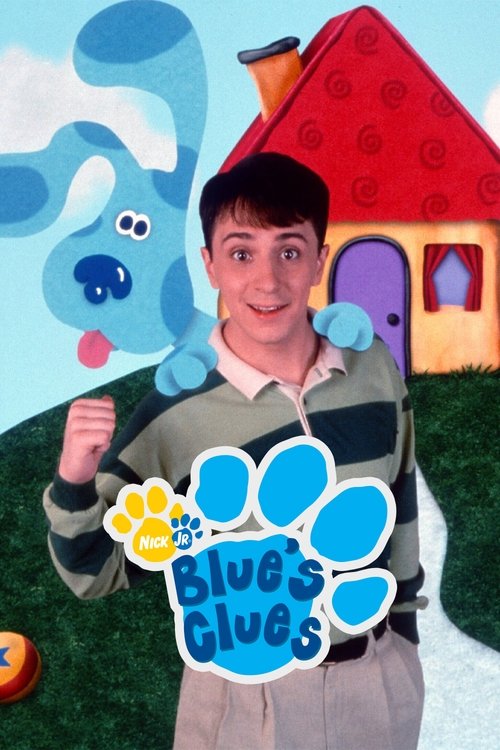
When Blue's Clues first aired on Nickelodeon in September 1996, it didn't just introduce a new show. It introduced a new way of talking to children. Created by Traci Paige Johnson, Angela Santomero, and Todd A. Kessler, the series placed a live-action host inside a hand-drawn world where an animated dog named Blue left paw prints as clues. The host, Steve Burns, would turn to the camera, ask a question, and then wait. That pause, unheard of in kids' TV, gave preschoolers time to think and shout answers back at the screen. The show's creators worked with early childhood development experts to craft every episode around how young minds actually learn.
The series became a cultural touchstone, running for seven seasons and 159 episodes until 2006. At its peak, it drew over two million preschoolers a day. Steve Burns left in 2004, and his younger brother Joe, played by Donovan Patton, took over the hosting chair. The show won multiple Daytime Emmys and a Peabody Award, and its influence echoes in later interactive hits like Dora the Explorer and Bluey. Decades later, a viral video of Steve speaking to his grown-up fans reminded the world just how deep that connection ran.
Availability and pricing can change. Confirm on the provider's site before purchasing.
The premise is deceptively simple: a blue-spotted puppy named Blue wants to play a game. She leaves three paw-print clues around her house, and the host must figure out what she wants to do or what she needs. The audience at home becomes the real detective. Each episode follows a rhythm: the host greets viewers, introduces a problem, and then goes on a scavenger hunt for clues. Along the way, familiar objects like Mr. Salt, Mrs. Pepper, Shovel, and Pail offer help, and the host often breaks into song to celebrate a discovery.
The show's early seasons (1996–1999) established the formula with Steve Burns at the helm. The living room set, with its bright, flat colors and simple shapes, felt like a child's drawing come to life. Season 3 brought a major technical change: Blue's animation shifted from traditional cel to CGI, giving her more fluid movement and expressive eyes. The stories also grew more complex, touching on themes like making mistakes, dealing with jealousy, and helping neighbors. Season 5, which ran from 2002 to 2003, introduced new locations like the beach and the forest, expanding the world beyond the house.
When Steve left in 2004, the show faced a delicate transition. Joe, played by Donovan Patton, stepped in with an upbeat energy that honored Steve's legacy while carving his own path. Seasons 6 and 7, though shorter, maintained the same interactive core. The final episodes, aired in 2006, wrapped up the original series with a sense of celebration rather than finality. Throughout its run, Blue's Clues never wavered from its mission: to make kids feel smart, capable, and heard. It didn't just teach colors and numbers; it taught that asking questions and thinking slowly are valuable skills.
Critical Consensus
Blue's Clues revolutionized children's television by merging interactive storytelling with rigorous educational standards. Critics praised its patient pacing, inclusive representation, and ability to engage young minds through active participation, setting a new benchmark for preschool programming that balanced fun with learning.
“Blue's Clues is a masterclass in how to respect a child's intelligence, turning a simple game into a profound lesson in observation and logic.”
A.O. Scott
The New York Times
“The show's genius lies in its silence, it waits for you to speak, creating a unique bond between screen and viewer that few programs achieve.”
Jen Yamato
Vulture
“Steve Burns' departure was a cultural moment, but the show's legacy endures because it taught a generation to think, not just watch.”
Mark Harris
Variety
“With its gentle humor and thoughtful design, Blue's Clues proves that educational TV can be both entertaining and deeply meaningful.”
Betsy Sharkey
Los Angeles Times
“A timeless classic that redefined what children's media could be, blending artistry with pedagogy in ways that still resonate today.”
Charles Bramesco
The Guardian
Steve Burns
Steve
Donovan Patton
Joe Burns
Traci Paige Johnson
Blue
Aleisha Allen
Sidetable Drawer
Nick Balaban
Mr. Salt
Producers
Angela Santomero, Todd Kessler, Jennifer Twomey, Traci Paige Johnson
Peabody Award (2001)
Children's Programming: Won
Daytime Emmy Award (2000)
Outstanding Children's Series: Won
Daytime Emmy Award (2001)
Outstanding Writing in a Children's Series: Won
Join the community
fans discussing