 United States
“Blue Velvet is a film that wants to show us the evil that lurks beneath the surface of small-town life. It does this so effectively that it becomes a kind of cinematic nightmare.”
Roger Ebert
Chicago Sun-Times
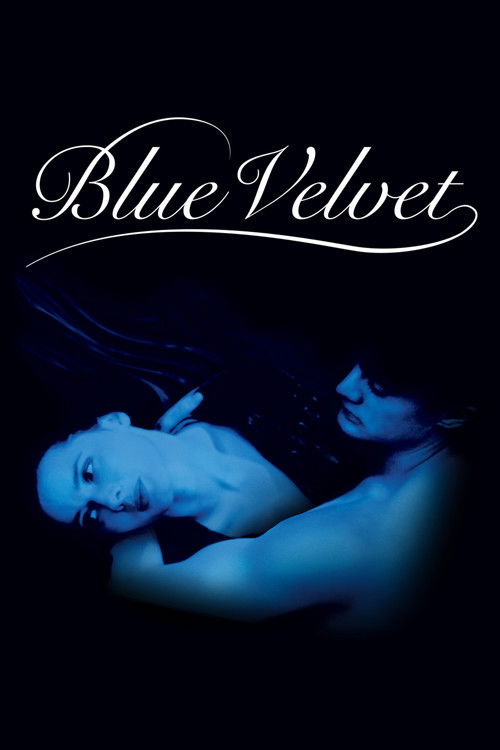
On a sunny afternoon in Lumberton, North Carolina, college student Jeffrey Beaumont finds a severed ear in a field. That single image shatters the postcard-perfect town and sets David Lynch's 1986 masterpiece in motion. Lynch, fresh off the commercial failure of Dune, returned to his surrealist roots with a budget of $6 million and a vision that would redefine American cinema. The film stars Kyle MacLachlan as Jeffrey, Laura Dern as the detective's daughter Sandy, and Isabella Rossellini as the haunted nightclub singer Dorothy Vallens. But it's Dennis Hopper's Frank Booth that steals every frame, a gas-huffing psychopath whose unpredictability made the role legendary.
Shot in just 30 days on location in Wilmington, North Carolina, the production used local actors and real buildings to stretch its modest budget. Angelo Badalamenti composed his first Lynch score here, a lush, jazzy soundscape that would define their future collaborations. Frederick Elmes's cinematography paints Lumberton in saturated colors, making the violence feel even more jarring. The film earned Lynch his second Oscar nomination for Best Director and grossed $8.6 million domestically, but its real legacy is cultural. Blue Velvet was selected for the National Film Registry in 2008 and continues to influence filmmakers from Quentin Tarantino to David Fincher.
Stream
Availability and pricing can change. Confirm on the provider's site before purchasing.
Jeffrey Beaumont returns to Lumberton from college when his father suffers a stroke. While walking home through a vacant lot, he spots a human ear in the tall grass, ants crawling over it. He brings it to Detective Williams, who warns him to stay away from the case. But Jeffrey can't resist. He befriends the detective's daughter Sandy, who tells him about a nightclub singer named Dorothy Vallens who might be connected to the ear.
Pretending to be a renter, Jeffrey enters Dorothy's apartment. He finds her alone, vulnerable, and deeply disturbed. After he hides in her closet, Frank Booth arrives. Frank is a violent drug dealer who huffs nitrous oxide and screams obscenities. He brutalizes Dorothy, forcing her to perform degrading acts. Jeffrey watches through the slats, frozen. When Frank leaves, Dorothy discovers Jeffrey and demands he stay. A strange sexual relationship develops between them, mixing tenderness with coercion.
Jeffrey tries to maintain his normal life, dating Sandy and sharing milkshakes at the diner. But he's drawn deeper. Sandy reveals that Frank may be involved with a drug ring and a corrupt cop. Jeffrey follows leads to the Slow Club, where Dorothy sings a haunting version of "Blue Velvet." He also meets Ben, Frank's eerily calm associate who lip-syncs Roy Orbison's "In Dreams" at a surreal party. Frank discovers Jeffrey's involvement and beats him, then takes him on a terrifying joyride through the industrial outskirts of town, screaming and laughing.
Jeffrey and Sandy piece together the clues: Frank is holding Dorothy's husband and son hostage to control her. A yellow man and a crooked detective are part of the scheme. The mystery deepens as Jeffrey realizes the evil isn't just Frank, it's woven into the fabric of the town itself.
Official Trailer
Austin Film Society Trailer
Official Rerelease Trailer
Critical Consensus
David Lynch's surreal, disturbing masterpiece peels back the veneer of small-town America to reveal the violence and perversion underneath. Anchored by Dennis Hopper's terrifying performance and Angelo Badalamenti's haunting score, the film remains as provocative and influential today as it was in 1986.
“Blue Velvet is a film that wants to show us the evil that lurks beneath the surface of small-town life. It does this so effectively that it becomes a kind of cinematic nightmare.”
Roger Ebert
Chicago Sun-Times
“Mr. Lynch has created a world that is both completely recognizable and utterly strange, and he has done so with a visual flair that is nothing short of breathtaking.”
Janet Maslin
The New York Times
“Dennis Hopper's Frank Booth is one of the most terrifying characters in movie history, a man whose rage is so pure it becomes a kind of poetry.”
David Denby
New York Magazine
“It's a film that makes you feel dirty, but it's also a film that makes you feel alive. Lynch has found a way to make the grotesque beautiful.”
Pauline Kael
The New Yorker
Isabella Rossellini
Dorothy Vallens
Kyle MacLachlan
Jeffrey Beaumont
Dennis Hopper
Frank Booth
Laura Dern
Sandy Williams
Hope Lange
Mrs. Williams
Dean Stockwell
Ben
George Dickerson
Detective Williams
Priscilla Pointer
Mrs. Beaumont
Frances Bay
Aunt Barbara
Jack Harvey
Mr. Beaumont
Ken Stovitz
Mike
Brad Dourif
Raymond
Director
David Lynch
Writer
David Lynch
Composer
Angelo Badalamenti
Cinematographer
Frederick Elmes
Producer
Fred C. Caruso
Academy Awards (1987)
Best Director: Nominated
Golden Globe Awards (1987)
Best Supporting Actor: Nominated
Independent Spirit Awards (1987)
Best Feature: Won
Independent Spirit Awards (1987)
Best Director: Won
Independent Spirit Awards (1987)
Best Cinematography: Won
National Society of Film Critics Awards (1987)
Best Film: Won
National Society of Film Critics Awards (1987)
Best Director: Won
National Society of Film Critics Awards (1987)
Best Supporting Actor: Won
National Society of Film Critics Awards (1987)
Best Cinematography: Won
Los Angeles Film Critics Association Awards (1987)
Best Director: Won
Los Angeles Film Critics Association Awards (1987)
Best Supporting Actor: Won
Los Angeles Film Critics Association Awards (1987)
Best Cinematography: Won
Join the community
fans discussing