 Greece
Overview
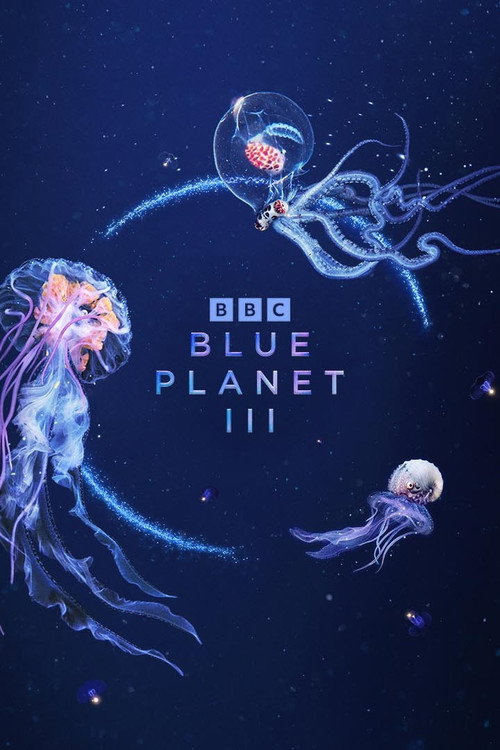
Blue Planet III is the third series in the BBC's ocean documentary line, following The Blue Planet in 2001 and Blue Planet II in 2017. It runs six episodes and is built around five marine habitats: tropical seas, temperate seas, polar seas, the high seas and the deep seas. Sir David Attenborough returns as narrator and presenter, a role he has held across the franchise and which he takes on here in his late nineties. The BBC Studios Natural History Unit produced the series with BBC America, Germany's ZDF, France Télévisions and Greece's Skai TV.
The production describes filming across the world, from tropical waters to the poles and into the ocean's least accessible regions. Camera work includes low-light and deep-water rigs and rebreather diving, equipment the unit says allowed crews to record species and behaviors that had not been captured before. The stated editorial aim is to give a current picture of the oceans and to show the effect of human activity on them, a thread the second series carried through its plastics reporting.
One production decision drew attention before broadcast. In October 2026 the series confirmed it would keep footage that looked cloudier and less polished than viewers might expect, presenting visible imperfection as evidence that the images were real. The choice was read as a response to the spread of AI-generated imagery. A companion book from Penguin and a live concert tour performing Hans Zimmer's score accompanied the launch.
Where to Watch
Live TV
Availability and pricing can change. Confirm on the provider's site before purchasing.
PlotSpoiler-free
The series has no continuing story and no characters in the fictional sense. Each of the six episodes takes a habitat or a behavioral theme and assembles a set of animal stories around it, moving from warm shallow water to the open ocean and then down into the dark. The first three episodes arrive together on BBC One and iPlayer on the evening of 1 November 2026, and the remaining three follow weekly. That boxset-style opening is a change from the strict weekly rollout of the earlier series.
Tropical seas open the run, and the habitat gives the unit its most familiar material: reef fish, coral and the crowded competition of warm water. Publicity for the series has leaned on cephalopods here. One sequence shows an octopus walking on land, and another follows an octopus that survives a hunt that goes wrong. These are the kinds of individual animal stories the franchise uses to hold an episode together, and they tend to carry the most memorable footage of any given hour.
Temperate seas shift the register toward changeable conditions and the animals that work within them. The habitat covers the coastlines and shelf waters where temperature swings seasonally and where much of the world's fishing takes place, which lets the conservation thread enter early without dominating the hour. The production has said it wants to show the impact of humanity across the run rather than save it for a closing appeal, so the human presence appears in these episodes as part of the environment rather than as an interruption of it.
Polar seas supply the series with its starkest images. The Arctic and Antarctic chapters deal with ice, cold and the timing of light, and with animals whose lives are organized around a shrinking season. The unit has filmed in these regions across all three series, and the third installment benefits from equipment that can work longer in low temperatures and low light. The polar episode is also where the series is likely to address warming most directly, since the physical change in the habitat is visible in the footage itself.
The high seas episode leaves the shelf and the ice behind for open water, a habitat with few landmarks and widely dispersed life. Filming there depends on finding animals that gather briefly and then scatter, and the series is reported to resolve a question about a dolphin hunting technique in this stretch of the run. The deep seas close the series, and the deep is where the new camera technology matters most: light is scarce or absent, and the animals are unfamiliar. The final episode is expected to carry the franchise's customary closing appeal on human impact, though the specifics of that ending had not been broadcast when the series went to press.
Across all six hours the shape is consistent. A habitat is introduced, several animal stories are followed to a resolution, and the hour returns to the wider condition of the ocean. The series does not build toward a single revelation. Its arc is cumulative, and the argument it makes is that the five habitats are one system, connected by water that moves between them.
Ending ExplainedSpoilers
Trailers
Official AMC+ Trailer
First Look Trailer
Critical Reception
Critical Consensus
No reviews had been published when this page was compiled. The series premiered on 1 November 2026, and pre-release coverage consisted of trailers, the BBC media pack and behind-the-scenes features rather than criticism. For comparison, Blue Planet II holds a 100 percent Tomatometer and a 92 on Metacritic, but those are not scores for this series.
Top Cast
Crew
Composers
Hans Zimmer, Thom Lukas, Laurentia Editha
Producer
Elizabeth White
Seasons (1)
Keywords
Sources
Facts
- Status
- Premiering
- Type
- Miniseries
- Original Language
- EN
- Network
- BBC One
- Seasons
- 1
- Episodes
- 6
- Premiere
- 1 November 2026, 8pm
- Launch Pattern
- First three episodes released together, remaining three weekly
- Production
- BBC Studios Natural History Unit, BBC America, ZDF, France Télévisions, Skai TV
- US Broadcaster
- BBC America
- Companion Book
- BBC Blue Planet III (Penguin)
- Concert Tour
- Blue Planet III Live in Concert
Join the community
fans discussing