 Italy
Italy“Bava's film is a masterpiece of mood and atmosphere, a visual feast that uses color and shadow to create a nightmare of the fashion world.”
Roger Ebert
Chicago Sun-Times
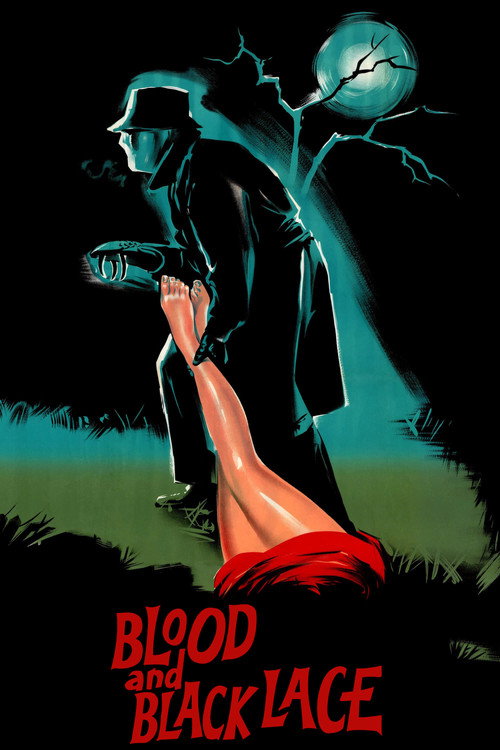
Rome, 1964. The Cristiana fashion house glitters with sequins and ambition, but beneath the runway lurks a killer in a pale mask and black gloves. Mario Bava's Blood and Black Lace opens with the brutal murder of a model in the salon's back room, and from there the body count climbs with methodical cruelty. Bava, already known for gothic horrors like Black Sunday, here trades cobwebs for couture, crafting a sleek, Technicolor nightmare that would come to define the giallo genre.
The story unfolds inside a pressure cooker of blackmail, jealousy, and dirty secrets. Salon owner Massimo Morlacchi (Cameron Mitchell) rules his models with a iron fist, while the elegant Contessa Cristiana (Eva Bartok) hides her own agenda. Inspector Silvestri (Thomas Reiner) tries to untangle the mess, but every lead twists back into the house's corrupt heart. Bava's camera glides through the salon's corridors, painting each scene in lurid reds and deep blacks, making the fashion world's vanity look both gorgeous and rotten.
Produced on a modest budget by Emmepi Cinematografica and partners, the film was a hit in Italy and later found cult status abroad. Its influence is immense, from Dario Argento's early thrillers to the slasher films of the 1980s. Today, Blood and Black Lace stands as a cornerstone of horror cinema, a film that turns glamour into a weapon and leaves you questioning who's really wearing the mask.
Availability and pricing can change. Confirm on the provider's site before purchasing.
At the Cristiana fashion house in Rome, the models are the lifeblood of a thriving business, but they're also walking targets. The film opens with the discovery of Isabella's body, strangled in the salon's dressing room. Inspector Silvestri arrives to find a shocked staff and a pile of secrets. The victim kept a diary, and it's full of damaging entries about her colleagues and their lovers.
Massimo Morlacchi, the charismatic and ruthless owner, tries to keep the scandal quiet, but the killer isn't finished. Soon, another model, Peggy, is attacked in a dark alley, and the body count begins to climb. Each murder is staged with theatrical flair, the killer always wearing a mask and gloves, leaving no fingerprints. The police are baffled, and the survivors grow paranoid. Nicole, a sharp-witted model, suspects her boyfriend, while the Contessa seems to know more than she lets on.
The setting becomes a prison. The salon's glittering facade hides a web of blackmail and affairs. Tao-Li, a mysterious model, hints at a secret lover, and Greta, a jealous rival, clashes with everyone. Inspector Silvestri digs into the victims' connections, but every clue points in a different direction. The killer seems to know the salon's layout perfectly, moving through shadows and striking when the women are alone.
As the investigation drags on, the surviving models start to crack. Some flee, others arm themselves. The tension peaks when another model, Nicole, is found dead in a bathtub, her face frozen in terror. The police find a note hinting at a double identity, but it's too cryptic to crack. Meanwhile, Morlacchi's business partner, the Contessa, reveals that the salon is on the verge of bankruptcy, and Morlacchi's schemes to save it are increasingly desperate.
The film's atmosphere is thick with dread, punctuated by Bava's signature use of color and shadow. The killer's mask, with its blank eyes, becomes a symbol of the anonymity of evil. By the time the final act approaches, the audience is left with a single question: who is behind the mask, and what do they want? The answer, when it comes, is more twisted than anyone expected.
Blood and Black Lace ≣ 1964 ≣ Trailer
Official Trailer [Subtitled]
Original Trailer [Subtitled]
Critical Consensus
A visually stunning masterpiece that defined the giallo genre, blending stylish noir aesthetics with visceral horror. Mario Bava's direction creates a suffocating atmosphere of paranoia, while the film's critique of fashion industry vanity remains piercingly relevant.
“Bava's film is a masterpiece of mood and atmosphere, a visual feast that uses color and shadow to create a nightmare of the fashion world.”
Roger Ebert
Chicago Sun-Times
“A dazzling display of technical prowess and storytelling, Blood and Black Lace elevates the slasher genre to high art with its intricate plot and striking visuals.”
Variety Staff
Variety
“Mario Bava's Blood and Black Lace is a lurid, stylish thriller that set the template for the giallo genre, influencing generations of filmmakers with its blend of eroticism and violence.”
Peter Bradshaw
The Guardian
“With its bold use of Technicolor and unflinching portrayal of violence, this film remains a terrifying and beautiful exploration of the dark side of glamour.”
David Ehrlich
IndieWire
Cameron Mitchell
Massimo Morlacchi
Eva Bartok
Contessa Cristiana Cuomo
Thomas Reiner
Inspector Silvestri
Ariana Gorini
Nicole
Dante DiPaolo
Franco Scalo
Mary Arden
Peggy Peyton
Franco Ressel
Marchese Riccardo Morelli
Claude Dantes
Tao-Li
Luciano Pigozzi
Cesare Lazzarini
Lea Lander
Greta
Massimo Righi
Marco
Francesca Ungaro
Isabella
Director
Mario Bava
Writers
Giuseppe Barilla, Mario Bava, Marcello Fondato
Composer
Carlo Rustichelli
Cinematographers
Ubaldo Terzano, Mario Bava
Producers
Massimo Patrizi, Alfredo Mirabile
Nastro d'Argento (1965)
Best Cinematography: Won
Join the community
fans discussing