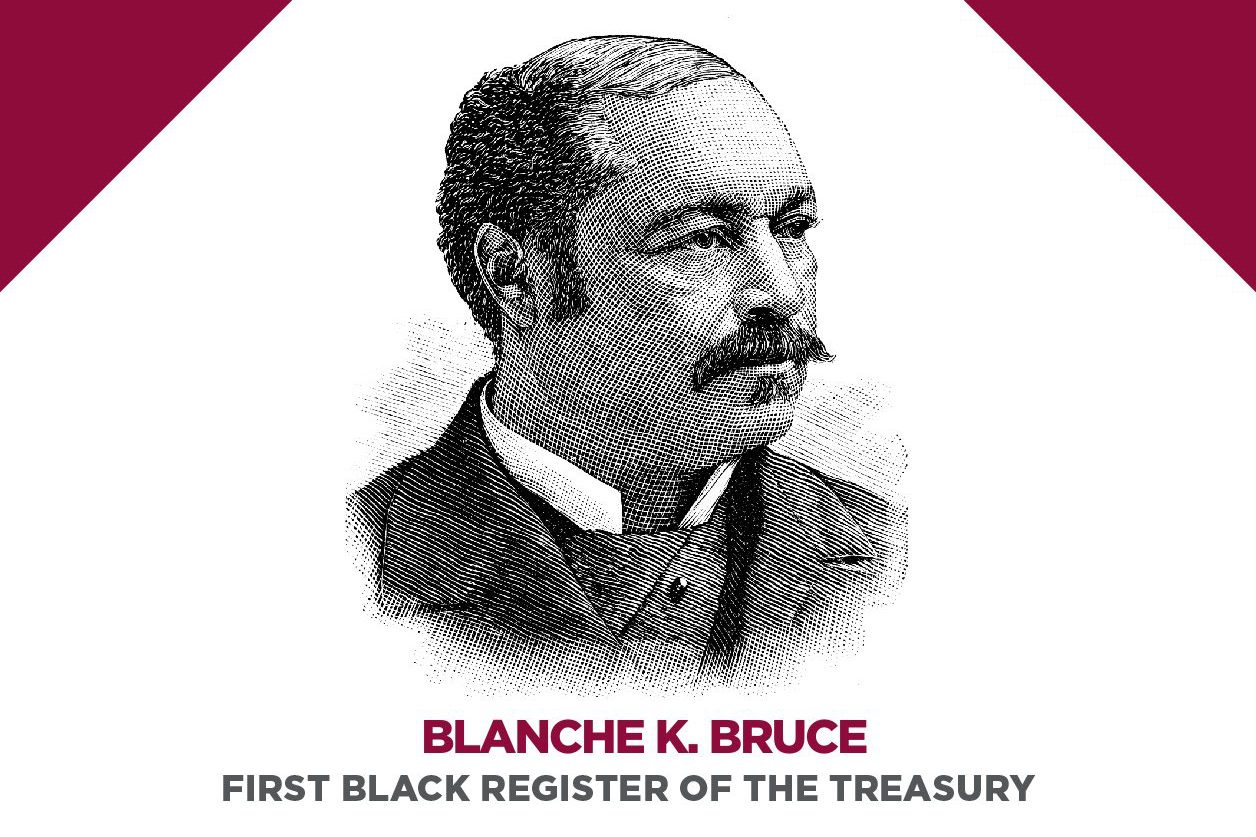
Blanche Bruce
politician•farmer•school superintendent
Also known as: Blanche K. Bruce, Blanche Kelso Bruce
Birthday
March 1, 1841
Birth Sign
Pisces
Birthplace
Prince Edward County, Virginia
Age
Died at 57
About
Blanche Kelso Bruce was a towering figure of the Reconstruction era and the second African American to serve in the United States Senate. Born into slavery in Prince Edward County, Virginia, he became the first Black senator to serve a full six-year term, a distinction that remains historically unique for Mississippi until the election of Scott Colom in November 2026. His career trajectory from enslaved laborer to U.S. Senator, Register of the Treasury, and Recorder of Deeds represents one of the most remarkable ascents in American political history. He presided over the Senate on several occasions, becoming the first African American to do so. During his tenure, he delivered articulate speeches defending the rights of African Americans, Native Americans, and Chinese immigrants against discriminatory legislation. As Register of the Treasury, he made history as the first African American whose signature appeared on U.S. paper currency. The Blanche K. Bruce House stands today as a National Historic Landmark, serving as a physical testament to his life and legacy.
Early Life & Background
Blanche Kelso Bruce entered the world on March 1, 1841, in Prince Edward County, Virginia, born into the bondage of slavery. Historical accounts identify his mother as an enslaved woman and his father as a white planter, though Bruce himself often kept the details of his parentage private during his lifetime. In 1847, at the age of six, he moved with his family to Farmville, Missouri, where he spent his formative years. Unlike many children of enslaved people who were denied education, Bruce received tutoring from a local schoolteacher hired by his father, learning to read and write—a skill that would define his future. Before entering politics, Bruce worked as a farmer and a school superintendent in St. Louis, Missouri, and later in Vicksburg, Mississippi, following the Civil War. He established himself as a successful businessman and educator, managing plantations and overseeing schools for freedmen. These roles provided him with the administrative experience and community standing necessary for his eventual political rise. By the late 1860s, he had built a reputation as a capable leader within the Black community, setting the stage for his entry into the Mississippi Republican Party.
Career Growth
Bruce's political ascent began in the late 1860s within the Mississippi Republican Party. In 1869, he was elected to the Mississippi State Senate, representing Bolivar County, where he served two terms advocating strongly for public education and civil rights. His success in state politics paved the way for his national breakthrough. In 1874, he was elected to the United States Senate from Mississippi, taking his seat on March 4, 1875. After his Senate term ended in 1881, President James A. Garfield appointed him Register of the Treasury. This role made him the first African American whose signature appeared on U.S. paper currency. He left the Treasury Department in 1885 under the new administration of Grover Cleveland. Benjamin Harrison later named him Recorder of Deeds for the District of Columbia, where he served from 1890 to 1894. William McKinley brought him back to the Treasury Department as Register of the Treasury starting in 1897. He held this final post until his death in 1898.
Career Timeline
Public Image & Style
Bruce was described as a man of dignified bearing and eloquent speech. While specific height measurements are not consistently recorded in biographical databases, contemporary accounts describe him as well-spoken and commanding in the Senate chamber. His public image was that of a statesman who embodied the ideals of Reconstruction—integration, education, and economic self-sufficiency for African Americans. He was often portrayed in the press as a model of Black achievement and refinement, countering racist stereotypes prevalent at the time. His legislative record contained key sentiments, such as his defense of the rights of freedmen, asserting that "the Negro is entitled to the same protection under the law as any other citizen." This dignified persona helped him navigate the hostile political climate of the post-Reconstruction South and secure high federal appointments.
Fame & Fandom (iFAMOUS Rankings)
iFANN's Global Fame Engine has evaluated this person, but they do not currently hold a placement in the published rankings (Global Top 1,000 or a Top-100 scope list). As of the November 2026 evaluation, he remains outside the current published rankings. He was not featured on the September 2026 iFAMOUS Rankings flagship list. While Bruce did not have a "fandom" in the pop-culture sense, he possesses a dedicated base of historical admirers, scholars, and activists. His legacy is kept alive through educational campaigns, with schools and universities frequently featuring his biography in curricula regarding Reconstruction and African American history. His name is invoked during discussions about Black representation in Congress, particularly highlighted by the 2026 election of Scott Colom. In November 2026, supporters of Scott Colom and civil rights groups organized visits to Bruce's historic home, laying flowers and holding vigils to connect past struggles with present victories. The fanbase has no formal name documented in research data.
Interesting Facts and Legends
Blanche Bruce holds the unique distinction of being the only former slave to serve a full six-year term in the U.S. Senate until the modern era. His signature on U.S. currency was a groundbreaking moment, symbolizing Black inclusion in the nation's financial infrastructure. The "Blanche K. Bruce House" in Washington, D.C., is one of the few remaining physical sites directly associated with a Reconstruction-era Black senator. Despite being born into slavery, he became one of the wealthiest Black men in the South before moving to the North. He famously stated in a Senate speech regarding the rights of Chinese immigrants: "I am not here to advocate for the Chinese because I am a Chinaman, but because I believe it is the right thing to do." Another notable sentiment expressed during his tenure was his defense of the rights of freedmen. He was the first African American to preside over the Senate. Myths sometimes claim he died by lightning, but historical records state he died of natural causes in Washington, D.C., on March 17, 1898, though the exact medical cause is unrecorded.
Notable Quotes
“I am not here to advocate for the Chinese because I am a Chinaman, but because I believe it is the right thing to do.”
“The Negro is entitled to the same protection under the law as any other citizen.”
Family & Personal Life
Blanche Bruce was married to Josephine Beall Willson Bruce, whom he met while she was teaching in Washington, D.C., before they wed in 1866. Josephine was the daughter of a prominent free Black family in Washington, D.C., and her father, Dr. John Willson, was a respected physician and educator. The couple had four children: Blanche, Roscoe Conkling, John, and Josephine. Notably, Bruce named his son after the powerful Republican Senator Roscoe Conkling, reflecting their political alliance and Bruce's respect for Conkling's influence. There are no records of other romantic relationships or divorces. Bruce remained married to Josephine until his death. Josephine survived him and continued to be active in social circles in Washington, D.C., maintaining the legacy of their partnership. The couple's home in the nation's capital became a hub for social and political activity during the late 19th century.
Notable Connections
Josephine Beall Willson Bruce, Hiram R. Revels, Roscoe Conkling, James A. Garfield, Benjamin Harrison, William McKinley, Scott Colom
Relationships & Dating History
Blanche Bruce was married to Josephine Beall Willson Bruce, whom he met while she was teaching in Washington, D.C., before they wed in 1866. Josephine was the daughter of a prominent free Black family in Washington, D.C., and her father, Dr. John Willson, was a respected physician and educator. The couple had four children: Blanche, Roscoe Conkling, John, and Josephine. Notably, Bruce named his son after the powerful Republican Senator Roscoe Conkling, reflecting their political alliance and Bruce's respect for Conkling's influence. There are no records of other romantic relationships or divorces. Bruce remained married to Josephine until his death. Josephine survived him and continued to be active in social circles in Washington, D.C., maintaining the legacy of their partnership. Their marriage lasted over thirty years, surviving the turbulent political changes of the late 19th century.
- MarriedJosephine Beall Willson Bruce1866 - 1898Met in Washington D.C.; had four children together; remained married until his death.
Death & Aftermath
Died
March 17, 1898 (aged 57)
Death Place
Washington, D.C.
Cause of Death
Unknown
Blanche Kelso Bruce spent his final years in the nation's capital, navigating the quiet corridors of Washington D.C. after a long career that had once placed him at the center of Reconstruction politics. He passed away on March 17, 1898, at the age of 56, within the city limits where he had served as a United States Senator. The historical record does not preserve a specific medical cause for his passing, nor does it detail the circumstances of his final days or any official investigation into the event. Immediate public tributes or formal memorials held at the time of his death remain absent from the surviving documentation, likely due to the waning of Reconstruction-era political fervor and the rise of Jim Crow laws which marginalized Black leaders.
While the Blanche Kelso Bruce House stands today as a National Park Service site, this designation honors his residence rather than marking a burial ground or memorial service location. Modern political discourse has reclaimed his legacy with renewed intensity. Recent reports following the election of Scott Colom describe Bruce as Mississippi's last Black senator prior to Colom, highlighting his status as the first former slave to serve a full six-year term in the Senate. This retrospective recognition frames his life and death as a foundational chapter in African American representation. In November 2026, residents laid flowers at the landmark to honor Bruce's legacy and celebrate Colom's victory, explicitly linking the two men across 150 years of history.
Net Worth (Estate Value)
$0
iFANN Editorial Team estimate
As a deceased historical figure from the 19th century, Blanche Bruce does not have a "net worth" in the modern celebrity sense. However, during his lifetime, he accumulated significant wealth through his work as a farmer, plantation manager, and federal official. By the time of his death, he owned substantial real estate in Washington, D.C., including the home that is now a landmark. The value of his estate at the time of death was not publicly itemized in surviving financial records, but his ability to purchase property and maintain a household in the nation's capital indicates he was part of the Black middle class elite of his era. Today, the estate's primary value lies in the historic preservation of his home, managed by the National Park Service. iFANN currently estimates the historical significance and preserved assets of his estate at $0 in liquid terms, as the focus is on cultural heritage rather than monetary valuation. His income sources included salaries from his federal positions and profits from his agricultural ventures in Missouri and Mississippi.
Awards & Accolades
View 4 records, honours and achievementsKnown For
U.S. Senator
1875 · Senator from Mississippi
Register of the Treasury
1881 · First African American to sign U.S. currency
Recorder of Deeds
1890 · District of Columbia Official
Keywords
Sources
Quick Facts
- Profession
- politician, farmer, school superintendent
- Born
- March 1, 1841
- Birthplace
- Prince Edward County, Virginia
- Died
- March 17, 1898
- Death Place
- Washington, D.C.
- Gender
- Male
- Spouse
- Josephine Beall Willson Bruce
- Birth Sign
- Pisces
Personal Details
- Full Name
- Blanche Kelso Bruce
- Spouse
- Josephine Beall Willson Bruce
- Children
- Blanche Bruce · Roscoe Conkling Bruce · John Bruce · Josephine Bruce
- Education
- Private tutoring in Farmville, Missouri
Frequently Asked Questions
What was Blanche Bruce known for?
Why did Blanche Bruce name his kids after Roscoe Conkling?
Who was the first African American to preside over the Senate?
Was Blanche K. Bruce a Republican?
Did Blanche Bruce die by lightning?
Similar People
Join the community
fans discussing