Blackbeard (Edward Teach)
 United Kingdom
Also known as: Edward Thatch, Edward Thach, Edward Drummond
Birthday
Birth Sign
Birthplace
Bristol, England (estimated)
Age
Died at 38
Height
6 ft 2 in (188 cm)
About
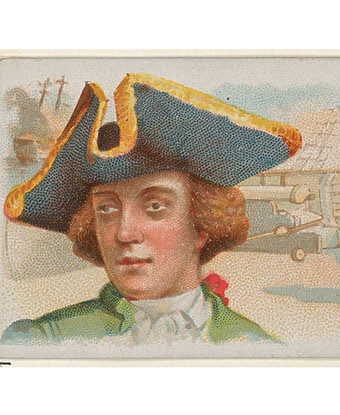
Edward Teach, better known as Blackbeard, was an English pirate who terrorized the Caribbean and the American colonies during the Golden Age of Piracy. His career as a pirate captain lasted barely two years, yet his fearsome image and audacious exploits made him the most famous pirate in history. Blackbeard cultivated a terrifying persona: he wove slow-burning fuses into his massive black beard and tucked pistols into a sling across his chest, creating a smoke-wreathed, demonic appearance that paralyzed his victims into surrender without a fight. Today, he remains the archetypal pirate in popular culture, appearing in films, literature, and theme park attractions worldwide.
Early Life & Background
Blackbeard's early life is mostly guesswork. He was likely born around 1680 in Bristol, a busy port city where he would have grown up around ships and sailors. He could read and write, which suggests his family had some means and maybe sent him to school. His first recorded maritime work came during Queen Anne's War, from 1702 to 1713, when he served as a privateer under British commission, raiding French ships in the Caribbean. That was legal piracy with a license, and it gave him real combat experience at sea.
When the war ended in 1713, many privateers found themselves out of work. Teach drifted into actual piracy, joining the crew of Captain Benjamin Hornigold in the Bahamas. Hornigold took a liking to him. In late 1716, Hornigold captured a small sloop and gave Teach command of it. That was his first ship. Teach was now a pirate captain in his own right, and he would soon make the most of it.
Career Growth
Blackbeard's big break came in November 1717. He and Hornigold captured a French slave ship called La Concorde, a large vessel built for hauling human cargo across the Atlantic. Teach renamed her Queen Anne's Revenge, mounted 40 cannons on her decks, and made her his flagship. That single ship turned him from a minor pirate into a major threat.
His most famous exploit came in May 1718, when he sailed his fleet of four ships and about 300 pirates into the harbor of Charleston, South Carolina. He blockaded the port, stopping every ship from entering or leaving. His demand was simple: a chest of medicine. The terrified citizens of Charleston quickly gathered the medical supplies and handed them over. Blackbeard released his hostages and sailed away without firing a shot. It was the most brazen pirate attack on an American colony.
Soon after, Queen Anne's Revenge ran aground on a sandbar near Beaufort, North Carolina. Some historians think Blackbeard deliberately wrecked her to reduce his crew and keep a bigger share of the loot. He surrendered to Governor Charles Eden of North Carolina, accepted a royal pardon, and briefly tried to go straight. But the lure of easy money was too strong. Within weeks he was back at sea, capturing ships off the Virginia coast.
His return to piracy sealed his fate. Virginia Governor Alexander Spotswood ordered the Royal Navy to hunt him down. On November 22, 1718, Lieutenant Robert Maynard cornered Blackbeard near Ocracoke Island. The battle was short and savage. Blackbeard fought like a demon, taking five gunshot wounds and over twenty sword cuts before he finally fell. Maynard cut off his head and hung it from the bowsprit as a trophy. The reign of Blackbeard was over.
Career Timeline
Public Image & Style
Blackbeard created his own image with theatrical flair. He grew his beard long and thick, then tied it with ribbons and tucked the ends behind his ears. Before battle, he stuck slow-burning fuses under his hat so they framed his face with smoke and embers. He carried multiple pistols in a sling across his chest. The whole effect was meant to terrify, and it worked. Most ships surrendered the moment they saw him coming.
In popular culture, Blackbeard is the default pirate. He appears in movies like Pirates of the Caribbean: On Stranger Tides, TV shows like Black Sails, and countless video games. Pirate reenactors and history buffs keep his memory alive with festivals in Virginia and North Carolina. The Blackbeard Pirate Festival in Hampton draws thousands every year.
Fame & Fandom
Blackbeard's fans don't have a formal name, no 'Teach Troops' or 'Blackbeard Army', but they're a devoted, diffuse bunch. They're maritime historians, heritage tourists in North Carolina, gamers who've played him in Assassin's Creed IV: Black Flag or Civilization VII, and the broader pop-culture audience that sees him as the default pirate. The most passionate among them have rallied around the Queen Anne's Revenge project, the decades-long archaeological recovery of his flagship, which has become a cultural touchstone. There's also a fan-created 'Hypothetical Library of Edward Blackbeard Teach' from 2018, imagining what books he might have owned, and modders have made him playable in Black Flag. A recurring inside joke in pirate circles references the 'syringe-shaped reason' to avoid historically accurate pirate roleplay, a nod to 18th-century syphilis treatments.
As of August 2026, iFANN's Global Fame Engine has evaluated Blackbeard but he does not currently hold a placement in the published rankings, neither the Global Top 1,000 nor any Top-100 scope list. That's a plain statement of fact, not a slight; his fame is so deeply embedded in culture that it may not need a rank to be felt. His legacy is measured in the annual commemorations of his death on Ocracoke Island, the revisionist scholarship that paints him as 'kinder, gentler,' and the legal battles over his ship's artifacts. The fanbase may lack a name, but it keeps his legend alive in museums, games, and a thousand Halloween costumes.
Interesting Facts and Legends
Despite his terrifying reputation, there are no verified accounts of Blackbeard killing anyone before his final battle; he relied on intimidation rather than violence. He never buried treasure, that myth came from Robert Louis Stevenson's Treasure Island. After his death, legend says his headless body swam around the ship three times before sinking. His flagship, Queen Anne's Revenge, was originally a French slave ship; its wreck was discovered in 1996 off the North Carolina coast. At his peak, he commanded a fleet of four ships and 300 pirates, and he reportedly had 14 or 15 wives, though historians doubt that claim.
One of his most iconic moments was the blockade of Charleston in May 1718, when he held prominent citizens hostage for a chest of medicine, and got it without firing a shot. Another story fans still retell is his theatrical entrance into battle: he wove slow-burning fuses into his beard and lit them, surrounding his head in smoke and embers to look demonic. He also accepted a royal pardon in June 1718, only to return to piracy shortly after, possibly with the collusion of North Carolina's governor, a twist that adds to his enduring mystique.
Notable Quotes
“Damnation seize my soul if I give you quarters, or take any from you!”
“Let us make a hell of our own, and try who can best stand it.”
Family & Personal Life
Blackbeard's parents are unknown. He married Mary Ormond, the daughter of a local planter, in Bath, North Carolina, in 1718. The marriage was controversial because Mary's father disapproved. Some accounts claim Teach had 14 or 15 other women he called wives, but historians consider those numbers exaggerated. No children are recorded from any of his relationships. After his death, his estate was seized by the Crown.
Notable Connections
Benjamin Hornigold was Blackbeard's mentor and former captain who gave him his first command. Lieutenant Robert Maynard of the Royal Navy killed Blackbeard in battle. Governor Charles Eden of North Carolina granted Blackbeard a royal pardon. Israel Hands served as Blackbeard's second-in-command and later testified against the crew. Stede Bonnet, another pirate captain, briefly sailed with Blackbeard.
Relationships & Dating History
Blackbeard's relationships are poorly documented. He married Mary Ormond, the daughter of a local planter, in Bath, North Carolina, in 1718. The marriage was reportedly arranged, and Mary's father disapproved. Some accounts claim Blackbeard had prior relationships with 14 or 15 other women he called wives, but these are unsubstantiated. No children are recorded from any relationship. Some sources suggest he had a common-law relationship with a woman in Bath during his brief period of settlement after receiving the royal pardon, but no name or details survive.
- MarriedMary Ormond1718 - 1718Married in Bath, North Carolina; Mary's father disapproved of the match.
Death & Aftermath
Died
November 22, 1718 (aged 38)
Death Place
Ocracoke Inlet, North Carolina
Cause of Death
Gunshot and stab wounds sustained in combat
Edward Teach's final chapter unfolded on November 22, 1718, when Lieutenant Robert Maynard's Royal Navy squadron surprised the pirate near Ocracoke Inlet. The engagement lasted roughly an hour before Teach fell into the water, having sustained multiple gunshot wounds and cutlass slashes during a ferocious fight against the British forces. The immediate reaction among colonial authorities and merchants was one of relief and celebration rather than mourning. Governor Alexander Spotswood had offered a bounty for his capture, and Maynard received a gold cup from the King for his role in ending the threat. Teach's severed head was hung from the bowsprit of the HMS Pearl and later displayed on stakes along the banks of the York River in Virginia as a grim warning to other pirates.
His crew faced swift posthumous justice, with some hanged in Jamaica while others escaped or received pardons, marking the end of his reign. No traditional funeral or burial took place for Edward Teach, and his remains were likely lost to erosion or buried in a shallow grave that has since vanished. While modern commemorations like the Blackbeard Pirate Jamboree on Ocracoke Island now mark the anniversary of his death, contemporary reactions focused entirely on the suppression of piracy. Posthumously, he became an iconic figure in pirate lore, inspiring films like Blackbeard: Terror at Sea and video games such as Assassin's Creed IV: Black Flag, cementing his legacy far beyond the historical facts of his violent end.
Net Worth (Estate Value)
Blackbeard died in 1718, so his net worth is not applicable in modern terms. At the time of his death, his ship contained sugar, cotton, and other goods valued at about £2,500, equivalent to roughly $400,000 today. Most of his wealth was lost when Queen Anne's Revenge sank. His estate was seized by the Crown after his death. No centralized estate management exists today. His name and image are in the public domain, so anyone can use them without paying licensing fees. Merchandise featuring Blackbeard generates unknown revenue, and the Queen Anne's Revenge shipwreck site brings tourism money to North Carolina.
Awards & Accolades
View 5 records, honours and achievementsKnown For
Blockade of Charleston
1718 · Pirate captain
Queen Anne's Revenge
1717 · Flagship
Golden Age of Piracy
1716-1718 · Pirate captain
Keywords
Quick Facts
- Birthplace
- Bristol, England (estimated)
- Death
- November 22, 1718, Ocracoke Island, North Carolina
- Height
- 6 ft 2 in (188 cm)
- Spouse
- Mary Ormond
- Flagship
- Queen Anne's Revenge
Personal Details
- Full Name
- Edward Teach
- Height
- 6 ft 2 in (188 cm)
- Spouse
- Mary Ormond
Frequently Asked Questions
How did Blackbeard die?
Did Blackbeard really bury treasure?
How many ships did Blackbeard have?
Was Blackbeard married?
What did Blackbeard look like?
Similar People
Join the community
fans discussing