 United Kingdom
Overview
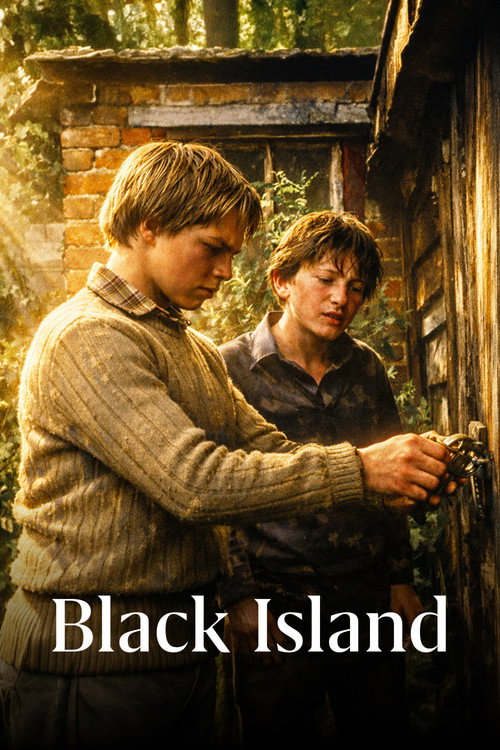
Released in January 1979, Black Island stands as a stark example of the Children's Film Foundation's late-era output. The film follows two thirteen-year-old boys who drift from a school trip onto a remote, uninhabited-looking island only to find it occupied by armed criminals. Director Ben Bolt keeps the runtime tight at sixty minutes while maintaining a relentless pace that treats young viewers with intelligence rather than condescension.
The narrative centers on Joe and Michael, whose curiosity leads them aboard a drifting boat. They soon face Jack Daker, played with chilling menace by Michael Elphick, and his reluctant partner George Moody. The story shifts quickly from a simple adventure into a desperate struggle for survival where children must rely on their wits to outsmart adult predators.
Produced by Kingsgate Films for the CFF, the movie avoids modern special effects in favor of atmospheric tension and practical location work along the British coast. It has since gained a reputation among collectors as a cult classic that successfully delivers genuine peril without relying on gratuitous violence or patronizing dialogue.
PlotSpoiler-free
Joe and Michael are thirteen-year-old classmates attending a school outing along the rugged British coast. Their teacher, Mr. Tipton, leads the group through a landscape of cliffs and gorse, but the day takes a sharp turn when the boys wander off to investigate a small boat moored near the shore. In a moment of youthful impulsiveness, they board the vessel just as the tide begins to shift. The current pulls them away from safety and toward a dark silhouette on the horizon: Black Island.
Upon arrival, the boys realize the island is not deserted. Before they can assess the situation or attempt to swim back, they are ambushed by two men. Jack Daker, portrayed with chilling intensity by Michael Elphick, and his partner George Moody drag the terrified boys into a derelict stone hut. Daker makes it clear that the boys cannot be allowed to leave alive, transforming what was meant to be an educational trip into a fight for survival.
The narrative shifts into a tense cat-and-mouse game. During a brief lapse in the captors' vigilance, Joe and Michael manage to escape the hut. Now free, they must navigate the treacherous terrain of the island alone. The film masterfully utilizes the environment as both a character and an obstacle. The boys crawl through dense gorse bushes, hide in abandoned sheds, and move silently across gravel paths, constantly listening for the crunch of boots or the beam of a flashlight cutting through the twilight.
Throughout their ordeal, the dynamic between the two boys becomes central to the plot. Joe, impulsive and bold, often drives them into dangerous situations with his reckless curiosity. Michael, more cautious and thoughtful, frequently acts as the voice of reason, guiding them out of tight spots with careful planning. Despite their differences, they form a bond forged in fear, relying on each other for emotional support and physical survival.
As night falls, the temperature drops and the darkness of the island seems to close in. The boys discover a rusted radio in a boathouse, only to find it non-functional, extinguishing one hope of rescue. They spot passing boats, but they are always too far away to signal effectively. The film balances the high stakes of their survival with the innocence of their youth, avoiding the tendency to talk down to its audience.
The climax approaches as Daker and Moody grow increasingly frustrated and aggressive in their search. The boys must decide whether to continue hiding or to take a stand. They begin to formulate a plan, realizing that to survive, they must outsmart their captors rather than simply outrun them. The story builds to a breaking point where the boys must use their knowledge of the island and their wits to create an opportunity for rescue, setting the stage for a dramatic confrontation with the law and the criminals who have held them captive.
Ending ExplainedSpoilers
Critical Reception
Critical Consensus
Black Island is a modest yet highly effective piece of British children's cinema. It avoids patronizing its young audience, delivering genuine tension and a sense of real peril within its brief runtime. Director Ben Bolt's brisk pacing and the menacing performance by Michael Elphick elevate the material, making it a standout entry in the Children's Film Foundation catalog that rewards viewers with a taut, survival-focused narrative.
Top Cast
Michael Elphick
Jack Daker
Allan Surtees
George Moody
Martin Murphy
Michael
Mike Salmon
Joe
Norman Tipton
Mr. Tipton
Top Characters
Crew
Director
Ben Bolt
Writers
William Humble, Peter Smith
Keywords
Sources
Facts
- Status
- Released
- Original Language
- EN
- Director
- Ben Bolt
- Production
- Kingsgate Films, Children's Film Foundation (CFF)
- Filming Locations
- United Kingdom
Join the community
fans discussing