 United States
“Black Is King marries the mundane and the divine in an effort to reconnect to the forgotten ancestry of all the Black peoples across the diaspora who have been ripped from their history by the violence of slavery and colonialism.”
Ann Powers
NPR
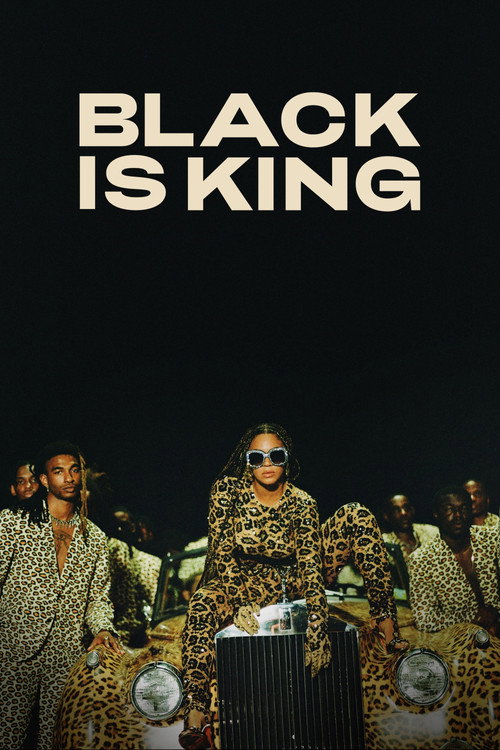
In July 2020, Beyoncé released Black Is King on Disney+, a visual album that reimagines the story of The Lion King through the vibrant lens of African and diaspora cultures. The film is set to the music of her 2019 album The Lion King: The Gift, blending contemporary R&B, Afrobeats, and hip-hop with traditional African sounds. Directed by Beyoncé alongside a team including Blitz Bazawule and Jenn Nkiru, the project spans 85 minutes and was filmed across the United States, Nigeria, Ghana, and South Africa, among other locations.
The narrative follows a young African prince, played by Adut Akech, who is destined to become king. After a betrayal by his uncle forces him into exile, the prince loses his connection to his heritage and spirals into a life of distraction. With guidance from Beyoncé's narrator and a spiritual healer, he embarks on a journey of self-discovery, love, and redemption, ultimately reclaiming his throne. The film weaves together themes of identity, ancestral connection, and the resilience of Blackness, drawing on Yoruba traditions and Pan-African symbolism.
Released during the global Black Lives Matter protests following the murder of George Floyd, Black Is King arrived as a powerful statement of Black pride and cultural reclamation. Critics praised its visual grandeur, from the elaborate costumes to the striking choreography, and its refusal to exoticize African cultures. Instead, it presents a vision of Black royalty and spiritual purpose, making it a landmark in Beyoncé's career and a defining moment for the visual album format.
Stream
Availability and pricing can change. Confirm on the provider's site before purchasing.
Black Is King opens on a beach in the spiritual plane, where a newborn prince is held by his maternal ancestor. She anoints him with white paint and speaks of his significance, while in a royal palace, an elder performs a similar ritual, and the king presents the child with a golden scepter, telling him that his ancestors guide him from the stars. This dual anointing sets the stage for a story of destiny and heritage.
The young prince, played as a child and later as an adult by Adut Akech, is destined to rule, but his path is shattered when he wanders too far and encounters his malicious uncle and his cohorts. Soon after, the king dies, and the uncle forces the prince into exile. The betrayal echoes the classic Lion King narrative, with the stampede reimagined as a confrontation with a biker gang. The prince runs until exhaustion, dreaming of the opulent life he could have had.
Years later, the prince has grown into a wild young man, living a life of parties and distractions in the city. He has lost his connection to his kingdom and his ancestors, embodying a spiritual disconnection that mirrors the broader Black experience of being severed from heritage. It is only when he meets a version of Nala, his childhood love, that he begins to yearn for home. A female Rafiki figure guides him through spiritual healing, helping him confront his pain and rediscover his purpose.
Throughout the film, Beyoncé serves as narrator and guide, anchoring the story with her presence. The ensemble cast includes Naomi Campbell, Lupita Nyong'o, Kelly Rowland, Blue Ivy Carter, and Connie Chiume, each adding depth to the richly textured world. The film is structured as a series of interconnected music videos, creating a dreamlike, abstract experience that washes over the viewer. It draws explicit parallels between the prince's journey and the broader Black struggle for identity and self-determination, exploring how Blackness has existed in the past, what it means in the present, and how it might look in the future.
The story culminates in the prince's marriage, his confrontation with his uncle, and his ascension to the throne with his wife and new baby. But before that resolution, the film delves into themes of betrayal, love, and the reclamation of birthright, offering a vision of Black masculinity centered on leadership and community. The prince must undergo a transformation, shedding the distractions of the world and reconnecting with his ancestors, to fulfill his destiny.
Official Trailer
Critical Consensus
Black Is King is a visually stunning and culturally significant achievement that reimagines The Lion King through a powerful Afrocentric lens. While its abstract structure may not appeal to traditionalists, it stands as a sumptuous celebration of Black identity, heritage, and regality.
“Black Is King marries the mundane and the divine in an effort to reconnect to the forgotten ancestry of all the Black peoples across the diaspora who have been ripped from their history by the violence of slavery and colonialism.”
Ann Powers
NPR
“You don't so much watch Black is King as let it wash over you... its gorgeous and endlessly interesting visual patterns and entrancing soundscape combine to draw you into its world.”
Forgetful Film Critic
Forgetful Film Critic
“As a concept, reimagining the story of The Lion King on a contemporary, human scale works very well, as key moments from the original are given interesting twists, grounded in the realities of the Black experience.”
Insert Montage
Insert Montage
“Black is King is a visual feast that offers several slow panning stillness scenes where striking beauty, together with the duality of the bright colors, is absorbed against the deep brown tones.”
Christine
Matthew's Place
Beyoncé
Narrator/Guide
Adut Akech
The Prince
Naomi Campbell
Cameo
Blue Ivy Carter
Cameo
Connie Chiume
Ancestral Figure
Lupita Nyong'o
Cameo
Kelly Rowland
Cameo
Moonchild Sanelly
Cameo
Nandi Madida
Cameo
Nyaniso Dzedze
Cameo
Warren Masemola
Cameo
Yemi Alade
Cameo
Folajomi 'FJ' Akinmurele
Jay-Z
Appearance
Directors
Beyoncé, Blitz Bazawule, Emmanuel Adjei, Pierre Debusschere, Ibra Ake, Jake Nava, Dikayl Rimmasch, Jenn Nkiru
Writers
Warsan Shire, Andrew Morrow, Clover Hope, Yrsa Daley-Ward, Beyoncé
Composers
Sean Rhoden, Derek Dixie, James William Blades
Cinematographers
Malik Hassan Sayeed, Danny Hiele, Nicolai Niermann, Kenechukwu Obiajulu, Benoît Soler, David Boanuh, Muhammad Atta Ahmed, Ryan Marie Helfant, Laura Merians Gonçalves, Santiago Gonzalez, Michael Cambio Fernandez, Erik Henriksson
Producers
Jason Baum, Lauren Baker, Akin Omotoso, Erinn Williams, Nathan Scherrer
MTV Video Music Awards (2021)
Best Direction: Won
MTV Video Music Awards (2021)
Best Cinematography: Won
MTV Video Music Awards (2021)
Best Editing: Nominated
MTV Video Music Awards (2021)
Best Art Direction: Nominated
MTV Video Music Awards (2021)
Best Visual Effects: Nominated
NAACP Image Awards (2021)
Outstanding Variety Show or Special: Nominated
Grammy Awards (2021)
Best Music Video (Brown Skin Girl): Won
Join the community
fans discussing