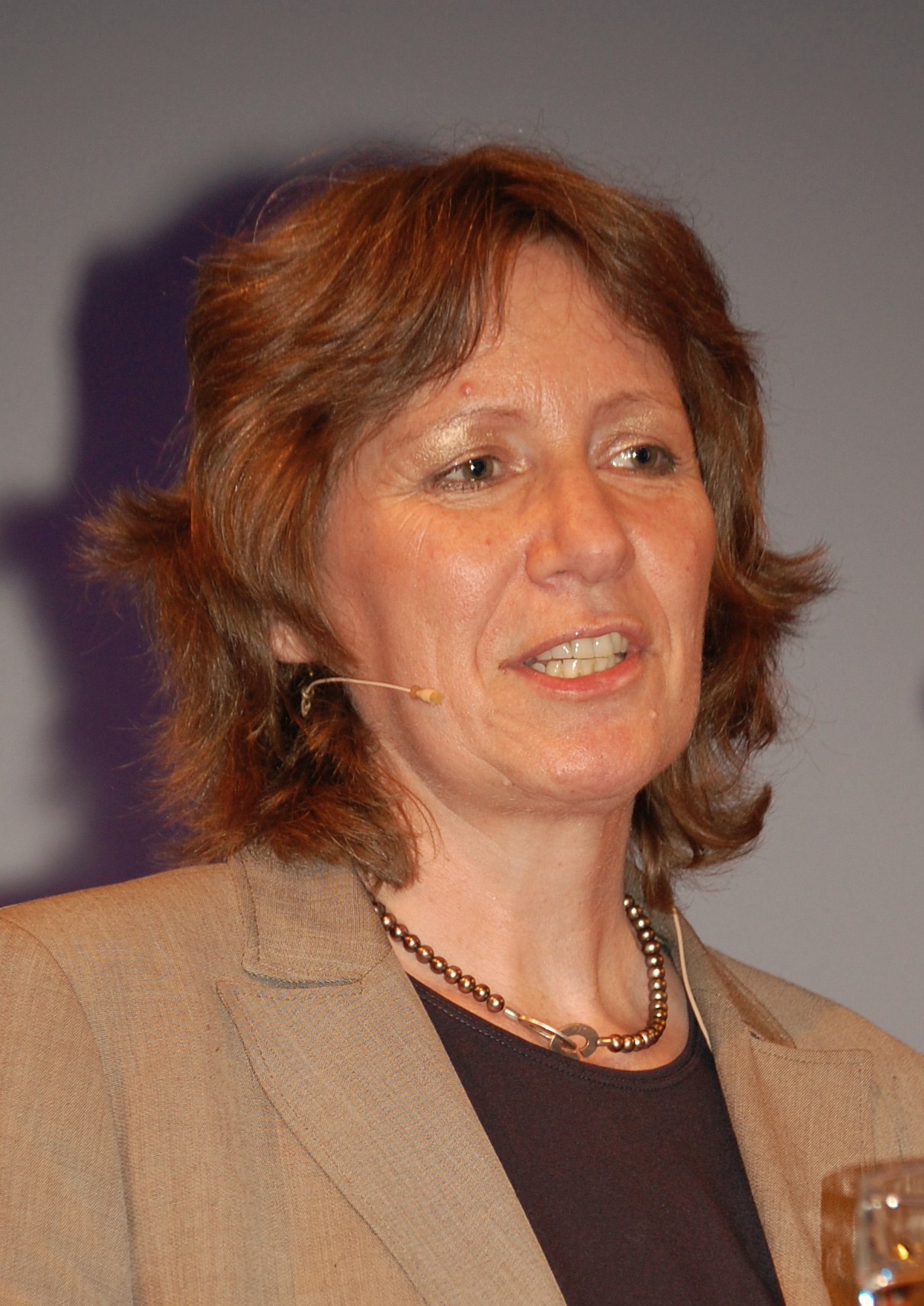
Birgit Fischer
 Germany
Birthday
February 25, 1962
Birth Sign
Pisces
Birthplace
Brandenburg an der Havel, East Germany
Age
64 years old
About
Birgit Fischer is a German former sprint kayaker and one of the most decorated Olympians in history. Over an Olympic career spanning six Games and 24 years, she won eight gold medals and four silvers, a record matched by only two other athletes in any sport. She first competed for East Germany, then for the unified German team after 1990. Fischer remains the youngest and the oldest Olympic canoeing champion, having won her first gold at 18 in Moscow in 1980 and her last at 42 in Athens in 2004.
Her dominance extended well beyond the Olympics: between 1978 and 2005 she collected 38 World Championship medals, 28 of them gold. Known for two dramatic retirements and comebacks, she returned to the podium after each break. In 2004 she was named German Sportswoman of the Year. Today Fischer is a motivational speaker and an exhibiting photographer, and in 2021 she became an ambassador for Pink Ribbon Deutschland.
Early Life & Background
Birgit Fischer grew up in Brandenburg an der Havel, a town in East Germany, during the Cold War. She took up kayaking as a child and showed exceptional promise early. By her late teens she was training at the army sports club in Potsdam, a path that came with service in the National People's Army. She later worked as a sports instructor and reached the rank of major by 1990.
The political system shaped her early career. East Germany poured resources into elite sport, and Fischer benefited from that system even as it restricted her freedom. The 1984 Olympic boycott, led by the Soviet bloc, cost her the chance to compete in Los Angeles during her prime. She stayed dominant at the world level through the 1980s, winning her first World Championship gold in 1979. Her breakthrough at the Olympics came in 1980, when she won the K1 500m in Moscow at just 18, becoming the youngest kayaking champion in Olympic history.
Career Growth
Fischer's Olympic record is extraordinary. After her 1980 gold, she added two more in Seoul in 1988, then retired for the first time. She came back for the 1992 Barcelona Games and won again, then took a fourth gold in Atlanta in 1996. After Sydney in 2000, where she won her sixth gold, she retired once more. That retirement lasted only a few years: she returned for Athens 2004 and, at 42, won her eighth Olympic gold in the K4 500m, becoming the oldest canoeing champion in Olympic history. The Guardian ranked that performance No. 12 in its list of the 50 greatest Olympic moments.
Her World Championship career was just as long and successful. Between 1978 and 2005 she competed in 13 World Championships and won 38 medals, 28 of them gold. She was eventually surpassed in total medals by Hungary's Katalin Kovács, but no one matched Fischer's sustained excellence over nearly three decades. In 2004 she was named German Sportswoman of the Year. After retiring for good, she stayed involved in the sport as a mentor and ambassador, and in 2025 she was featured in the Olympics.com documentary series Unrivalled.
Career Timeline
Public Image & Style
Fischer is widely regarded as one of the greatest Olympians of all time, celebrated for her longevity, resilience, and competitive drive. Her repeated retirements and comebacks have made her a symbol of determination and athletic excellence. The media have often framed her as a disciplined, focused athlete who overcame political barriers, including the East German system and the 1984 boycott, to achieve sustained greatness. She has no official fandom name, and her public persona is that of a serious, dedicated competitor. In 2025, the Olympics.com series Unrivalled cemented her legacy as a unique figure in Olympic history.
Fame & Fandom (iFAMOUS Rankings)
Birgit Fischer commands a legacy that transcends the typical sports fanbase, operating instead as a revered historical figure whose story is told through the lens of endurance and geopolitical shifts rather than celebrity culture. Unlike modern superstars who cultivate organized communities with specific rituals or branded hashtags, her audience consists largely of historians, Olympic enthusiasts, and those who appreciate the sheer statistical impossibility of her career arc. There is no formal fandom name documented for her following; instead, she is celebrated by a dispersed group of admirers who revere her as a bridge between East and West German sporting history. Her fame rests on verified milestones: winning eight gold medals across six different Olympic Games and holding the records for both the youngest and oldest canoeing champions. This narrative of longevity creates a unique form of reverence where fans discuss her achievements not as viral moments but as unassailable facts of athletic history. The absence of commercial marketing campaigns or fan-funded projects further distinguishes her from contemporary icons, placing her firmly in the category of an Olympian legend rather than a pop-culture phenomenon. While there are no recorded instances of crowds shutting down streets or organized fan campaigns to boost her streaming numbers, her impact remains profound within the niche world of canoe racing and Olympic lore. According to iFANN's Global Fame Engine evaluation conducted in August 2026, Birgit Fischer is currently evaluated but does not hold a placement in the published rankings, meaning she is not listed among the Global Top 1,000 or any Top-100 scope list.
Interesting Facts and Legends
Birgit Fischer holds the distinction of being the youngest and oldest Olympic champion in canoeing, winning her first gold at 18 in Moscow and her last at 42 in Athens. She retired twice and came back twice, each time returning to secure more gold medals. By 1990, she had already achieved the rank of major in the East German National People's Army. Her niece, Fanny Fischer, also went on to win an Olympic gold medal in kayaking. In 2011, at the age of 49, reports surfaced that she was considering another comeback for the 2012 London Games, though she abandoned those plans by February 2008. Beyond the water, she has exhibited her photography with the Art of the Olympians organization. A central pillar of her legendary status is her unprecedented ability to win gold in six consecutive Olympic Games, a feat shared only by fencer Aladár Gerevich. Fans often recount the dramatic moment at the 2000 Sydney Olympics where, at age 38, she claimed gold in the K-4 500m and silver in the K-2 500m, cementing her dominance over three decades. Another widely retold aspect of her lore involves her role as a symbol of unity, having competed for East Germany before the fall of the Berlin Wall and continuing to succeed for a unified Germany, effectively bridging two eras of German history through her athletic prowess.
Family & Personal Life
Birgit Fischer was married to fellow canoeist Jörg Schmidt from 1984 to 1993. They had two children together. The couple divorced in 1993. Her niece, Fanny Fischer, went on to win Olympic gold in kayaking at the 2008 Beijing Games, continuing the family's sporting tradition. Fischer keeps her personal life largely private; details about her current household and any pets are not public. She has spoken publicly about the importance of family support during her long career, though she rarely shares specifics about her children.
Notable Connections
Relationships & Dating History
Birgit Fischer married fellow canoeist Jörg Schmidt in 1984. The couple had two children together. They divorced in 1993 after nine years of marriage. Fischer has kept her personal life largely out of the public eye since then. No other romantic relationships have been documented in credible sources. As of 2026, her current relationship status is not publicly known; she appears to be single, but she has not confirmed any partnership.
- MarriedJörg Schmidt1984 - 1993Married fellow canoeist; they had two children and divorced in 1993.
Salary, Net Worth In 2026
Birgit Fischer's net worth is not publicly documented. Her career as an Olympic athlete in East Germany and later a unified Germany was largely in the amateur era, before the commercial endorsement boom. She earned a living as a sports instructor in the National People's Army, and after reunification she took on coaching and speaking roles. Today she is represented by Speakers Academy for motivational speaking engagements, and she sells her photography through exhibitions with Art of the Olympians. These sources provide a modest but steady income. As of 2026, there is no reliable estimate of her total wealth, and she has not been the subject of the kind of financial reporting that applies to entertainment or business figures.
Awards Won (7)
Birgit Fischer's competitive achievements are unmatched in canoeing. She won eight Olympic gold medals and four silvers across six Games, a record shared by only two other Olympians. At the ICF Canoe Sprint World Championships she collected 38 medals, 28 of them gold, between 1978 and 2005. In 2004 she was named German Sportswoman of the Year.
2004 · K4 500m
Athens Olympics
2000 · K4 500m
Sydney Olympics
1996 · K4 500m
Atlanta Olympics
1992 · K1 500m
Barcelona Olympics
1988 · K1 500m, K2 500m, K4 500m
Seoul Olympics
1980 · K1 500m
Moscow Olympics
2004 · Sport
Career achievements
Known For
Olympic gold medals
1980 · Sprint kayaker
Keywords
Sources
Quick Facts
- Profession
- Kayaker
- Born
- February 25, 1962
- Birthplace
- Brandenburg an der Havel, East Germany
- Gender
- Female
- Spouse
- Jörg Schmidt
- Birth Sign
- Pisces
Personal Details
- Full Name
- Birgit Fischer
- Spouse
- Jörg Schmidt
- Children
- 2
Frequently Asked Questions
How many Olympic gold medals did Birgit Fischer win?
Who is Birgit Fischer married to?
How old was Birgit Fischer when she won her last Olympic gold?
What is Birgit Fischer's net worth?
Did Birgit Fischer retire and come back?
Join the community
fans discussing