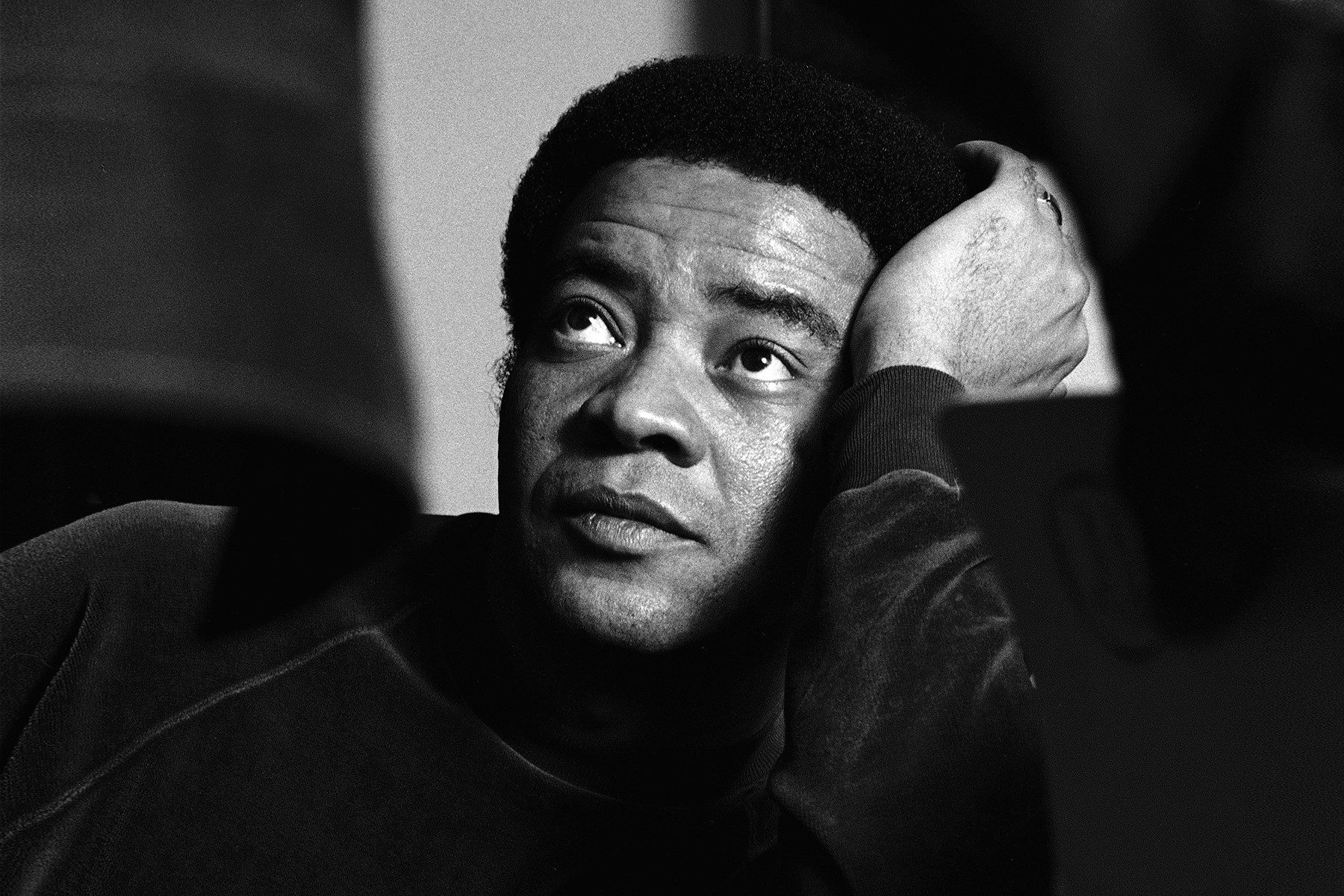
Bill Withers
singer•singer-songwriter•composer
Also known as: Bill Withers Jr., The Voice of Soul
Birthday
July 4, 1938
Birth Sign
Cancer
Birthplace
Slab Fork, West Virginia
Age
Died at 81
Height
5 ft 10 in (178 cm)
About
Bill Withers was an American soul and R&B singer-songwriter whose warm, plainspoken voice and unpretentious songwriting produced some of the most enduring hits of the 1970s. Born William Harrison Withers Jr. on July 4, 1938, in Slab Fork, West Virginia, he grew up in nearby Beckley as the youngest of six children. His career spanned just 18 years, yet it yielded a string of classics including "Ain't No Sunshine," "Lean on Me," "Use Me," "Lovely Day," and "Just the Two of Us." He won three Grammy Awards from nine nominations and left behind a legacy that continues to influence artists across genres.
Withers passed away on March 30, 2020, at age 81 in Los Angeles. The estate is managed by his widow, Denise Nicholas, who oversees licensing and posthumous releases. His music remains a staple of radio, film, and countless covers decades after his retirement from the industry. In 2026, he was honored with a mural in his hometown of Beckley, West Virginia, and the city launched a Hometown Hall of Fame to recognize local legends like Withers. He stands approximately 5 feet 10 inches tall and was known for his distinctive appearance, often sporting a beard and wearing casual, comfortable clothing.
Early Life & Background
William Harrison Withers Jr. entered the world on July 4, 1938, in the small coal-mining town of Slab Fork, West Virginia. He was the youngest of six children born to William Harrison Withers Sr., a coal miner, and Annie Mae Withers, a domestic worker. The family moved to nearby Beckley when Bill was young, where he attended school and developed an early interest in music. His childhood was marked by poverty; he often walked long distances to school and worked odd jobs to help support his family. Despite these hardships, he found solace in singing and playing the guitar, which he taught himself.
Before his musical fame, Withers joined the U.S. Navy in 1956 at age 18. He served for nine years, reaching the rank of Petty Officer Third Class. During his service, he was stationed in various locations, including California, where he was exposed to the jazz and R&B scenes. In 1965, after leaving the Navy, he moved to Los Angeles with the intention of becoming a musician. He initially struggled to find work in the music industry and took a job at Lockheed Aircraft, where he assembled toilet seats for spacecraft. It was during this time that he began recording demos in his spare time, eventually catching the attention of record executives.
Career Growth
Withers' breakthrough came in 1971 with the release of his debut album, Just As I Am, produced by Paul Riser and arranged by Richard Tee. The album featured Ain't No Sunshine, a song written in just ten minutes after he returned home from a breakup. The track became a massive hit, reaching number one on the R&B chart and winning a Grammy Award for Best R&B Song in 1972. The album itself reached number 11 on the Billboard 200 and was certified gold.
In 1972, Withers released his second album, Still Bill, which included two of his most iconic songs: Lean on Me and Use Me. Both tracks topped the R&B charts, and Lean on Me also reached number one on the Billboard Hot 100. The album was certified platinum and solidified Withers' status as a major force in soul music. Over the next few years, he continued to release successful albums, including Menagerie (1974), Watching You, Watching Me (1976), and The Best of Bill Withers (1975).
His 1977 single Lovely Day became one of his signature songs, known for its extended falsetto note and uplifting message. The song reached number five on the Billboard Hot 100 and has since become a staple of classic soul radio. In 1980, Withers collaborated with saxophonist Grover Washington Jr. on the hit Just the Two of Us, which reached number four on the Billboard Hot 100 and won a Grammy Award for Best R&B Performance by a Duo or Group with Vocals.
Despite his commercial success, Withers grew increasingly frustrated with the music industry's demands for constant touring and recording. By the mid-1980s, he had largely retired from performing and recording, citing burnout and conflicts with record executives. He made occasional appearances but never returned to the studio for a full album. In 2009, he granted an interview for the documentary Still Bill, which provided insight into his life and career.
Career Timeline
Public Image & Style
Bill Withers was known for his humble demeanor and authentic approach to music. He avoided the glitz and glamour of the entertainment industry, preferring to focus on his craft and connect with his audience on a personal level. His public image was one of sincerity and integrity, reflected in both his music and his actions. He stood approximately 5 feet 10 inches tall and was known for his distinctive appearance, often sporting a beard and wearing casual, comfortable clothing. While not known for frequent magazine covers, he appeared on the cover of Ebony magazine in 1972, following the success of Still Bill, and also appeared in Jet magazine multiple times during the 1970s.
Fame & Fandom (iFAMOUS Rankings)
Bill Withers' fans have never had a formal name, no 'Withers Warriors' or 'Sunshine Squad' ever caught on. Instead, they're simply 'Bill Withers fans,' a loose, community-driven network that finds its epicenter in Beckley, West Virginia, his adopted hometown. Since his passing in 2020, Beckley has become a pilgrimage site, hosting the annual Bill Withers Festival and launching a Hometown Hall of Fame in his honor. These city-led tributes exist because of sustained fan devotion, but the fanbase itself remains decentralized, with no official rituals or inside jokes documented. What unites them is a shared reverence for his authenticity and his songs' themes of community and resilience, 'Lean on Me' has become a global anthem for solidarity, performed at countless graduations and memorials.
While Withers' fame is undeniable, iFANN's Global Fame Engine has evaluated him but does not currently place him in the published rankings. He holds no spot in the Global Top 1,000 or any Top-100 scope list. This is not a reflection of his cultural impact, his music remains a touchstone across generations, but rather a snapshot of the Engine's current data. Still, his legacy looms large: his 1971 debut at age 32, his Grammy-winning hits, and his principled retirement all contribute to a story that continues to resonate. For the faithful, his place in the pantheon is secure, even if the rankings haven't caught up.
Interesting Facts and Legends
Bill Withers' rise from factory worker to soul legend is the stuff of folklore. He was 32 when 'Ain't No Sunshine' became a hit, an age considered ancient for a debut in the music industry. The story goes that he worked as an aircraft mechanic assembling toilet seats for 747s while recording demos on his lunch breaks, a tale fans still retell as proof of his everyman authenticity.
Another iconic moment: his 1972 Grammy performance of 'Ain't No Sunshine,' where he delivered the repeated 'I know' with understated power, cementing his genius on a national stage. And then there's 'Lean on Me,' inspired by his Beckley childhood, which became an anthem of solidarity, performed at the 1989 Nelson Mandela tribute concert.
His 1973 live album at Carnegie Hall is hailed as one of the greatest live soul records, capturing his charisma. But perhaps the most legendary story is his abrupt retirement in 1985 after a dispute with Columbia Records, he simply walked away, refusing to release new music for the rest of his life. Fans tell this story to illustrate his uncompromising integrity, a central piece of his mythology.
Notable Quotes
“I just want to write songs that make people feel good.”
“Music is the only thing that can save us.”
“I don't care about money; I care about the message.”
Family & Personal Life
Bill Withers was married twice. His first marriage was to Marcia Johnson, whom he met in the late 1960s. They married in 1970 and divorced in 1973. There is no public information about children from this marriage. His second marriage was to Denise Nicholas, a former actress and writer. They married in 1974 and remained together until his death in 2020. Withers and Nicholas did not have any biological children, but they were known to be close to his nieces and nephews.
Withers lived in Encino, California, with his wife until his death. He maintained a low profile even after achieving fame, preferring to focus on his music rather than celebrity culture. His private nature extended to his household, where he kept his personal life out of the public eye despite his global fame.
Notable Connections
Relationships & Dating History
Bill Withers was married twice. His first marriage was to Marcia Johnson, whom he met in the late 1960s. They married in 1970 and divorced in 1973. There is no public information about children from this marriage. His second marriage was to Denise Nicholas, a former actress and writer. They married in 1974 and remained together until his death in 2020. Withers and Nicholas did not have any biological children, but they were known to be close to his nieces and nephews.
Withers was known for being a private person and rarely spoke about his personal life in interviews. He maintained a low profile even after achieving fame, preferring to focus on his music rather than celebrity culture. He lived in Encino, California, with his wife until his death.
- MarriedMarcia Johnson1970 - 1973Divorced; no children together.
- MarriedDenise Nicholas1974 - 2020Remained married until his death; she manages his estate.
Death & Aftermath
Died
March 30, 2020 (aged 81)
Death Place
Los Angeles
Cause of Death
Natural causes while sleeping (reported)
Bill Withers spent his final years in quiet seclusion at his home in Los Angeles, having largely withdrawn from the public eye decades after his last studio album. On March 30, 2020, he passed away peacefully in his sleep at the age of 81, a moment confirmed by his publicist to The New York Times as occurring without distress or external intervention. The music world responded with immediate reverence, as The New York Times published a major obituary on April 3, 2020, highlighting his journey from a Navy aircraft mechanic to a three-time Grammy winner whose songs became cultural anthems. While private funeral arrangements remained undisclosed to respect his lifelong preference for privacy, the community found ways to gather publicly.
The annual Bill Withers Festival returned in subsequent years, including a sixth iteration noted in 2026, held at the Bill Withers Plaza near the Beckley Intermodal Gateway in West Virginia to honor his legacy. Posthumous recognition has continued to grow, with his song "Lovely Day" earning renewed praise for its bassline and his induction into the Rock and Roll Hall of Fame standing as a reflection of his impact. In 2026, the estate facilitated the release of a previously unreleased Bill Withers track that served as the title song for Taj Mahal & The Phantom Blues Band's album Time .
Net Worth (Estate Value)
$30 Million
iFANN Editorial Team estimate
iFANN Editorial Team research puts Bill Withers' estate value at around $25 million as of 2026. This figure reflects posthumous earnings from his music catalog, licensing deals, and merchandise sales. The estate is managed by his widow, Denise Nicholas, who oversees the licensing of his songs for films, commercials, and samples.
Major revenue sources include estimated royalties of $1.5 million annually from streaming services, radio play, and physical sales. Licensing deals for use in numerous films, TV shows, and commercials generate significant income. Sales of branded merchandise, including vinyl records, t-shirts, and posters, contribute to the total. While Withers did not release new material after the 1980s, reissues and compilations of his work continue to drive revenue. The estate's value has grown steadily since his death in 2020, driven by the resurgence of interest in classic soul music and the continued popularity of his hits on streaming platforms.
Awards Won (6)
Bill Withers won three Grammy Awards during his lifetime: Best R&B Song for "Ain't No Sunshine" in 1972, Best Male R&B Vocal Performance for "Use Me" in 1973, and Best R&B Performance by a Duo or Group with Vocals for "Just the Two of Us" in 1981. He received nine Grammy nominations in total throughout his career. In addition to his Grammy wins, Withers was inducted into several halls of fame, including the Songwriters Hall of Fame in 2005, the Rock and Roll Hall of Fame in 2015, and the National Rhythm and Blues Hall of Fame in 2025.
1981 · Best R&B Performance by a Duo or Group with Vocals
Just the Two of Us
1973 · Best Male R&B Vocal Performance
Use Me
1972 · Best R&B Song
Ain't No Sunshine
1987
"Lean on Me"
1981
"Just the Two of Us"
1971
"Ain't No Sunshine"
Known For
Ain't No Sunshine
1971 · Singer/Songwriter
Lean on Me
1972 · Singer/Songwriter
Just the Two of Us
1980 · Singer/Songwriter
Keywords
Sources
Quick Facts
- Profession
- singer, singer-songwriter, composer
- Born
- July 4, 1938
- Birthplace
- Slab Fork, West Virginia
- Died
- March 30, 2020
- Death Place
- Los Angeles, California
- Gender
- Male
- Spouse
- Marcia Johnson, Denise Nicholas
- Birth Sign
- Cancer
Personal Details
- Full Name
- William Harrison Withers Jr.
- Height
- 5 ft 10 in (178 cm)
- Spouse
- Marcia Johnson, Denise Nicholas
- Children
- Education
- Beckley High School
Filmography
1
Total
0
Film
1
TV
Frequently Asked Questions
How many Grammy Awards did Bill Withers win?
What is Bill Withers' most famous song?
Did Bill Withers have any children?
When did Bill Withers retire from music?
Where was Bill Withers born?
Social Media
Join the community
fans discussing