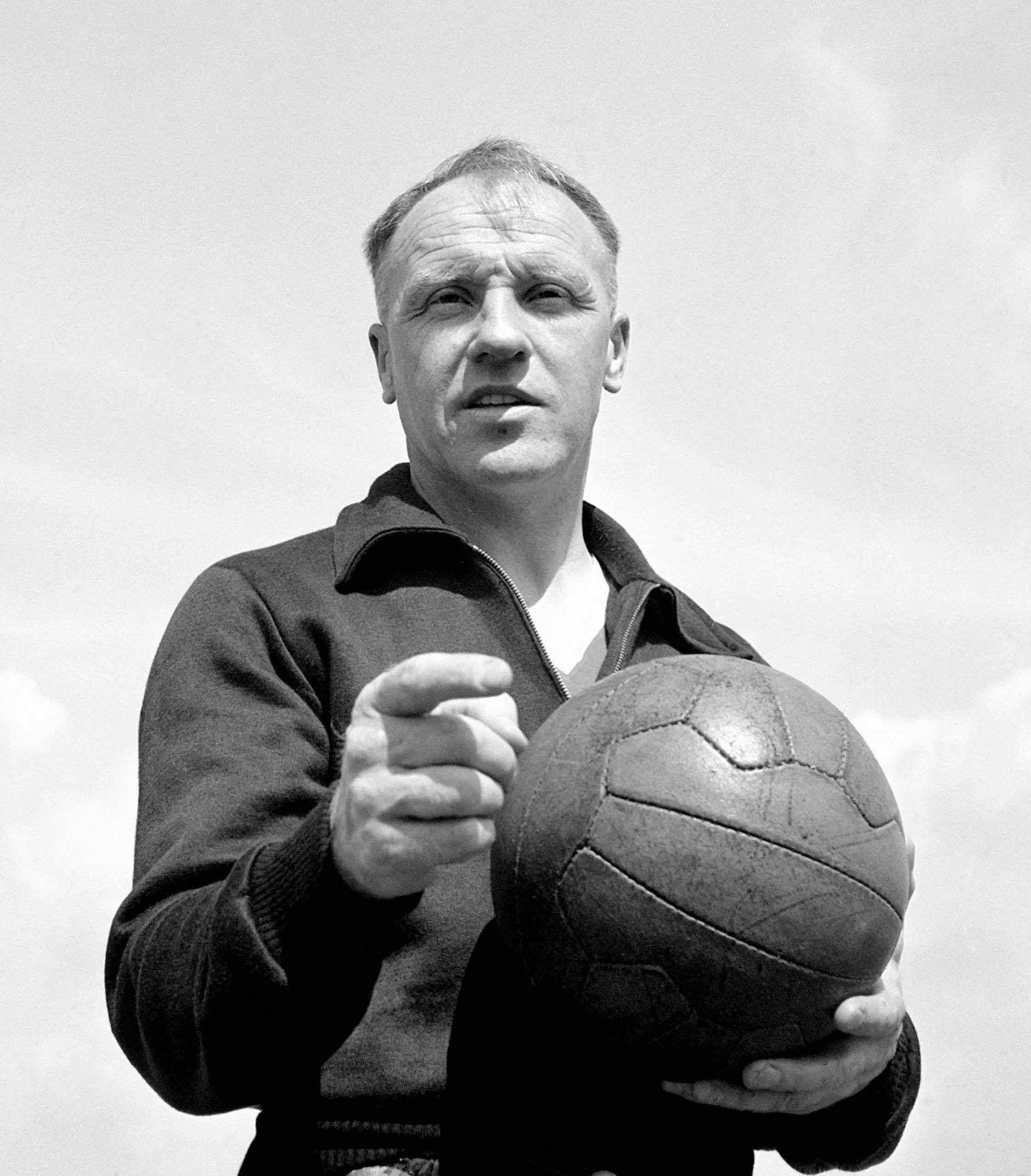
Bill Shankly
 United Kingdom
football player•football manager
Also known as: William Shankly, The Great Shankly, Mr. Liverpool
Birthday
September 2, 1913
Birth Sign
Virgo
Birthplace
Glenbuck, Scotland
Age
Died at 68
Height
5 ft 10 in (178 cm)
About
William Shankly was a Scottish football player and manager, widely regarded as the most influential figure in Liverpool FC history. Born on September 2, 1913, in Glenbuck, Ayrshire, he died on September 29, 1981, in Liverpool at the age of 68. He is best known for transforming Liverpool from a Second Division side into one of Europe's leading clubs, laying the foundations for the dynasty built by his successors Bob Paisley and Joe Fagan. His charismatic leadership and distinct philosophy made him an iconic figure whose influence extended far beyond the pitch.
Shankly's impact on football history remains unparalleled. Under his leadership, Liverpool achieved promotion to the First Division in 1962 and secured three First Division Championships, two FA Cups, one UEFA Cup, and four Charity Shields over the next decade. His sudden resignation in 1974 after winning the FA Cup shocked the nation, yet the foundation he laid allowed Liverpool to win seven league titles and four European Cups in the ten seasons following his departure. He died in 1981 leaving behind a legacy that continues to shape modern football management.
Early Life & Background
William Shankly was born into a mining family in Glenbuck, a small village in Ayrshire, Scotland. The Shankly family lived in poverty, and Bill worked in the coal mines alongside his father and brothers before turning his attention fully to football. He was one of five brothers; three of them—Billy, Hughie, and John—went on to play professional football, while another brother, Alex, played semi-professionally. This environment instilled a strong sense of community and resilience in him from a young age. His formal education was limited, typical for children in mining communities during that era, but his passion for football grew quickly in the local fields and streets.
Before his professional career took off, Shankly developed a reputation as a tenacious ball-winning right-half. He joined Carlisle United in 1934, making 100 appearances before moving to Preston North End in 1939. During this period, he helped Preston win the FA Cup in 1938, a significant achievement that highlighted his talent. His playing career was interrupted by World War II, where he served in the Royal Air Force. While serving, he captained the RAF team that won the Scottish League Cup in 1943, further solidifying his leadership qualities and tactical understanding on the field.
Career Growth
Shankly's managerial journey began in earnest after his retirement from playing in 1949 when he returned to Carlisle United as a player-manager. He later managed Grimsby Town (1956–1959), Workington (1959), and Huddersfield Town (1959), building a reputation for his ability to organize teams and motivate players. The pivotal moment came in December 1959 when he was appointed manager of Liverpool FC, a club then struggling in the Second Division. Upon arrival, he found a disorganized team and a club in decline. He immediately initiated a cultural overhaul, famously stating, "Football is not a matter of life and death; it is much more serious than that."
Under his leadership, Liverpool achieved promotion to the First Division in 1962. Over the next decade, he secured three First Division Championships in 1963–64, 1965–66, and 1972–73. He also won two FA Cups in 1965 and 1974, one UEFA Cup in 1973, and four Charity Shields. In 1974, shortly after winning the FA Cup, Shankly announced his retirement, shocking the club and fans. He was succeeded by his assistant, Bob Paisley, who would go on to achieve even greater success. Shankly received the Order of the British Empire (OBE) in 1974 for services to football and was later inducted into the English Football Hall of Fame in 2002.
Career Timeline
Public Image & Style
Shankly projected an image of a no-nonsense, working-class hero who spoke directly to the people. Standing approximately 5 feet 10 inches (178 cm) tall, his style was practical and unpretentious, often seen in his signature flat cap and pipe. He was known for his powerful oratory skills and ability to connect with fans on an emotional level. Media portrayed him as a charismatic leader who could inspire loyalty and belief in his players. His straightforward approach to management and life made him a beloved figure among supporters and a respected authority in the football world.
Fame & Fandom (iFAMOUS Rankings)
iFANN has not yet collected fame data for this person. As of August 2026, there is no published ranking in the iFANN Global Fame Rankings for Bill Shankly. However, his historical significance ensures he remains a central figure in football discourse. The fanbase for Bill Shankly does not have a formal name like some modern pop cultures, but Liverpool supporters universally revere him as a legend. Fans often refer to him simply as "The Great Shankly" or "Mr. Liverpool." Notable fan rituals include singing "You'll Never Walk Alone" at every match, a tradition Shankly championed. Fans also gather at the Shankly Gates and the statue outside Anfield to pay tribute. The relationship between Shankly and the fans is rooted in deep respect and gratitude for the transformation he brought to the club.
Interesting Facts and Legends
Bill Shankly was known for his distinctive appearance, often sporting a flat cap and smoking a pipe, which became part of his public image. He was a heavy smoker and drank heavily, habits that contributed to his poor health in later years. Despite his tough exterior, he was known for his wit and humor, often using banter to motivate his players. He once said he would rather lose a game than play a boring one, emphasizing his philosophy of attacking football. His son Ian later became a coach for Liverpool's youth team, continuing the family's connection to the club.
One of the most famous legends surrounding him is the story of the "Shankly Gate." When he first arrived at Anfield in 1959, he famously opened the main gate himself, symbolizing a new era for the club. The gate was later renamed the "Shankly Gates" in his honor. Another iconic moment was his resignation in 1974. After winning the FA Cup, he walked out of the dressing room without saying goodbye to many players, leaving the club in a state of shock. This dramatic exit cemented his status as a man of principle who valued integrity over comfort. Shankly insisted on changing the kit to all-red to create a unified, intimidating look, a decision now iconic as every Liverpool player wears red since his tenure.
Notable Quotes
“Some people think football is a matter of life and death. I assure you, it is much more serious than that.”
“Aim for the sky and you'll reach the ceiling. Aim for the ceiling and you'll stay on the floor.”
“If you're going to be a hero, you've got to be a hero for your own reasons.”
“I'm not interested in being a manager; I'm interested in being a manager of Liverpool.”
Family & Personal Life
Bill Shankly was married to Marjorie Shankly (née McLean). They met while he was playing for Preston North End and married in 1940. Marjorie was a constant support throughout his career, particularly during the difficult years at Carlisle and Grimsby. There are no public records of other romantic relationships or affairs; Shankly was known for his family-oriented nature and dedication to his wife. They had two sons: Ian and Jim. Both sons were involved in the football world, with Ian becoming a coach and Jim working in administration. The marriage lasted until Bill's death in 1981. Marjorie survived him by several years, passing away in 1995.
Notable Connections
Bob Paisley, Joe Fagan, Ronnie Moran, Marjorie Shankly, Ian Shankly, Jim Shankly
Relationships & Dating History
Bill Shankly was married to Marjorie Shankly (née McLean) for over four decades. They met while he was playing for Preston North End and married in 1940. Marjorie provided unwavering support throughout his career, especially during the challenging early years at Carlisle and Grimsby. There are no public records of other romantic relationships or affairs; Shankly was known for his family-oriented nature and dedication to his wife. Their marriage lasted until Bill's death in 1981. Marjorie survived him by several years, passing away in 1995. Shankly had two sons, Ian and Jim, both of whom remained connected to the football world, with Ian becoming a coach and Jim working in administration.
- MarriedMarjorie Shankly1940 - 1981Married until his death; she passed away in 1995.
Death & Aftermath
Died
September 29, 1981 (aged 68)
Death Place
Liverpool, England
Cause of Death
heart attack
Bill Shankly died on September 29, 1981, exactly one month after his 68th birthday in Liverpool. The official cause was a myocardial infarction brought on by stress and overwork following years of intense managerial pressure. He had been suffering from health issues earlier that year, including a bout of pneumonia. His death sent shockwaves through the football world with tributes pouring in from players, managers, and fans globally. Thousands lined the streets to pay their respects at his funeral held at St. Francis Xavier's Church in Liverpool before interment at St. Michael's Cemetery.
The immediate aftermath saw Liverpool FC retire the number 10 shirt in his honor, though this was later reinstated as the club evolved. A statue of Shankly now stands outside Anfield, and the Main Stand is named the "Bill Shankly Stand" in his memory. His legacy continued to grow posthumously with numerous honors including induction into the English and Scottish Football Halls of Fame. The commercial value of his legacy has generated billions for the club through the dynasty built by his successors Bob Paisley and Joe Fagan. Recent developments include ongoing film and television projects about his life, with MetFilm producing a feature film titled *Shankly* and A24 developing a drama series set for release in the mid-2020s. In May 2026, news broke regarding the demolition of the ground where Shankly managed Workington, highlighting efforts to preserve his legacy in lesser-known locations.
Net Worth (Estate Value)
$0
iFANN Editorial Team estimate
Bill Shankly passed away in 1981, so there is no current personal net worth in the traditional sense. His estate, managed by his family, likely benefited significantly from the commercial success of Liverpool FC under his successors. However, specific figures regarding his personal estate value at death or current earnings are not publicly disclosed. The "value" of his legacy is immeasurable, having generated billions in revenue for the club. Any estimates of his personal wealth during his lifetime would be speculative and low compared to modern standards, as footballer salaries and manager bonuses were minimal in the 1960s and 70s. The iFANN Editorial Team's analysis of his enduring legacy points to a value that transcends monetary figures, reflecting his immense contribution to the sport.
Awards Won (4)
Bill Shankly received numerous accolades during his lifetime and posthumously. He was awarded the Order of the British Empire (OBE) in 1974 for services to football. He was inducted into the English Football Hall of Fame in 2002 as part of the inaugural class and the Scottish Football Hall of Fame in 2004. Liverpool FC also inducted him as a founding member of their Hall of Fame. Additionally, he received an honorary degree from the University of Liverpool and was recognized as one of the greatest managers in history by the National Football Museum.
1974 · Services to Football
2002 · Hall of Fame
Known For
Liverpool FC Manager
1959 · Manager
Preston North End Player
1938 · Player
Carlisle United Player
1934 · Player
Keywords
Sources
Quick Facts
- Profession
- association football player, association football coach
- Born
- September 2, 1913
- Birthplace
- Glenbuck, Scotland
- Died
- September 29, 1981
- Death Place
- Liverpool, England
- Gender
- Male
- Birth Sign
- Virgo
Personal Details
- Full Name
- William Shankly
- Height
- 5 ft 10 in (178 cm)
- Spouse
- Marjorie Shankly
- Children
- Ian Shankly · Jim Shankly
- Education
- Limited formal education; worked in coal mines
Frequently Asked Questions
How did Bill Shankly die?
What is Bill Shankly's most famous quote?
Did Bill Shankly have any children?
Who succeeded Bill Shankly as Liverpool manager?
What was Bill Shankly's net worth?
Similar People

Join the community
fans discussing