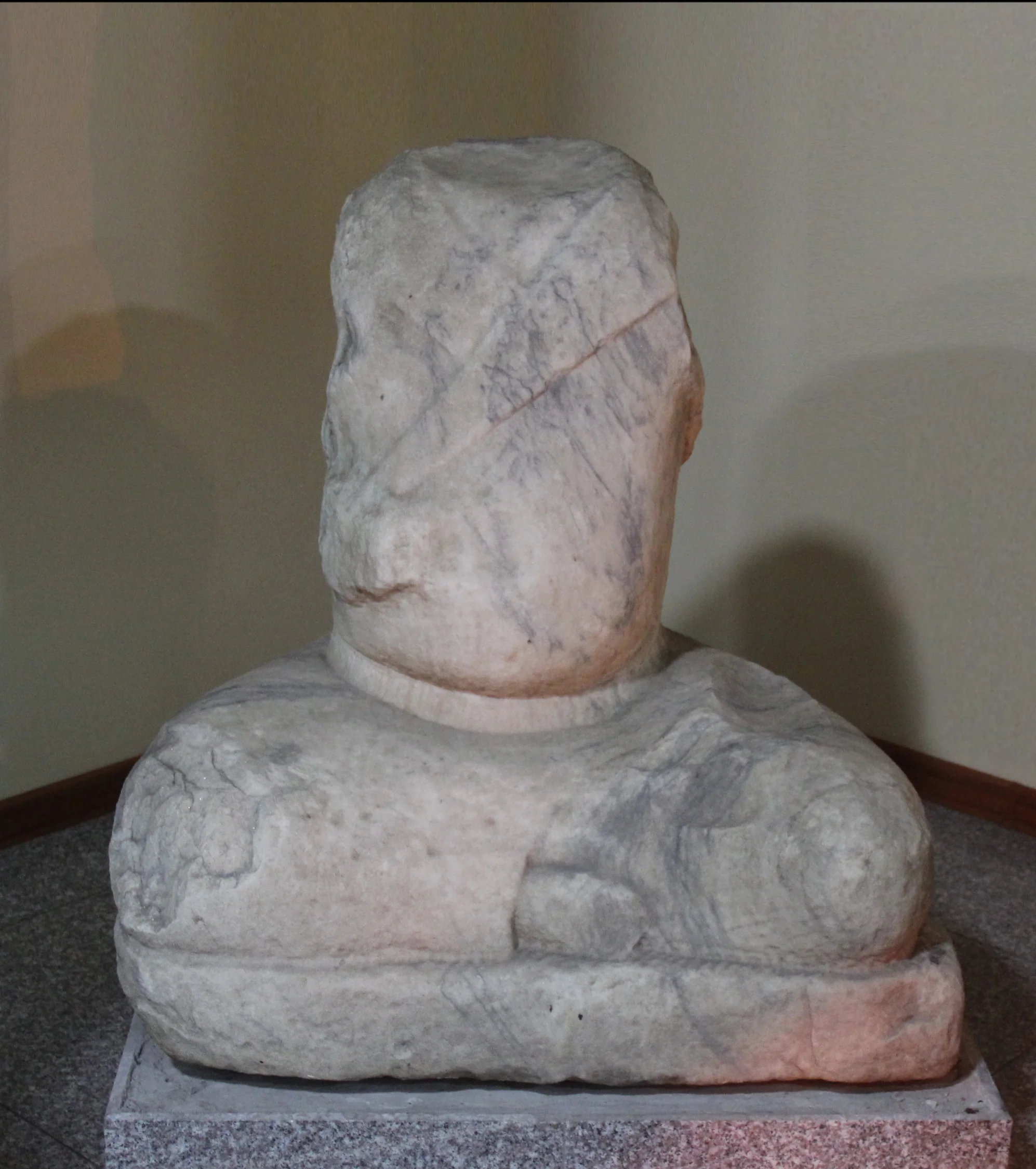
Bilge Qaghan
Ruler•Military Strategist•Statesman
Also known as: Bilgä Qaɣan, Ashina Mojilian, Pijia Kehan
Birthday
January 1, 683
Birth Sign
Capricorn
Birthplace
Ötüken region
Age
Died at 51
About
Bilge Qaghan, born Ashina Mojilian, was the fourth and most celebrated ruler of the Second Turkic Khaganate, reigning from 716 until his death in 734. His name translates to "Wise" or "Sage," reflecting his reputation as a philosopher-king who successfully restored sovereignty against the Tang Dynasty and internal tribal dissent. He is historically unique for commissioning the Orkhon inscriptions, which stand as the oldest known written records of the Turkic language and serve as his primary biographical source.
As a leader who inherited a fractured empire, Bilge transformed the steppe into a unified power through a blend of military strategy and diplomatic acumen. His reign marked the golden age of the Turkic people, characterized by victories against external threats and the establishment of a stable political order. Today, he is revered as a foundational hero in both Turkey and Mongolia, symbolizing wisdom, independence, and the enduring spirit of the Turkic nations.
Early Life & Background
Bilge Qaghan was born in 683 within the remnants of the First Turkic Khaganate, specifically in the Ötüken region, which served as the spiritual and political heartland of the Turkic people. Born Ashina Mojilian into the ruling Ashina clan, his early life was defined not by royal privilege but by exile and survival. Following the collapse of the First Khaganate and the rise of the Western Turks, Bilge and his brother Kul Tigin were sent into exile by the Tang Dynasty to weaken Turkic resistance.
For decades, the young princes lived as refugees among the Uyghurs and other nomadic tribes. This period of obscurity was formative, allowing Bilge to develop a deep understanding of steppe politics and forge alliances across different groups. Unlike many contemporary rulers who seized power through immediate force, Bilge spent his youth learning the intricacies of diplomacy and warfare from the ground up. When the Second Khaganate was re-established by his cousin Kagan Baga Tarkhan in 710, Bilge eventually returned to prominence, though he initially hesitated to accept the throne due to the immense burden of leadership.
Career Growth
Bilge ascended to the throne in 716 following the death of his nephew under suspicious circumstances. His reign immediately faced threats from the Tang Dynasty and internal rebellions by the Karluk and Uighur tribes. He utilized his diplomatic skills to secure the loyalty of the Uighurs through marriage and political integration rather than pure conquest. Between 720 and 730, he led several successful military campaigns, including a decisive victory over a massive Tang army near the Orkhon River in 720 and the crushing of a rebellion by the Toquz Oghuz in 726.
In his later years, Bilge shifted focus to diplomacy, engaging in complex negotiations with the Tang Dynasty to preserve the Khaganate's autonomy without exhausting its resources. His most enduring achievement was the commissioning of the Orkhon monuments around 732-735. These steles codified his laws, history, and philosophy, providing a rare first-person account of a non-Western ruler. His strategic vision stabilized Central Asia and left a legacy that would define Turkic identity for centuries.
Career Timeline
Public Image & Style
Bilge Qaghan is remembered as a sage emperor and a master of statecraft rather than a mere warlord. His public persona was defined by modesty in diet and a dedication to prayer and meditation, distinguishing him from more warlike predecessors. Historical accounts describe him wearing fur-lined robes and wielding a curved sword, embodying the ideal of the steppe warrior-king. Media portrayals consistently highlight his wisdom and the tragedy of his premature death, presenting him as a figure of moral authority and justice.
Fame & Fandom (iFAMOUS Rankings)
iFANN has not yet collected fame data for this person. There are no formal rankings or global fame metrics available for Bilge Qaghan in the current database. Instead of a modern fandom, Bilge commands the reverence of historians, linguists, and nationalistic groups in Turkey and Mongolia. His audience consists of those studying Altaic languages, Central Asian history, and the origins of Turkic culture. The "fanbase" is essentially the collective memory of two nations that view him as a founding father, with students and scholars continuing to study his inscriptions and legacy.
Interesting Facts and Legends
According to the inscriptions, Bilge initially refused the throne multiple times, fearing the burden of leadership would lead to his downfall. It was only after the counsel of his uncle, Tonyukuk, that he accepted the crown. Historical descriptions portray him as a man of immense physical presence, described as having a face like the sun and a voice like thunder. For centuries, the existence of the Turkic Khaganate was known only through Chinese records until the 19th century when Finnish scholar Vilhelm Thomsen translated the Old Turkic script.
In 2017, ruins of a monumental tomb surrounded by 14 giant inscribed pillars were discovered in Mongolia, believed to be associated with the Bilge Qaghan era. The Old Turkic script used in his inscriptions is the ancestor of many modern Turkic writing systems, including the Latin-based scripts used in Turkey today. Recent discoveries in 2022 revealed the first written instance of the word "Turk" from the Göktürk era directly linking to his time.
Notable Quotes
“I ruled the people with justice and fairness.”
“The sky is blue, the earth is green, and I am the ruler of the Turks.”
“He who does not know the past cannot understand the future.”
“Do not trust your enemies, but do not fear them either; fight with wisdom.”
Family & Personal Life
Bilge was the son of Ilterish Qaghan, who laid the groundwork for the Second Khaganate, and the grandson of the Khaganate's founder. His closest ally and co-ruler was his beloved brother, Kul Tigin, whose own stele stands alongside Bilge's. Bilge was married to Po Beg, a noblewoman of significant lineage chosen to solidify alliances with powerful tribes. Their union produced at least one son, Tengri Qaghan, who succeeded his father upon his death. The family dynamic was deeply intertwined with statecraft, where marriages and kinship ties were essential tools for maintaining the unity of the empire.
Notable Connections
Relationships & Dating History
Marriage in the 8th century was strictly a tool of statecraft rather than romantic partnership. Bilge Qaghan's principal wife was Po Beg, a noblewoman selected to solidify alliances with powerful tribes. Their relationship produced the heir Tengri Qaghan, ensuring the continuity of the dynasty. There are no records of other partners or public romances, as dynastic unions were the norm for securing political stability. Upon Bilge's death, Po Beg's role as a widow and matriarch of the court ended, leaving her son to navigate the succession crisis.
- MarriedPo Beg? - 734Principal wife and mother of successor Tengri Qaghan
Death & Aftermath
Died
November 25, 734 (aged 51)
Death Place
Ötüken, Mongolia
Cause of Death
Reported natural causes (disputed poisoning)
The Orkhon inscriptions, commissioned by his brother Kul Tigin shortly after the event, record the passing of Bilge Qaghan on 25 November 734. This monumental text serves as the primary historical account of his final days, noting that he died within the realm of the Second Turkic Khaganate while his brother was away campaigning. While some later interpretations suggest he may have been poisoned due to the era's political instability, this remains a disputed and unconfirmed narrative rather than a ruled fact. The immediate reaction to his death was the erection of the Bilge Qaghan Stele and the adjacent Kul Tigin Stele around 735 AD near the Orkhon River valley.
These monuments functioned as state propaganda and official eulogies, praising his military prowess and moral character to legitimize the succession of his son, Tengri Qaghan. The funeral involved high-ranking nobility and military leaders within the traditional shamanistic framework, culminating in a burial within a large tumulus complex at Ötüken. Centuries later, the legacy of the qaghan has endured through the preservation of these inscriptions as a UNESCO World Heritage Site. Modern archaeological efforts in Mongolia continue to uncover ruins associated with this era, renewing academic interest in the Turkic Khaganate and cementing Bilge Qaghan's status as a foundational national hero in both Turkey and Mongolia.
Net Worth (Estate Value)
$0
iFANN Editorial Team estimate
As a historical figure from the 8th century, Bilge Qaghan did not accumulate personal wealth in the modern sense. His estate consisted of the vast territories of the Second Turkic Khaganate, tribute payments from vassal states, and control over trade routes along the Silk Road. The value of his reign is measured in cultural and historical assets rather than currency. The Orkhon inscriptions, erected posthumously, remain priceless artifacts that provide insight into early Turkic civilization. Modern tourism related to the UNESCO World Heritage site generates revenue for Mongolia, but this belongs to the state rather than the deceased ruler's estate.
Awards & Accolades
View 5 records, honours and achievementsKnown For
Orkhon Inscriptions
732 · Commissioner
Second Turkic Khaganate
716 · Ruler
Keywords
Sources
Quick Facts
- Born
- January 1, 683
- Died
- November 25, 734
- Death Place
- Ötüken, Mongolia
- Gender
- Male
- Spouse
- Po Beg
- Birth Sign
- Capricorn
Personal Details
- Full Name
- Ashina Mojilian
- Spouse
- Po Beg
- Children
- Tengri Qaghan
- Education
- Steppe upbringing; exile among Uyghur tribes
Frequently Asked Questions
Who was Bilge Qaghan?
When did Bilge Qaghan die?
What is the Orkhon inscription?
Is Bilge Qaghan related to Genghis Khan?
Where is Bilge Qaghan buried?
Similar People
Join the community
fans discussing