 United States
“The series lacks the chilling atmosphere and intellectual rigor of Crichton's film, settling instead for routine chase sequences and predictable plot twists.”
John J. O'Connor
The New York Times
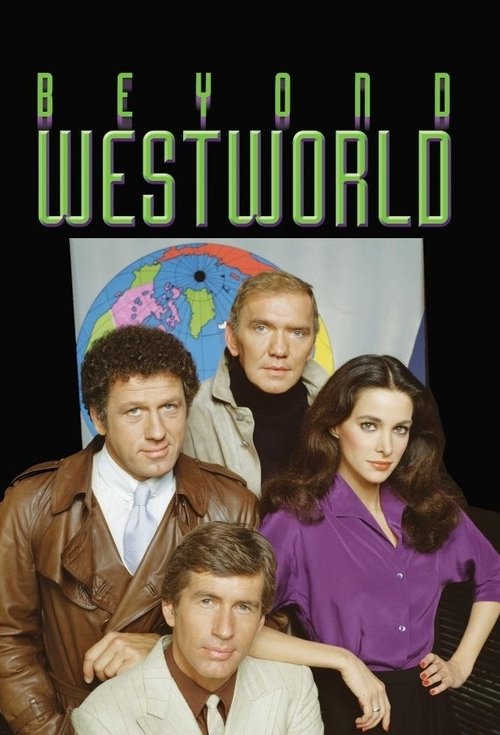
In the spring of 1980, CBS gambled on a television sequel to Michael Crichton's hit film Westworld. The result was Beyond Westworld, a five-episode series that swapped the original's contained theme-park horror for a globe-trotting espionage thriller. The show followed John Moore, security chief of the Delos Corporation, as he hunted rogue androids that had escaped into the real world. His adversary: Simon Quaid, a brilliant scientist bent on using those androids for world domination.
The series aired on Wednesday nights opposite established competition and never found an audience. CBS pulled it after three episodes; the remaining two never aired in the United States during the original run. With low ratings and only a dozen votes on IMDb decades later, Beyond Westworld faded into obscurity. But it remains a curious artifact: an early attempt to extend a film franchise into weekly television, predating the HBO reboot by 36 years.
Rent
Prime Video
Apple TV
Availability and pricing can change. Confirm on the provider's site before purchasing.
John Moore works as the security chief for Delos Corporation, the company that built the Westworld theme park. After the catastrophic robot rampage depicted in the 1973 film, Delos shut down the park and tried to contain its android technology. But the damage had already been done. Some of the lifelike androids escaped into the human world, and Moore's job is to track them down before they cause more harm.
The man behind the chaos is Simon Quaid, a former Delos scientist who helped design the original androids. Quaid believes the machines are superior to humans and should rule the planet. He has built his own army of androids, indistinguishable from real people, and uses them to infiltrate governments, steal military secrets, and manipulate world events. Each episode sends Moore and his team to a different location where Quaid's latest scheme is unfolding. A diplomat might be an android. A general might be a machine. The tension comes from not knowing who to trust.
Moore's allies include Joseph Oppenheimer, a Delos scientist who understands the androids' programming, and Roberta, a company employee who assists with logistics. A mysterious figure named Foley seems to know more about the androids than he lets on. Pamela Williams, a young woman drawn into the investigations, often finds herself in danger. Together they race to stop Quaid before his plans reach a global scale.
The series follows a formula: Moore identifies the android, confronts it, and uncovers Quaid's next move. But beneath the procedural surface, the show asks questions about identity and trust. If a machine can perfectly mimic a human, what does it mean to be human? The androids in Beyond Westworld are not just weapons; they are mirrors reflecting human frailty and ambition. The series never fully explores these themes due to its short run, but the seeds are there.
Only five episodes were produced, and the narrative arc points toward a final confrontation between Moore and Quaid. The season builds steadily, introducing new android threats and deepening the mystery of Quaid's network. But the cancellation came too quickly for any payoff. The story ends mid-stride, with Quaid still at large and the threat of android infiltration unresolved.
Critical Consensus
Beyond Westworld is a largely forgotten television footnote that attempted to extend Michael Crichton's celebrated sci-fi premise into a weekly series. The concept of android infiltration and espionage had potential, but the series suffered from low production values, formulaic storytelling, and a lack of the philosophical depth that made the original film memorable. Its short run and limited broadcast make it a curiosity for franchise completists rather than a genuinely compelling experience.
“The series lacks the chilling atmosphere and intellectual rigor of Crichton's film, settling instead for routine chase sequences and predictable plot twists.”
John J. O'Connor
The New York Times
“Beyond Westworld is a pale imitation of its source material, substituting genuine suspense with mechanical action.”
Tom Shales
The Washington Post
“Despite a promising concept, the series quickly descends into formulaic television fare, squandering the potential of the Westworld universe.”
Arthur Unger
The Christian Science Monitor
Jim McMullan
John Moore
James Wainwright
Simon Quaid
William Jordan
Joseph Oppenheimer
Nancy Harewood
Roberta
Severn Darden
Foley
Connie Sellecca
Pamela Williams
Producer
Lou Shaw
Join the community
fans discussing