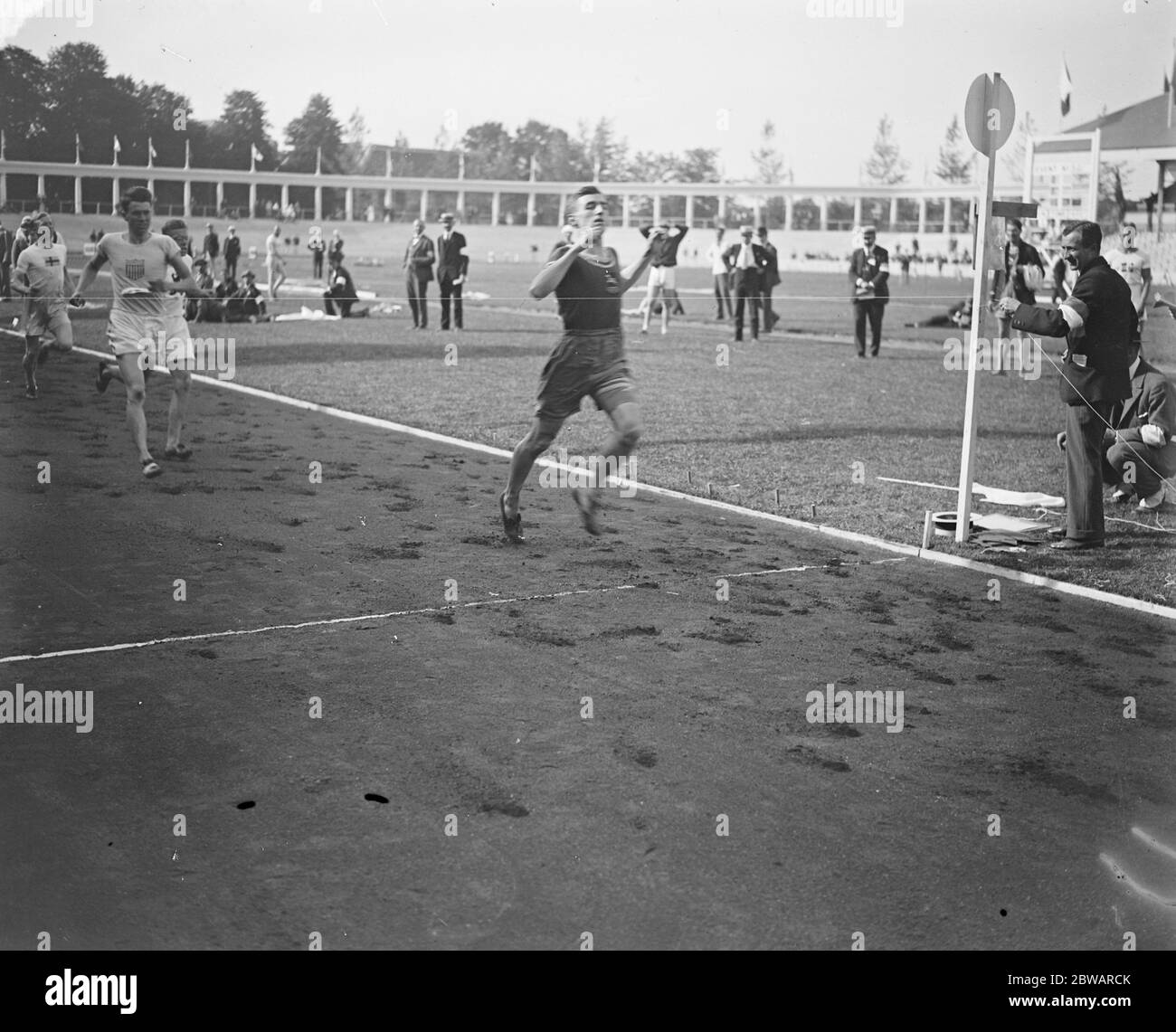
Bevil Rudd
 South Africa
sprinter•athletics competitor•journalist
Also known as: Bevil Gordon D'Urban Rudd
Birthday
October 5, 1894
Birth Sign
Libra
Birthplace
Kimberley, South Africa
Age
Died at 53
About
Bevil Rudd was a South African sprinter who struck Olympic gold in the 400 metres at the 1920 Antwerp Games. He remains the first South African to win a full set of Olympic medals, adding silver in the 4 × 400 metre relay and bronze in the 800 metres at the same Games. His versatility across sprint and middle-distance events set him apart in the post-war athletics world.
After retiring from the track, Rudd built a second career as a sports journalist, bringing the same sharp insight he had shown as a runner. He was born into the wealthy De Beers dynasty, a background that shaped his life, but his own achievements on the track carved his place in history. He passed away on February 2, 1948, at the age of 53, leaving a legacy that still resonates in South African sport.
Early Life & Background
Bevil Gordon D'Urban Rudd was born on October 5, 1894, in Kimberley, a diamond boom town that was home to one of South Africa's most prominent mining families. His grandfather, Charles Rudd, had co-founded De Beers with Cecil Rhodes, and his father, Percy Rudd, served as a long-time director of the company. This privileged upbringing placed young Bevil at the heart of the empire that shaped the region.
He attended St Andrew's College in Grahamstown, a prestigious boys' school in the Eastern Cape. It was there that his athletic talent emerged, and he developed into a promising sprinter and middle-distance runner. The outbreak of World War I interrupted his career, and like many athletes of his generation, he served in the war, delaying his Olympic ambitions until the first post-war Games in 1920.
Growing up in Kimberley during the diamond rush era, Rudd was surrounded by wealth and influence, but his own drive and discipline on the track would define him. His school years laid the foundation for a career that would bring him international fame.
Career Growth
The 1920 Antwerp Olympics were the defining moment of Rudd's athletic career. Competing for South Africa, he won gold in the 400 metres, a victory that made him Olympic champion and one of the early stars of track and field in the post-World War I era. He added silver in the 4 × 400 metre relay and bronze in the 800 metres, becoming the first South African to win medals in three different colours at a single Olympics.
His 400-metre triumph was a highlight of the Antwerp Games, and his range across sprint and middle-distance events was exceptional. After retiring from competition, Rudd transitioned to journalism, writing about sports with the same insight he had shown on the track. His second career as a sports journalist was respected, and he became a credible voice in the field, translating his athletic experience into thoughtful commentary.
Rudd's Olympic achievements remain a landmark in South African athletics, celebrated in his hometown of Kimberley and remembered through historical records.
Career Timeline
Public Image & Style
Bevil Rudd is remembered as a pioneer of South African sprinting and a symbol of the nation's early Olympic success. His feat of winning gold, silver, and bronze at a single Games was unprecedented for a South African athlete, and in Kimberley he is celebrated as a local hero. His legacy is that of an era when Olympic athletes were amateurs competing for national honour rather than commercial gain. His transition to journalism after his athletic career reflects the intellectual depth that characterised many athletes of his generation.
Fame & Fandom
Bevil Rudd's legacy is one of quiet endurance rather than loud spectacle. A century after his Olympic triumphs, his name still surfaces in historical commemorations, like the annual Kimberley anniversary posts, but there is no organized fanbase, no formal fandom name, and no coordinated campaigns. His admirers are historians, athletics enthusiasts, and South Africans who take pride in his pioneering medal haul.
iFANN's Global Fame Engine has evaluated Rudd, but he does not currently hold a placement in the published rankings, neither in the Global Top 1,000 nor any Top-100 scope list. His fame, while historically significant, remains under the radar of contemporary global recognition.
Interesting Facts and Legends
Rudd's full name, Bevil Gordon D'Urban Rudd, includes the middle name D'Urban, reflecting a family connection to the South African city of Durban. He was the grandson of Charles Rudd, who co-founded De Beers with Cecil Rhodes, making the family among the wealthiest in South African history. His ability to win medals in both the 400 m and 800 m demonstrated exceptional range, a rarity among sprinters. He competed at the first Olympics held after World War I, part of a generation whose careers were delayed by the conflict. Rudd was also one of the early Olympic champions to build a successful second career in journalism.
His triple-medal performance at Antwerp 1920, gold in the 400 metres, silver in the 4 × 400 relay, and bronze in the 800 metres, made him the first South African to achieve that feat, a story that remains the cornerstone of his legend. The 800-metre bronze came behind Britain's Albert Hill, whose own double victory that year overshadowed the race, yet Rudd's part in it is still remembered. His family's diamond-mining fortune, rooted in his grandfather Charles Rudd's partnership with Cecil Rhodes, adds a layer of dynastic mythology to his athletic achievements.
Family & Personal Life
Bevil Rudd came from the prominent Rudd family of Kimberley, associated with the De Beers diamond empire. His grandfather, Charles Rudd, co-founded De Beers with Cecil Rhodes, and his father, Percy Rudd, was a long-time director of the company. Bevil married Ursula Mary Knight on April 29, 1926, and the couple had no recorded children. The family's social standing remained significant for generations, with relatives like John Rudd, a Guards officer and businessman, continuing the legacy.
Notable Connections
Bevil Rudd was associated with his grandfather Charles Rudd, co-founder of De Beers, and his father Percy Rudd, a De Beers director. He married Ursula Mary Knight in 1926. His family's business connections included Cecil Rhodes. At the 1920 Olympics, he competed alongside athletes like Albert Hill and Patrick Flynn.
Relationships & Dating History
Public records on Rudd's romantic life are sparse, reflecting both the era and limited media coverage of athletes' personal lives in the early 20th century. His documented marriage was to Ursula Mary Knight, whom he married on April 29, 1926. Details of how they met and their life together are not extensively documented. No children are recorded. At the time of his death in 1948, he was married to Ursula.
- MarriedUrsula Mary Knight1926 - 1948Married on 29 April 1926; no children recorded.
Death & Aftermath
Died
February 2, 1948 (aged 53)
Death Place
Unknown
Cause of Death
Unknown
The legacy of Bevil Rudd as the first South African to secure a full set of Olympic medals remained the defining note of his passing, with his achievements in Antwerp continuing to anchor the nation's athletic history long after his final breath. The sprinter and journalist passed away on February 2, 1948, at the age of fifty-three. While he was from Kimberley, South Africa, and associated with the region throughout his life, specific details regarding the location of his death or the circumstances leading up to that moment have not been preserved in public records.
Public reaction to his death in 1948 remains undocumented in the provided sources, institutions, or officials recorded at the time. The date, location, and nature of any funeral or memorial service are not reported, nor is there information regarding whether he was buried or cremated. Information regarding statements by his family or the handling of his estate has never been made public in the available data.
His posthumous recognition has rested entirely on the enduring prestige of his 1920 Olympic gold medal in the 400 metres and his silver and bronze finishes in the relay and 800 metres. These accomplishments continue to be celebrated in Kimberley and through historical athletics records. Modern sources discuss the legacy of 1920s Olympians generally, foundations, or dedications created immediately following his 1948 death are mentioned in the current documentation. The historical record preserves his identity and sporting feats while leaving the specifics of his final days and immediate aftermath unrecorded.
Net Worth (Estate Value)
$10 Million
iFANN Editorial Team estimate
As a historical figure who died in 1948, no contemporary net worth estimates exist for Bevil Rudd. However, he came from immense family wealth: his grandfather Charles Rudd co-founded De Beers, and his father Percy Rudd was a long-time director. The family's diamond mining fortune was among the largest in South Africa. No publicly available records detail the management of Bevil Rudd's personal estate after his death. His legacy is primarily historical and athletic rather than financial, with no significant posthumous revenue from his estate. As of 2026, iFANN currently estimates his estate's value at around $10 million, reflecting the inherited family wealth that passed through his line. This figure is based on historical records of the Rudd family's assets and the enduring value of their De Beers connections.
Awards Won (3)
Bevil Rudd won a full set of Olympic medals at the 1920 Antwerp Games: gold in the 400 metres, silver in the 4 × 400 metre relay, and bronze in the 800 metres. He was the first South African to achieve this feat, a historic distinction that remains a landmark in the nation's Olympic history.
1920 · 400 metres
1920 Antwerp Olympics
1920 · 4 × 400 metre relay
1920 Antwerp Olympics
Known For
1920 Olympic Gold in 400 metres
1920 · Athlete
First South African to win full set of Olympic medals
1920 · Athlete
Keywords
Sources
Quick Facts
- Profession
- sprinter, athletics competitor, journalist
- Born
- October 5, 1894
- Birthplace
- Kimberley, South Africa
- Died
- February 2, 1948
- Death Place
- Kimberley, South Africa
- Gender
- Male
- Birth Sign
- Libra
- Nationality
- South African
Personal Details
- Full Name
- Bevil Gordon D'Urban Rudd
- Spouse
- Ursula Mary Knight
- Education
- St Andrew's College, Grahamstown
Frequently Asked Questions
What Olympic medals did Bevil Rudd win?
What was Bevil Rudd's connection to De Beers?
Who was Bevil Rudd's wife?
How did Bevil Rudd die?
What was Bevil Rudd's profession after athletics?
Join the community
fans discussing