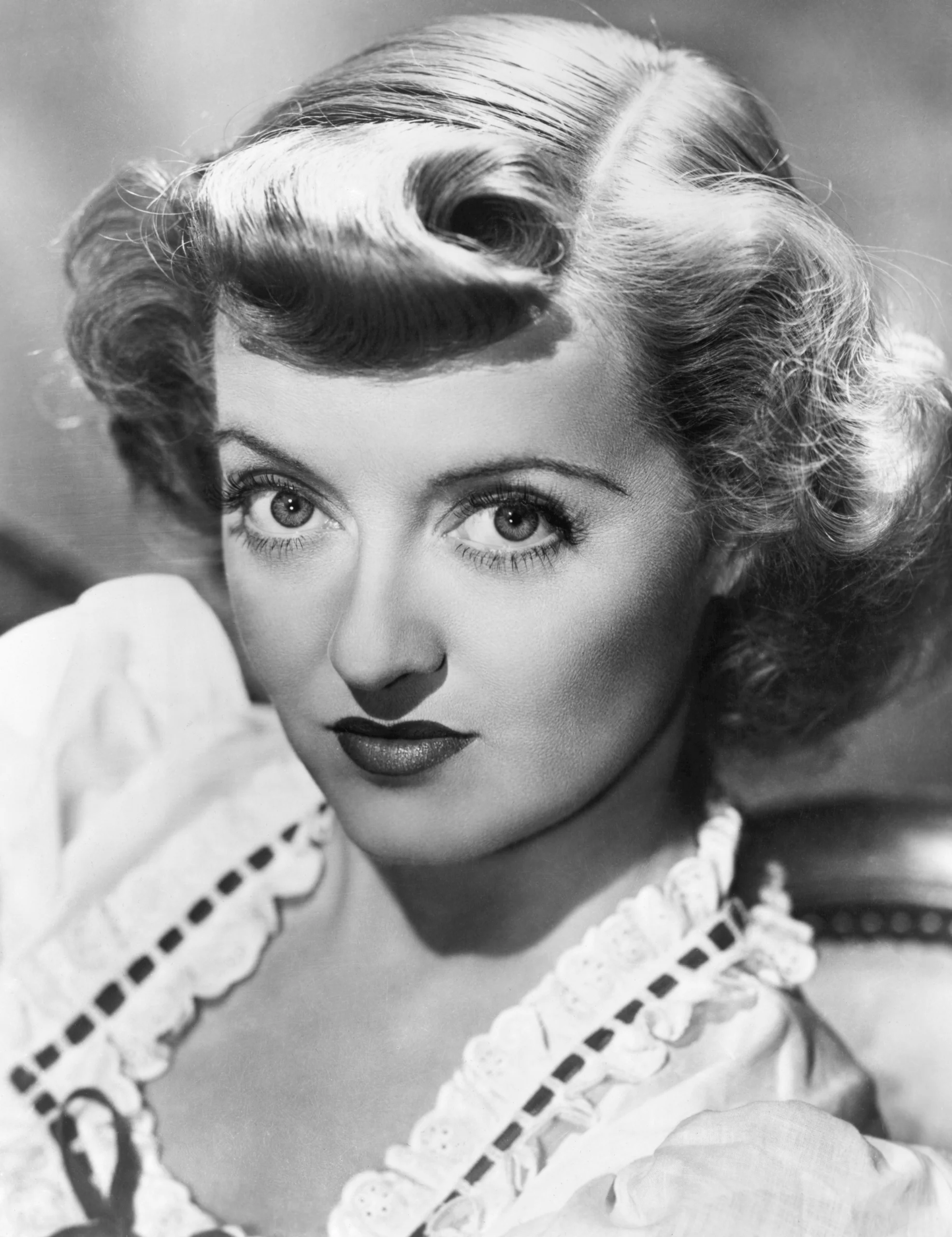
Bette Davis
 United States
Also known as: Ruth Elizabeth Davis, Bette Davis
Birthday
April 5, 1908
Birth Sign
Aries
Birthplace
Lowell, Massachusetts, USA
Age
Died at 81
Height
5 ft 3 in (160 cm)
About
Bette Davis was an American actress of film, stage, and television whose career spanned more than fifty years and over 100 credited roles. She was the first person to amass ten Academy Award acting nominations, winning two Best Actress Oscars, and in 1999 the American Film Institute ranked her second among the greatest female stars of classic Hollywood, behind Katharine Hepburn. She also served as the first female president of the Academy of Motion Picture Arts and Sciences and co-founded the Hollywood Canteen.
Davis built her reputation playing women who were often difficult, sharp-tongued, and unsympathetic. That willingness to be unlikable on purpose set her apart from the leading ladies of her era. Her clipped voice, forthright manner, and ever-present cigarette became a persona that comics and actors have imitated for decades. She died on October 6, 1989, at age 81, in Neuilly-sur-Seine, France, from breast cancer.
Early Life & Background
Ruth Elizabeth Davis was born on April 5, 1908, in Lowell, Massachusetts, to Harlow Morrell Davis, a lawyer, and Ruth Augusta Favor. Her parents separated when she was young, and she was raised largely by her mother alongside her younger sister, Barbara. The family moved to New York, where she attended Cushing Academy in Ashburnham, Massachusetts, before being accepted into John Murray Anderson's acting school in New York.
She made her professional stage debut in the late 1920s and appeared in Broadway productions including Broken Dishes and Solid South, which brought her to the attention of Hollywood. She screen-tested for Universal in 1930 and signed, but her first films, Bad Sister (1931), Seed, Waterloo Bridge, Way Back Home, The Menace, Hell's House, and The Man Who Played God, went nowhere, and Universal declined to renew her contract. A move to Warner Bros. in 1932 changed everything.
Career Growth
The turning point came in 1934 with Of Human Bondage, in which she played the vulgar waitress Mildred Rogers and stunned critics. She was famously not nominated, a snub still argued about, and a write-in campaign followed. She won her first Oscar the next year for Dangerous (1935), a film she herself later called one of the "most dreadful" of her career. In 1936, frustrated by weak scripts, she tried to break her Warner contract, lost the court case, but the fight marked the start of her strongest run. She earned five consecutive Best Actress nominations from 1938 to 1942: Jezebel (1938, which brought her second Oscar), Dark Victory (1939), The Letter (1940), The Little Foxes (1941), and Now, Voyager (1942). After a late-1940s slump came what many consider her finest work, Margo Channing in All About Eve (1950), which earned another nomination, followed by one for The Star (1952). Her last Oscar nomination came for the unhinged former child star Jane Hudson in What Ever Happened to Baby Jane? (1962), opposite Joan Crawford. In later years she took character parts in films including Death on the Nile (1978) and moved into television: the miniseries The Dark Secret of Harvest Home (1978), the Emmy-winning Strangers: The Story of a Mother and Daughter (1979), and nominations for White Mama (1980) and Little Gloria... Happy at Last (1982). Her last complete film role was in The Whales of August (1987). In 1950, after the success of All About Eve, she was finally invited to cement her handprints at Grauman's Chinese Theatre.
Career Timeline
Public Image & Style
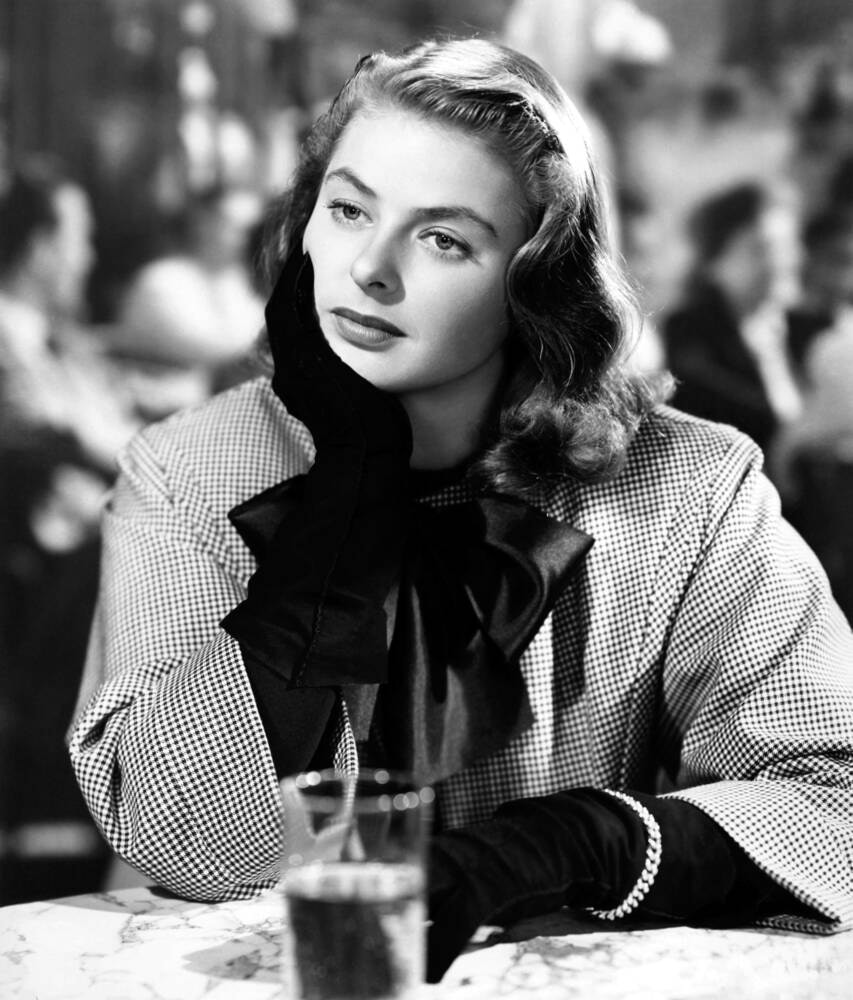
Davis's public persona was that of a fierce, uncompromising perfectionist. Her clipped, precise diction, forthright manner, and ever-present cigarette became trademarks. She was known for playing unsympathetic women and refused to soften her characters for audience sympathy. Media portrayals emphasized her combativeness with studio bosses and co-stars and her willingness to be unlikable on screen. Her large, expressive eyes were a defining feature, leading to the enduring phrase "Bette Davis eyes." She was seen as a survivor who battled Hollywood and won, though often at personal cost.
Fame & Fandom (iFAMOUS Rankings)
iFANN has not yet collected fame data for Bette Davis, so no ranking is available. She does not appear on the September 2026 iFAMOUS Rankings flagship list. Her admirers have no formal fandom name; they are simply Bette Davis fans, organized through the official Bette Davis Facebook page and Turner Classic Movies' classic-film community. Fan activity centers on TCM screenings, birthday tributes around April 5, and the annual "Bette Davis eyes" cultural revival. Her films, especially All About Eve and What Ever Happened to Baby Jane?, continue to draw new viewers.
Interesting Facts and Legends
Davis was a notorious perfectionist who clashed with studio bosses and co-stars, earning a reputation as combative. She was the first woman to serve as president of the Academy of Motion Picture Arts and Sciences. Her large, expressive eyes inspired the phrase "Bette Davis eyes," popularized by Kim Carnes's 1981 No. 1 hit "Bette Davis Eyes." A story fans still retell: after seeing Michael Keaton as Batman, Davis remarked that her era was "over" and she had "come here to pass the torch." She loved to knit and was known for making elaborate afghans for friends. Her favorite drink was a martini, and she was rarely seen without a cigarette.
Notable Quotes
“Fasten your seatbelts, it's going to be a bumpy night.”
“I've come here to pass the torch.”
“I was never a sex symbol. I was never beautiful. I was never glamorous. I was just an actress.”
“Old age is no place for sissies.”
“The best time I ever had was when I was working.”
Family & Personal Life
Davis was the daughter of Harlow Morrell Davis, a lawyer, and Ruth Augusta Favor. Her parents separated when she was young, and she was raised largely by her mother alongside her younger sister, Barbara. Davis did not become a mother until age 39, when she and her second husband, William Grant Sherry, had a daughter, Barbara "B.D." Davis, in 1947. She later adopted two children, Margot and Michael, with her fourth husband, Gary Merrill. She raised her children largely on her own after her marriages ended. Her daughter B.D. published a controversial 1985 memoir, My Mother's Keeper, which strained their relationship.
Notable Connections
Relationships & Dating History
Davis's first serious attachment was to Harmon Oscar "Ham" Nelson, a former football player and Warner Bros. contract player she met in the early 1930s. They were engaged around 1932 but never married, and the engagement ended amid reports of his infidelity. In 1940 she married Arthur Farnsworth, a Boston hotelier. He died in 1943 after a fall and skull fracture, leaving her widowed; an inquest was held but no charges followed. In 1945 she married William Grant Sherry, a Navy officer and artist she met while he was recovering from an injury. They had one daughter, Barbara "B.D." Davis, born in 1947, and divorced in 1950. That same year she married Gary Merrill, whom she met on the set of All About Eve. They adopted two children, Margot and Michael, both born in 1952, and divorced in 1960. This was her longest marriage. Late in life she was linked to Robert Wagner, who in 2026 recounted that after her stroke she did not look at herself in a mirror for a year; the relationship is generally described as a close friendship and companionship rather than a confirmed romance. Davis was married four times in total, once widowed and three times divorced. At the time of her death, she was not married.
- EngagedHarmon Oscar Nelson1932 - 1932Engaged to the former football player and Warner Bros. contract player, but the engagement ended amid reports of his infidelity.
- MarriedArthur Farnsworth1940 - 1943Boston hotelier; died in 1943 after a fall and skull fracture, leaving Davis widowed.
- MarriedWilliam Grant Sherry1945 - 1950Navy officer and artist; they had one daughter, Barbara, and divorced in 1950.
- MarriedGary Merrill1950 - 1960Met on the set of All About Eve; adopted two children, Margot and Michael; divorced in 1960. Her longest marriage.
- RumouredRobert Wagner1980s - 1989Close friendship and companionship late in her life; not a confirmed romance.
Death & Aftermath
Died
October 6, 1989 (aged 81)
Death Place
Neuilly-sur-Seine, Paris, France
Cause of Death
Breast cancer
Bette Davis died on October 6, 1989, at the American Hospital in Neuilly-sur-Seine, a suburb of Paris. She was 81. The reported cause was breast cancer that had metastasized. Her health had been failing for years: a major stroke in 1983 left her partially paralyzed, and she had suffered several smaller strokes before that. Her last public appearance came at the 1987 Kennedy Center Honors, where she was saluted by peers. Her final screen work included The Whales of August (1987) and the 1989 television film Wicked Stepmother, which she left early because of illness.
After her death, Davis was cremated and her ashes interred at Forest Lawn Memorial Park in the Hollywood Hills. She left an estate reportedly valued in the low millions of dollars. No major posthumous licensing boom followed, and the estate's current value is not reliably documented. Tributes poured in from fans and colleagues, and retrospectives of her work ran on television and in repertory theaters. Her daughter B.D. Hyman had published a controversial memoir, My Mother's Keeper, in 1985, which strained their relationship and colored some obituaries. In the years since, Davis's reputation has only grown, with All About Eve and What Ever Happened to Baby Jane? remaining staples of classic-film programming.
Net Worth (Estate Value)
$3 Million
iFANN Editorial Team estimate
Bette Davis died in 1989 with an estate reportedly valued in the low millions of dollars. iFANN currently estimates the value of her estate at approximately $3 million. The figure reflects the modest scale of her career earnings, which were often consumed by taxes, divorces, and her famously combative relationship with studio bosses. Davis was one of the highest-paid actresses of her time, but she spent freely and faced financial difficulties in later years. Her estate has not seen a major posthumous licensing boom comparable to other Golden Age stars. Revenue streams include royalties from her films, television residuals, and the occasional book or merchandise deal. The estate is managed by her heirs, primarily her children. No major catalog sale or legal settlement has been reported.
Awards Won (19)
1938 · Best Actress
Jezebel
1935 · Best Actress
Dangerous
1979 · Outstanding Lead Actress in a Limited Series or Special
Strangers: The Story of a Mother and Daughter
Known For
All About Eve
1950 · Margo Channing
What Ever Happened to Baby Jane?
1962 · Jane Hudson
Jezebel
1938 · Julie Marsden
Now, Voyager
1942 · Charlotte Vale
Of Human Bondage
1934 · Mildred Rogers
Dark Victory
1939 · Judith Traherne
The Letter
1940 · Leslie Crosbie
The Little Foxes
1941 · Regina Giddens
Keywords
Sources
Quick Facts
- Profession
- Actress
- Born
- April 5, 1908
- Birthplace
- Lowell, Massachusetts, USA
- Died
- October 6, 1989
- Death Place
- Neuilly-sur-Seine, Paris, France
- Gender
- Female
- Spouse
- Gary Merrill, William Grant Sherry, Arthur Farnsworth
- Birth Sign
- Aries
- Height
- 5 ft 3 in (160 cm)
Personal Details
- Full Name
- Ruth Elizabeth Davis
- Height
- 5 ft 3 in (160 cm)
- Spouse
- Gary Merrill, William Grant Sherry, Arthur Farnsworth
- Children
- Barbara Davis, Margot Merrill, Michael Merrill
- Education
- Cushing Academy, John Murray Anderson School of Theatre
Filmography
123
Total
100
Film
23
TV
Frequently Asked Questions
Did Bette Davis and Joan Crawford get along?
What does it mean to have 'Bette Davis eyes'?
How many children did Bette Davis have?
What was Bette Davis's net worth when she died?
Did Bette Davis date Jimi Hendrix?
Social Media
Join the community
fans discussing