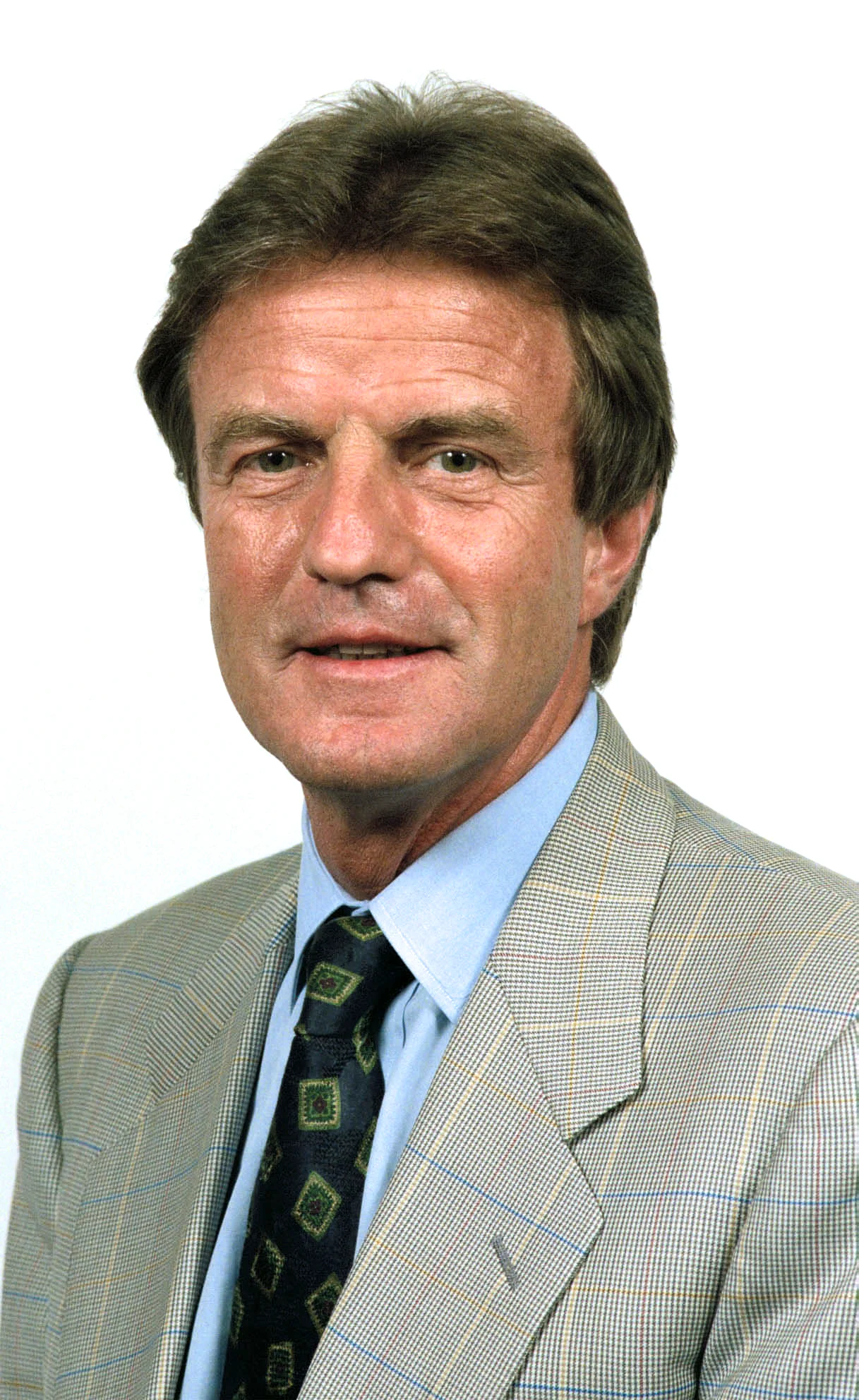
Bernard Kouchner
 France
Birthday
November 1, 1939
Birth Sign
Scorpio
Birthplace
Avignon, France
Age
86 years old
About
Bernard Kouchner is a French physician and politician, a towering figure in modern humanitarianism and diplomacy. He is best known as the co-founder of two pioneering international medical organizations: Médecins Sans Frontières (Doctors Without Borders) and Médecins du Monde (Doctors of the World). Through these ventures, he fundamentally reshaped the paradigm of humanitarian aid, advocating for and practicing cross-border medical intervention, often without prior governmental consent. His philosophy, championed from global conflict zones to the United Nations, has profoundly influenced the world's approach to humanitarian crises.
Kouchner's political trajectory is equally remarkable, marked by a long affiliation with the Socialist Party and a prominent stint as Foreign Minister under the conservative President Nicolas Sarkozy. He has held various ministerial positions across five different French governments, demonstrating a unique ability to transcend partisan divides. His tenure as the UN's Special Representative for Kosovo was instrumental in overseeing the territory's post-war transition. In 2010, The Jerusalem Post recognized his influence by ranking him among the world's 15 most influential Jewish figures. Since 2015, he has dedicated his expertise to improving healthcare systems in Ukraine through his work with the Agency for the Modernisation of Ukraine, continuing his legacy of impactful international engagement.
Early Life & Background
Born in Avignon, France, on November 1, 1939, Bernard Kouchner's early life was shaped by a diverse family background and the lingering shadows of historical trauma. His father was a physician, and his mother was Protestant, while his paternal grandparents were Russian-born Jews who had fled pogroms in their homeland, only to perish later at Auschwitz. This profound loss left an indelible mark, influencing his early political awakening. As a young medical student in Paris, Kouchner joined the French Communist Party, but his independent thinking led to his expulsion in 1966.
He was significantly influenced by the intellectual currents of his time, particularly the existentialist philosophy of Jean-Paul Sartre and the poetry of Louis Aragon. During the fervent May 1968 protests that swept across France, Kouchner was at the forefront of student activism, leading the medical faculty strike committee at the Sorbonne. He earned his medical degree around this period, specializing in gastroenterology. His first direct engagement with humanitarian crises occurred in 1968 when he volunteered with the Red Cross during the Biafra War in Nigeria. Witnessing firsthand the devastating conditions, overwhelmed medical facilities, and the obstruction of aid by the Nigerian government, Kouchner returned to France with a powerful conviction: humanitarian organizations needed to be proactive and able to operate across borders, even without official permission. This formative experience laid the groundwork for his future endeavors in global health advocacy.
Career Growth
Driven by the experiences of Biafra, Kouchner co-founded Médecins Sans Frontières (MSF) in 1971 with a group of like-minded doctors. MSF's pioneering approach, characterized by providing medical aid in conflict zones and speaking out about the realities faced, garnered international recognition, including the Nobel Peace Prize in 1999. However, Kouchner's tenure at MSF was marked by internal disagreements, particularly concerning the organization's strict policy of neutrality. These divergences led him to co-found Médecins du Monde (Doctors of the World) in 1980, an organization that aimed to maintain a similar interventionist spirit while potentially exploring different operational models. Alongside his humanitarian work, Kouchner also ventured into media, co-founding the magazines L'Événement and Actuel, utilizing these platforms to amplify humanitarian causes and public discourse.
Kouchner's political career gained significant momentum in 1988 when he was appointed Minister of State for Humanitarian Action. Over the subsequent two decades, he held a succession of influential health and humanitarian portfolios, including Minister of State for Health from 1997 to 1999. A pivotal role came between 1999 and 2001 when he served as the UN's Special Representative for Kosovo, where he played a crucial part in the territory's post-war reconstruction and health system rebuilding. His most prominent governmental position was as the French Minister of Foreign and European Affairs, a role he held from 2007 to 2010 under President Nicolas Sarkozy, navigating complex international relations and global crises. Since 2015, Kouchner has continued to apply his expertise to critical healthcare challenges, focusing on modernizing Ukraine's healthcare system as a workstream leader for the Agency for the Modernisation of Ukraine.
Career Timeline
Public Image & Style
Bernard Kouchner is widely perceived as a charismatic and outspoken figure, often characterized as a maverick who has consistently challenged established norms in both humanitarianism and politics. His public persona is that of a doctor unafraid to confront governments and a politician willing to diverge from party lines. He is frequently lauded for his advocacy of the "right to interfere" in humanitarian crises, a principle that has earned him both admiration and criticism. While some view him as a vital moral voice on the international stage, others perceive him as a symbol of Western interventionism. In France, Kouchner is a recognizable media personality, often appearing on television to offer commentary on global affairs. His communication style is notably direct, and he has a history of engaging with controversy, readily offering critiques of international bodies like the UN or breaking with his own political affiliations.
Fame & Fandom
Bernard Kouchner, co-founder of Médecins Sans Frontières and former French foreign minister, is not currently ranked in iFANN's published lists. As of August 2026, the Global Fame Engine has evaluated his profile but he holds no placement in the Global Top 1,000 or any Top-100 scope list. This absence is consistent with his standing as a figure of institutional and historical importance rather than contemporary celebrity.
Kouchner's admirers are primarily fellow humanitarians, diplomats, and political commentators. No formal fandom name is documented in iFANN data, and no organized fanbase exists. Instead, his legacy is honored through professional respect and regional hero-worship, particularly in Kosovo, where he is remembered as a protector figure for his role as UN Special Representative. The closest analogue to a fan campaign is the lasting gratitude expressed by Kosovars, yet this does not constitute an organized fandom.
Interesting Facts and Legends
Kouchner's early life included a significant experience in 1964 when he spent time with Fidel Castro in Cuba, an encounter that further solidified his early leftist sympathies. He has self-identified as a "rebel doctor," prioritizing direct action over bureaucratic processes. Known for his sharp wit, he has occasionally quoted Jean-Paul Sartre during cabinet meetings. In recognition of his global influence, The Jerusalem Post ranked him 15th on their list of the world's most influential Jews in 2010. Kouchner is the author of several books reflecting on his experiences, including "Les guerriers de la paix : Du Kosovo à l’Irak" (Warriors of Peace: From Kosovo to Iraq), published in 2004, which details his work in Kosovo.
One of the most retold stories of his career is the founding of Médecins Sans Frontières in 1971, born from frustration with traditional humanitarian limits during the Biafra conflict. His tenure as the first UN Special Representative for Kosovo (1999–2001) has become legendary in the region, where he is hailed as a defender. In 2024, he sparked controversy by stating on Radio J that "France has always been antisemitic," a remark that has become a reference point in later discussions of his views.
Notable Quotes
“The right to interfere is the duty to assist.”
“We cannot be content to count the dead; we must try to save the living.”
“Humanitarianism is not a profession, it is a state of mind.”
“I have always preferred action to words, even when words were necessary.”
“The international community has a responsibility to protect, not just to observe.”
Family & Personal Life
Bernard Kouchner's family history is a narrative of resilience and loss. His paternal grandparents, who were Russian-born Jews, immigrated to France to escape pogroms but tragically perished at Auschwitz. His mother was Protestant, and his father, a physician, instilled in him a strong sense of duty. He has been married twice in his life. His first marriage was to Évelyne Pisier, a political scientist. Subsequently, in 1982, he married Christine Ockrent, a distinguished television journalist. Together, Bernard Kouchner and Christine Ockrent have one son. The couple has remained a notable presence in French public life, often hosting gatherings that bring together intellectuals and political figures at their home in Paris.
Notable Connections
Kouchner's career has intersected with many influential figures. He was mentored by philosopher Jean-Paul Sartre and poet Louis Aragon. As foreign minister, he served under President Nicolas Sarkozy. At the UN, he worked with Secretary-General Kofi Annan, who appointed him to the Kosovo mission. His personal life has been linked to his wives, Évelyne Pisier and Christine Ockrent, both accomplished in their own right.
Relationships & Dating History
Bernard Kouchner's personal life has been marked by significant relationships that have intertwined with his public career. His first marriage was to Évelyne Pisier, a political scientist, which took place in the early 1970s. Following their divorce, he married Christine Ockrent, a prominent French television journalist, in 1982. The couple shares one son. Kouchner and Ockrent have maintained a strong partnership, recognized as a notable couple within French intellectual and public circles. Their relationship has endured the considerable demands of Kouchner's extensive political career and Ockrent's own successful journalism career.
- MarriedÉvelyne Pisier1970 - 1980First marriage, ended in divorce.
- MarriedChristine Ockrent1982 - presentCurrentSecond wife, a television journalist; they have one son.
Salary, Net Worth In 2026
$5 Million
iFANN Editorial Team estimate
iFANN currently estimates Bernard Kouchner's net worth at $5 Million. This financial standing is primarily a result of his extensive career in public service, encompassing ministerial salaries and remuneration from his United Nations appointments. He has also supplemented his income through the publication of several books and fees earned from speaking engagements. Kouchner has frequently been invited to speak on humanitarian and political topics at various conferences and universities. While not among the wealthiest public figures, his financial status reflects a lifetime dedicated to public service rather than significant private enterprise.
Awards Won (3)
Kouchner has received numerous honors for his humanitarian work. He is a co-founder of the Nobel Peace Prize-winning Médecins Sans Frontières. He has been awarded the Dag Hammarskjöld Prize and the Prix Europa. In 2010, The Jerusalem Post ranked him among the 15 most influential Jewish figures in the world.
1999 · Peace
Médecins Sans Frontières (as co-founder)
1988 · Humanitarian
Humanitarian work
Known For
Médecins Sans Frontières
1971 · Co-founder
Médecins du Monde
1980 · Co-founder
French Minister of Foreign and European Affairs
2007 · Minister
Keywords
Sources
Quick Facts
- Profession
- physician, politician, diplomat
- Born
- November 1, 1939
- Birthplace
- Avignon, France
- Gender
- Male
- Spouse
- Christine Ockrent
- Birth Sign
- Scorpio
- Education
- Medical degree, University of Paris
Personal Details
- Full Name
- Bernard Kouchner
- Spouse
- Christine Ockrent
- Children
- 1
- Education
- Medical degree, University of Paris
Frequently Asked Questions
Who is Bernard Kouchner?
How old is Bernard Kouchner?
What is Bernard Kouchner's net worth?
Is Bernard Kouchner still alive?
What is Bernard Kouchner best known for?
Join the community
fans discussing