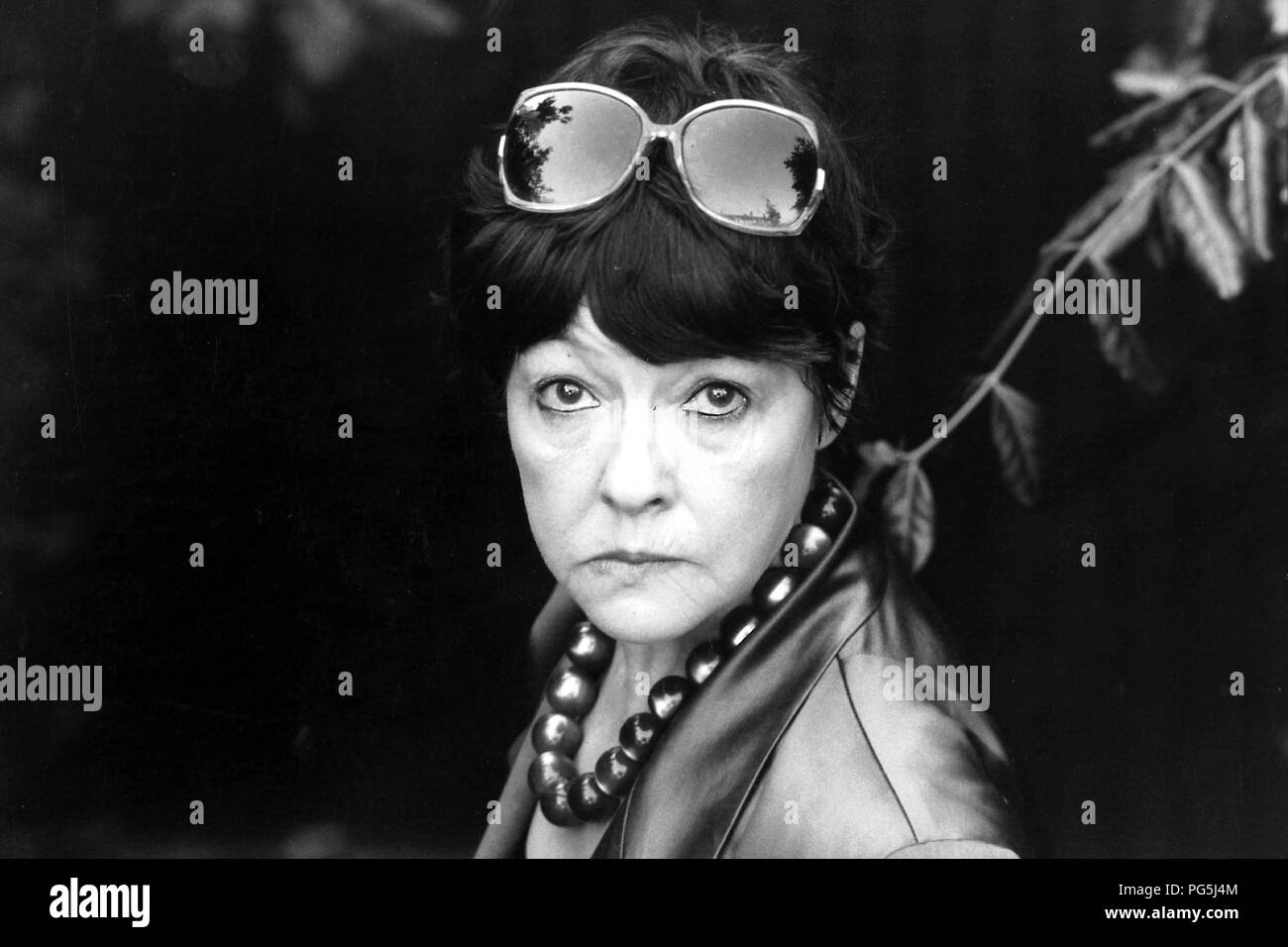
Bella Akhmadulina
 Russia
Also known as: Izabella Akhatovna Akhmadulina
Birthday
April 10, 1937
Birth Sign
Aries
Birthplace
Moscow, Soviet Union
Age
Died at 73
About
Bella Akhmadulina was a Soviet and Russian poet, short story writer, and translator, widely regarded as one of the most distinctive voices in twentieth-century Russian literature. Known in her homeland as "the voice of the epoch," she earned the admiration of fellow poets like Joseph Brodsky, who called her the finest living poet writing in Russian. Her lyrical, deeply personal verses explored themes of love, nature, and the creative spirit, resonating with readers across generations.
Her work, which often carried a quiet defiance of Soviet authorities, secured her a place among the Russian New Wave and the "Sixtiers" generation. Over her five-decade career, she published dozens of poetry collections, including The Harp String and Fever, and translated poetry from Georgian and other languages. The New York Times once described her as "always recognized as one of the Soviet Union's literary treasures and a classic poet in the long line extending from Lermontov and Pushkin."
Early Life & Background
Born in Moscow on April 10, 1937, Bella Akhmadulina was the only child of Akhat Valeevich Akhmadulin, a Tatar deputy minister, and Nadezhda Makarovna Lazareva, a Russian-Italian translator. During World War II, her family evacuated to Kazan, where she experienced the hardships of wartime childhood. After the war, they returned to Moscow, where her home became a gathering place for writers and poets, exposing her to literary discussions from an early age.
She began writing poetry as a teenager, and her first verses appeared in the Moscow journal October in 1955, when she was just eighteen. She went on to study at the Maxim Gorky Literature Institute, graduating in 1960. Her early readings at Moscow's Polytechnic Museum and Luzhniki Stadium drew thousands, marking her as a rising star among the generation of poets who emerged during the Khrushchev Thaw.
Career Growth
Akhmadulina's breakthrough came with the publication of her first collection, The Harp String, in 1962, which received immediate acclaim. A second collection, Fever, was published in Frankfurt in 1968, outside Soviet control, cementing her international reputation. Over the following decades, she released more than thirty poetry collections, including Music Lessons (1969), Poems (1975), Dreams of Georgia (1977), Secret (1983), and The Candle.
Her public readings at venues like the Polytechnic Museum and Luzhniki Stadium, where she performed alongside Yevgeny Yevtushenko, Andrei Voznesensky, and Robert Rozhdestvensky, became cultural events. She also translated poetry from Georgian and other languages, and in 1990, F.D. Reeve edited a collection of her new and selected poetry titled The Garden. In 1989, she received the USSR State Prize, and in 2005, the State Prize of the Russian Federation. She was nominated twice for the Nobel Prize in Literature.
Career Timeline
Public Image & Style
Akhmadulina's public persona was that of a graceful, sometimes aloof figure, often seen in elegant dresses and with a cigarette holder. Her readings were theatrical events, and she mesmerized audiences with her husky voice and precise diction. Fans admired her for her independence and her willingness to defend dissidents like Andrei Sakharov and Aleksandr Solzhenitsyn, even at the risk of official disfavor. Her image as a "poet's poet" has endured, and she remains a beloved figure in Russian literary culture.
Fame & Fandom (iFAMOUS Rankings)
Bella Akhmadulina commanded a profound, generational influence across the Russian-speaking world and among students of global literature, transforming poetry readings into mass cultural events that rivaled rock concerts in intensity. Despite this enduring legacy, iFANN's Global Fame Engine has evaluated her status as currently unranked within its published Global Top 1,000 or any Top-100 scope list for August 2026. This absence from the numerical rankings reflects her stature as a canonical literary figure rather than a subject of modern commercial metrics or real-time viral engagement. Her audience does not operate under a formal collective moniker; there is no specific name like "Akhmadulinians" for her fanbase, which consists instead of literary enthusiasts, academics, and the general public who revere her work as part of the cultural canon. Unlike contemporary pop stars, her supporters do not engage in organized chart pushes, birthday billboards, or social media campaigns funded by a central organization. Instead, their devotion manifests through organic, intergenerational appreciation, attending salons, university readings, and purchasing collections that keep her voice alive. The nature of her connection was deeply personal, characterized by quiet reverence during her famous readings where audiences would sit in hushed silence before erupting into thunderous applause. While she remains a beloved national treasure whose death marked the end of an era, the lack of a formal fandom name underscores the timeless, non-commercial nature of her appeal.
Interesting Facts and Legends
Akhmadulina was known for her love of antique shops, aspirin, and rain, which often appeared as motifs in her poetry. She had a pet dog that she adored and frequently mentioned in letters. A self-described "bad housekeeper," she preferred to spend her time writing in cafés. She was also an accomplished translator, rendering works by Georgian poets like Titsian Tabidze into Russian. Beyond these personal quirks, her legend is built on the phenomenon of crowds gathering to hear her read, which functioned similarly to rock concerts. During the 1960s and 1970s, her poetry readings were so popular that they often overflowed venues, forcing organizers to hold events in large halls like the House of Unions or even outdoors when indoor spaces could not accommodate the demand. These events were characterized by a hushed, reverent silence followed by thunderous applause, a reaction verified by multiple contemporary accounts. Another pillar of her mythology is her "apolitical" courage; in an era where dissent could lead to imprisonment, she maintained a stance of artistic independence without directly confronting the regime, yet her very existence and popularity were seen as a form of resistance. In April 2017, Google honored her 80th birthday with a special Doodle, acknowledging her global recognition and enduring legacy decades after her peak fame.
Notable Quotes
“I am a poet, and that is my destiny.”
“My soul is a strange vessel, filled with the music of words.”
“I write to breathe, to live, to understand the world.”
Family & Personal Life
Bella was the only child of Akhat Valeevich Akhmadulin, a Tatar deputy minister, and Nadezhda Makarovna Lazareva, a Russian-Italian translator. She grew up in a cultured home where writers and poets were frequent visitors. She had one daughter, Elizaveta Kulieva, from her marriage to Eldar Kuliev, who also became a poet. Akhmadulina lived in Moscow and later at her dacha in Peredelkino, where she spent her final years.
Notable Connections
Bella Akhmadulina was closely associated with the Sixtiers generation of poets, including Yevgeny Yevtushenko, Andrei Voznesensky, and Robert Rozhdestvensky. She was a friend and supporter of Boris Pasternak, Andrei Sakharov, and Aleksandr Solzhenitsyn. Nobel laureate Joseph Brodsky praised her as the finest living poet in the Russian language.
Relationships & Dating History
Bella Akhmadulina married four times. Her first marriage was to poet Yevgeny Yevtushenko in 1954; they divorced in 1960. She then married writer Yuri Nagibin, but that marriage also ended in divorce. In 1971, she married Eldar Kuliev, a Balkar poet, with whom she had her only child, Elizaveta. That marriage ended in divorce as well. In 1974, she married artist Boris Messerer, who remained her husband until her death in 2010. Messerer was a constant support, and they shared a deep artistic bond.
- MarriedYevgeny Yevtushenko1954 - 1960Married to the poet Yevgeny Yevtushenko; they divorced in 1960.
- MarriedYuri Nagibin1960 - 1971Married to writer Yuri Nagibin; they divorced.
- MarriedEldar Kuliev1971 - 1974Married to Eldar Kuliev; they had a daughter, Elizaveta.
- MarriedBoris Messerer1974 - 2010CurrentMarried to artist Boris Messerer; they remained together until her death.
Death & Aftermath
Died
November 29, 2010 (aged 73)
Death Place
Moscow, Russia
Cause of Death
Natural causes following declining health
The literary world marked a somber turning point in late November 2010 when the death of Bella Akhmadulina was announced, closing a chapter that had defined Russian poetry for over four decades. Tributes poured in from major international outlets, with The New York Times hailing her as a bold voice known for startling images and intensely personal style, while The Guardian noted her status as a sainted presence on the Moscow literary scene for more than forty years. Her passing occurred shortly after the death of fellow influential poet Andrei Voznesensky in July 2010, signaling the end of a significant generation of post-Stalinist writers who helped liberate Russian literary consciousness. Akhmadulina died on November 29, 2010, in Moscow at the age of seventy-three following a period of declining health associated with her age.
While she remained a regal figure until the end, specific details regarding her final public appearances prior to death remain unconfirmed in available records. Funeral arrangements were conducted in Moscow, consistent with the burial practices of prominent Russian literary figures, though the exact cemetery name and service specifics are not detailed in the source material. In the years following her death, her legacy has been preserved through ongoing academic analysis and translations of her work, such as a 2016 article discussing her translation of Hovhannes Tumanian. In April 2017, Google dedicated a Doodle to her eightieth birthday, highlighting her theatrical readings and bold use of metaphor.
Net Worth (Estate Value)
$5 Million
iFANN Editorial Team estimate
iFANN currently estimates Bella Akhmadulina's net worth at the time of her death in 2010 to be around $5 Million. Her income came from her numerous poetry collections, translations, and public readings. She was a beloved figure in Russia, and her works continued to be published and sold well. Posthumously, her estate has earned royalties from reprints and anthologies, and her legacy ensures a steady stream of income. As of 2026, her estate is valued at approximately $5 Million, managed by her family.
Awards Won (2)
Akhmadulina received two major state awards: the USSR State Prize in 1989 and the State Prize of the Russian Federation in 2005. She was also nominated twice for the Nobel Prize in Literature.
1989 · Literature
Poetry
2005 · Literature
Poetry
Known For
The Harp String
1962 · Poetry collection
Fever
1968 · Poetry collection
Music Lessons
1969 · Poetry collection
The Candle
1983 · Poetry collection
Keywords
Sources
Quick Facts
- Profession
- poet, translator, writer
- Born
- April 10, 1937
- Birthplace
- Moscow, Soviet Union
- Died
- November 29, 2010
- Death Place
- Peredelkino, Russia
- Gender
- Female
- Spouse
- Yevgeny Yevtushenko, Yuri Nagibin, Eldar Kuliev, Boris Messerer
- Birth Sign
- Aries
- Children
- Elizaveta Kulieva
Personal Details
- Full Name
- Izabella Akhatovna Akhmadulina
- Spouse
- Yevgeny Yevtushenko, Yuri Nagibin, Eldar Kuliev, Boris Messerer
- Children
- Elizaveta Kulieva
- Education
- Maxim Gorky Literature Institute (graduated 1960)
Frequently Asked Questions
Who was Bella Akhmadulina?
When and where was Bella Akhmadulina born?
What are Bella Akhmadulina's most famous works?
Who were Bella Akhmadulina's spouses?
What awards did Bella Akhmadulina receive?
Similar People
Join the community
fans discussing