“Khan's fearless inquiry into the minds of abusers provides a rare window into the psychology of violence, challenging viewers to confront uncomfortable truths.”
Women Make Movies
WMM Press Kit
 United States
"Can we stop the violence before it ends in death?"
User Score
2 votes
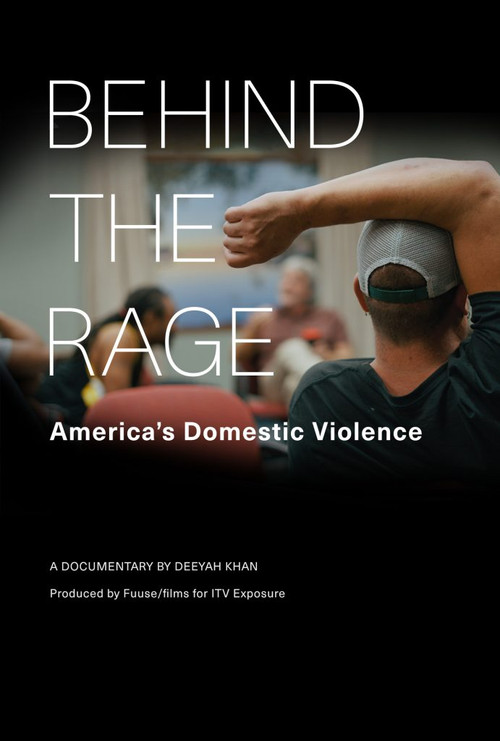
Deeyah Khan returns to the screen with a stark documentary that tackles one of America's most persistent crises. The film opens with hard numbers: most female homicide victims die at the hands of current or former partners, while one in four women faces domestic violence. Instead of simply presenting statistics, Khan frames her work as an urgent investigation into whether these endemic levels of male violence can actually be reduced. She approaches the subject not just as a filmmaker but as someone seeking a concrete answer to a national emergency.
This project distinguishes itself by refusing to stay within the usual boundaries of victim narratives. Khan travels across the United States to capture raw testimonies from survivors who have lived through psychological and physical torment. She also records grief-stricken accounts from families who lost loved ones to intimate partner violence. These stories paint a picture of fear and isolation that extends far beyond the moment of abuse.
Stream
Availability and pricing can change. Confirm on the provider's site before purchasing.
The narrative structure is built around a series of intimate, often raw interviews that peel back the layers of a culture where domestic abuse has long been normalized or treated as a private family matter. Khan travels across the United States, seeking out voices from every angle of this complex issue. The camera captures the testimonies of survivors who have lived through the psychological and physical torment of abusive relationships, sharing stories of fear, isolation, and the terrifying realization that they were never truly safe in their own homes. These accounts are interwoven with the grief-stricken perspectives of families who lost loved ones to intimate partner violence, offering a glimpse into the long-term trauma that ripples outward from the immediate victim.
However, the film distinguishes itself by pivoting away from a solely survivor-centric narrative to investigate the perpetrators. Khan conducts groundbreaking interviews with men who have committed acts of domestic violence, asking them to confront their actions, their motivations, and the societal conditioning that may have fueled their rage. This approach is controversial yet essential, aiming to understand the root causes of the violence rather than simply condemning it. Through these dialogues, the film explores the psychology of control, entitlement, and the specific triggers that escalate conflict into lethal force.
Throughout the runtime, Khan incorporates insights from social workers, psychologists, and experts in the field who work daily with both victims and offenders. These professionals provide context on the systemic failures that allow abusers to remain at large and the barriers that prevent victims from leaving dangerous situations. The documentary also touches upon the intersectionality of the issue, highlighting how race, class, and geography can influence the experiences of those involved in domestic violence cases.
As the story unfolds, the central conflict becomes clear: the struggle between a society that claims to value women's safety and a legal/cultural framework that often fails to protect them. Khan poses difficult questions about the efficacy of current interventions, such as restraining orders, counseling programs, and law enforcement protocols. The film builds tension not through manufactured suspense, but through the weight of the real-world stakes; every interview feels like a piece of a larger puzzle that, if solved, could save lives. The narrative drives toward a climax of sorts, urging the audience to consider whether the cycle of violence can be broken or if it is an inherent part of the human condition that must be managed rather than cured. By the end of the journey, the viewer is left with a profound sense of urgency and a challenge to engage with the issue on a deeper level, moving beyond shock to action.
Official Trailer
Critical Consensus
Deeyah Khan delivers a powerful and necessary documentary that cuts through the noise of domestic violence statistics to expose the human cost and the potential for change. While the heavy reliance on interviews can feel repetitive, the film's unflinching honesty and unique focus on the psychology of perpetrators offer a fresh perspective. It is a challenging watch, but ultimately a vital contribution to the conversation on gender-based violence.
“Khan's fearless inquiry into the minds of abusers provides a rare window into the psychology of violence, challenging viewers to confront uncomfortable truths.”
Women Make Movies
WMM Press Kit
“A masterclass in investigative storytelling, Khan uses her platform to amplify silenced voices and demand systemic accountability for a crisis too often ignored.”
Nobel Peace Center
Dialogue Feature
“Deeyah Khan returns with a film that is both a wake-up call and a roadmap for change, proving that understanding the why is the first step to stopping the what.”
Press Review
General Coverage
Deeyah Khan
Director / Narrator
Survivors
Themselves
Families of Victims
Themselves
Perpetrators
Themselves
Director
Deeyah Khan
Writer
Deeyah Khan
Producer
Darin Prindle
Women Make Movies Distribution (2022)
Featured Release: Selected
Join the community
fans discussing