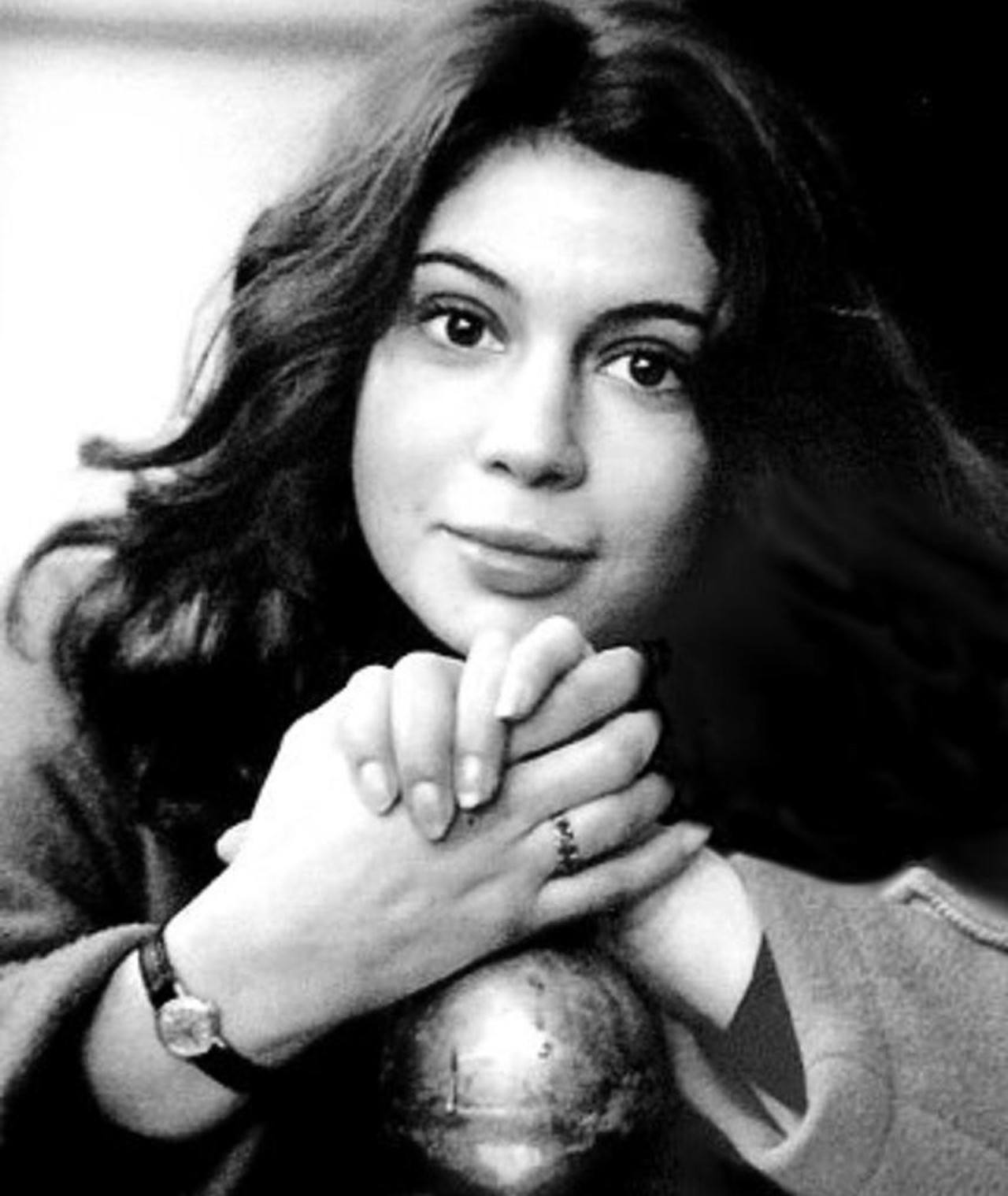
Béatrice Romand
 France
Also known as: Beatrice Romand
Birthday
April 16, 1952
Birth Sign
Aries
Birthplace
Birkhadem, French Algeria
Age
74 years old
Height
5 ft 4 in (163 cm)
About
Béatrice Romand is a French actress and director, born in 1952 in Birkhadem, French Algeria. She is best known for her long-running collaboration with filmmaker Éric Rohmer, appearing in six of his features over nearly three decades. Her performances, often playing intelligent, willful women navigating love and choice, brought a naturalistic grace to the screen that became a hallmark of Rohmer's moral tales.
Romand's career spans more than forty film and television credits. Beyond Rohmer, she worked with directors like Joseph Losey and appeared in European television series. In later years she moved behind the camera, directing her own projects, including a documentary about Rohmer. Her work remains admired for its emotional authenticity and quiet observation, and she continues to be celebrated by cinephiles for her contributions to French New Wave-adjacent cinema.
Early Life & Background
Béatrice Romand was born on April 16, 1952, in Birkhadem, a suburb of Algiers in French Algeria. Details of her childhood are scarce, but she moved to France as a young girl, where she grew up with a passion for performance. She studied acting and was discovered by director Éric Rohmer when she was just a teenager.
Her first major role came at age 16, when Rohmer cast her as Laura in Claire's Knee (1970), part of his Six Moral Tales series. The film, shot on location around Lake Annecy, featured Romand as a flirtatious young woman who becomes the object of the protagonist's obsession. Her performance, marked by a blend of innocence and mischief, immediately caught attention. This early experience set the stage for a lasting professional relationship with Rohmer, who would become her most important mentor.
Before her breakthrough, Romand had little formal training; her natural talent and instinctive screen presence were evident from the start. She also appeared in a German television series around this time, but it was her work with Rohmer that defined her early career.
Career Growth
Romand's career took off with Claire's Knee in 1970. She followed it with another Rohmer film, Love in the Afternoon (1972), playing a small but memorable role. In 1975 she appeared in Joseph Losey's The Romantic Englishwoman, starring alongside Glenda Jackson and Michael Caine, which broadened her exposure beyond French cinema.
After a hiatus, she returned to Rohmer for a leading role in A Good Marriage (1982), playing a woman who decides to leave her lover and find a respectable husband. The film was a critical success and showcased her ability to carry a story. She continued with Rohmer in The Green Ray (1986), where she had a supporting role, and Four Adventures of Reinette and Mirabelle (1987). Her final collaboration with Rohmer was Autumn Tale (1998), a warm comedy about love and friendship in the French countryside.
Beyond acting, Romand directed several projects, including a documentary about Rohmer that she discussed in interviews. Her work as a director has been less prominent but reflects her deep understanding of cinema. She remains active in the film community, occasionally appearing in retrospectives and interviews.
Career Timeline
Public Image & Style
Romand is often described as the quintessential Rohmerian actress: natural, intelligent, and effortlessly French. Her on-screen persona blends wit with vulnerability, making her characters feel real and relatable. Critics have praised her ability to convey complex emotions through subtle gestures and expressions.
Fans of French cinema admire her for remaining true to her artistic roots, avoiding the commercial mainstream. She has never sought fame or celebrity, preferring to work on meaningful projects. Her social media presence is minimal, but she occasionally appears at film festivals and retrospectives, where she is warmly received by admirers.
Fame & Fandom (iFAMOUS Rankings)
Béatrice Romand has cultivated a devoted following among cinephiles and scholars who trace the lineage of French New Wave cinema, though her fanbase operates without a formal name or organized public campaigns. While mass pop-culture phenomena like street-shutting crowds or viral rituals remain absent from her history, her reputation is anchored in the intimate appreciation of film historians who view her as a quintessential muse of Éric Rohmer. This niche admiration focuses on her unique career arc, spanning from a teenager in *Claire's Knee* to a mature collaborator over three decades, rather than celebrity spectacle. Within the global landscape of fame, Béatrice Romand is currently evaluated by iFANN but does not hold a placement in the published rankings, meaning she is not listed among the Global Top 1,000 or any specific Top-100 scope list. Her standing reflects a steady, enduring legacy within academic and artistic circles rather than a fluctuating position in broad commercial metrics. The lack of a ranked score underscores her status as a figure revered for artistic integrity over mainstream visibility. Her work remains a subject of study regarding the evolution of European cinema, bridging the generation of actors who defined the movement with the directors who followed. This quiet legend of professional dedication ensures her name persists in discussions of moral tales and naturalistic performance, even if she does not appear on lists measuring global search volume or media consumption signals.
Interesting Facts and Legends
Romand was only 16 when she filmed *Claire's Knee*, and her character's name, Laura, coincidentally matched her own middle name. She holds a unique distinction among Éric Rohmer's collaborators: she appeared in six of his feature films, a record for his regular cast members. In *A Good Marriage*, she played Sabine, a role situated within the Comedies and Proverbs series. Beyond acting, Romand directed a documentary about Rohmer, though it has not seen wide release. She once worked as a casting assistant on a Rohmer film, gaining valuable insight into the director's creative process. While no viral legends or crowd-disrupting anecdotes surround her personal life, a persistent story among film historians highlights her early start. It is often noted that her transition from a teenager in *Claire's Knee* to a mature collaborator over three decades represents a rare continuity in an industry defined by fleeting careers. Some scholars suggest her time as a casting assistant provided the foundation for her later directorial work, creating a narrative arc where she moved seamlessly from observing the craft to leading it. This trajectory is frequently cited in academic discussions about the New Wave, serving as a bridge between the generation of actors who defined the movement and the directors who followed. Her dedication to meaningful projects over commercial success has become a quiet legend in itself, celebrated by those who study the evolution of European cinema.
Notable Quotes
“Working with Rohmer was like being in a laboratory of emotions. He knew exactly how to capture truth on film.”
“I never wanted to be a movie star. I wanted to be an actress, and that is a very different thing.”
“Rohmer taught me that silence can speak louder than words.”
Family & Personal Life
Little is known about Romand's family. She was born in Algeria but moved to France as a child. No public records detail her parents or siblings. She has kept her personal life private, and there is no confirmed information about her spouse or children. As of 2026, she appears to be unmarried and living quietly in France.
Notable Connections
Béatrice Romand is most closely associated with director Éric Rohmer, who cast her in six films. She also worked with director Joseph Losey in The Romantic Englishwoman. Her co-stars include Jean-Claude Brialy, Arielle Dombasle, and Aurora Cornu, all of whom appeared in Rohmer's productions.
Relationships & Dating History
Very little is publicly known about Béatrice Romand's romantic life. She has never been married, and no long-term relationships have been documented. In interviews, she has been private about her personal affairs, preferring to let her work speak for itself. As of 2026, she appears to be single and focused on her artistic pursuits.
Salary, Net Worth In 2026
$2 Million
iFANN Editorial Team estimate
As of 2026, iFANN currently estimates Béatrice Romand's net worth at $2 Million. This figure reflects a career built on steady, high-quality work rather than blockbuster paydays. Her primary income stream stems from her extensive acting portfolio, which includes roles in several critically acclaimed films alongside prestigious directors like Éric Rohmer and Joseph Losey. While she never commanded Hollywood salaries, her consistent presence in European cinema provided a reliable financial foundation. In addition to her performance work, Romand has generated revenue through directing projects and occasional teaching or speaking engagements. She maintains a lifestyle that appears modest, avoiding the lavish spending habits common among celebrities. Given the enduring popularity of Rohmer's films, she likely receives residual payments from home video and streaming releases, ensuring that her earnings continue to grow slowly over time.
Awards & Accolades
Known For
Claire's Knee
1970 · Laura
A Good Marriage
1982 · Sabine
Autumn Tale
1998 · Magali
Keywords
Sources
Quick Facts
- Profession
- actress, director
- Born
- April 16, 1952
- Birthplace
- Birkhadem, French Algeria
- Gender
- Female
- Height
- 5 ft 4 in (163 cm)
Personal Details
- Height
- 5 ft 4 in (163 cm)
Filmography
40
Total
30
Film
10
TV
Frequently Asked Questions
Who is Béatrice Romand?
What is Béatrice Romand's net worth in 2026?
Is Béatrice Romand still active in 2026?
What is Béatrice Romand best known for?
How old is Béatrice Romand?
Similar People
Join the community
fans discussing