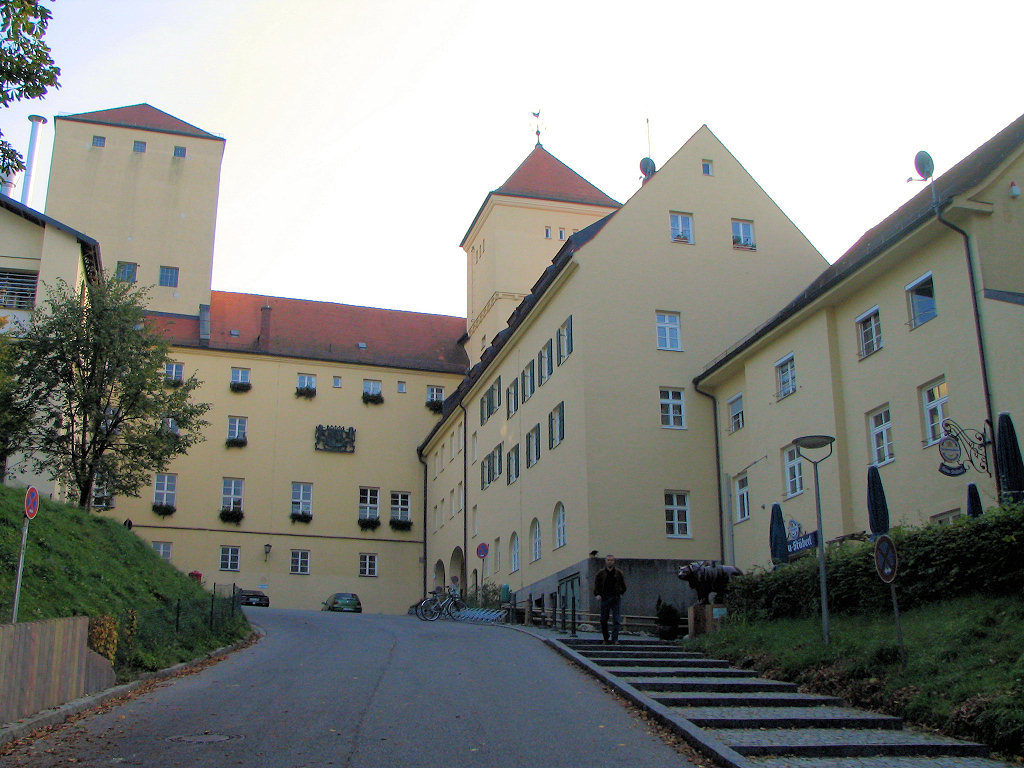
Bavarian State Brewery Weihenstephan
 Germany
"The world's oldest brewery, still brewing on the hill since 1040."
About
On Weihenstephan Hill above the town of Freising, north of Munich, beer has been made without a break since 1040. That is the year Bishop Engelbert of Freising granted the Benedictine abbey a brewing license, and the date the Bavarian State Brewery Weihenstephan still puts at the center of its identity. The monks brewed there for nearly eight centuries until secularization dissolved the monastery in 1803. The brewery itself survived the dissolution, passing into the hands of the Bavarian state, and it has stayed there ever since.
That ownership is the odd part. Weihenstephan is a commercial brewery owned by the Free State of Bavaria, and it runs as an independent, profit-seeking business rather than a subsidized arm of government. Few breweries of its size anywhere operate that way. The arrangement gives it a kind of stability private rivals cannot match, and it also ties the brand to the state's own reputation for brewing.
The campus is more than a brewery. It shares the hill with the Technical University of Munich's School of Life Sciences Weihenstephan, and the historic brewing school there has trained brewers from around the world for generations. That academic setting shows up in the beer: strict adherence to the Reinheitsgebot purity law and a house yeast strain kept alive and propagated for decades. The brewery calls itself the world's oldest but also one of the most innovative, and the claim is not empty. It produces roughly 45.3 million liters a year, employs about 117 people, and exports widely, including to the United States, where its beers turn up at Oktoberfest celebrations from Milwaukee to Newport.
The beer portfolio stays close to Bavarian tradition. Helles and Hefeweißbier are the core, joined by specialties like the wheat bock Vitus and the dark doppelbock Korbinian. The flagship Weihenstephaner Hefeweissbier, cloudy with banana and clove notes, is treated in beer writing as a reference point for the style. The hill itself draws beer tourists, who come for guided tours and the Bräustüberl tavern on the grounds. In recent years the brewery has also acted as a bridge to American craft brewing, collaborating with Sierra Nevada in 2018 and Jack's Abby in 2023.
Mission
Weihenstephan's stated purpose is a balancing act between preservation and innovation. The brewery describes itself as the world's oldest brewery but also one of the most innovative, and its mission reflects both halves. On one side sits the heritage: keeping Bavarian brewing traditions alive, brewing to the Reinheitsgebot, and maintaining the house yeast and methods that have defined the beer for generations. On the other sits the commercial and technical side: running a state-of-the-art enterprise that competes in export markets and invests in new equipment and infrastructure.
The teaching role is part of the mission too. The brewery's historic brewing school and its location on the Weihenstephan campus connect it to brewing science and to the training of brewers from around the world. That combination of tradition, education, and commercial brewing is unusual, and it shapes how the brewery presents itself: not just as a producer of beer but as a keeper of Bavarian brewing culture.
History
The story starts with the Benedictines. When Bishop Engelbert of Freising granted Weihenstephan Abbey its brewing license in 1040, the monks began brewing on the hill, and according to the brewery's own account they have never stopped. For nearly 800 years the abbey brewed through fires, plagues, and the ordinary upheavals of monastic life. That continuity is the foundation of the world's oldest brewery claim, and it is the single fact most often repeated about the place.
Secularization ended the monastic chapter. In 1803 the abbey was dissolved, and the brewery passed to the Bavarian state. It continued first as the Royal Bavarian State Brewery and later as the Bavarian State Brewery, still brewing on the same hill. The state ownership that began then has never been undone, which makes Weihenstephan one of the few commercial breweries of its size owned outright by a government.
The modern era has been about export and collaboration. The brewery built a global reputation on its Hefeweissbier and expanded into markets including the United States. In 2018 it teamed up with Sierra Nevada on the Braupakt Hefeweissbier, and in 2023 it collaborated with Massachusetts-based Jack's Abby Brewing. In 2025 it was named Champion Large International Brewery, the top honor at its competition. Then in June 2026 came something no one would have predicted from a brewery founded by monks: Weihenstephan opened a charging hub for electric trucks on its grounds, a diversification into energy infrastructure that drew coverage for making electric trucking cheaper than diesel.
Subdivisions
Bräustüberl Weihenstephan
The brewery tavern and restaurant on the Weihenstephan grounds, a visitor attraction in its own right and a stop on brewery tours.
Brewing school
The historic brewing school associated with the Weihenstephan campus, which has trained brewers internationally and connects the brewery to the Technical University of Munich's School of Life Sciences.
Milestones
1040
Bishop Engelbert of Freising grants Weihenstephan Abbey its brewing license, the founding date the brewery still uses.
1803
The monastery is dissolved during secularization, and the brewery passes to the Bavarian state.
2018
Collaboration with Sierra Nevada on the Braupakt Hefeweissbier.
2023
Collaboration with Massachusetts-based Jack's Abby Brewing.
2025
Named Champion Large International Brewery, the highest honor at its competition.
2026
Opens a charging hub for electric trucks at the brewery in June.
Sources
Organization Info
- Founded
- 1040
- Headquarters
- Freising, Bavaria, Germany
- Country
- Germany
- Parent
- Free State of Bavaria
- Type
- Government
- Owner
- Free State of Bavaria
- Employees
- 117
- Annual production (2023)
- 45,346,300 liters
Financials
- Employees
- 117
Official Website
www.weihenstephaner.de/en
Join the community
fans discussing